desk
desk Share
Share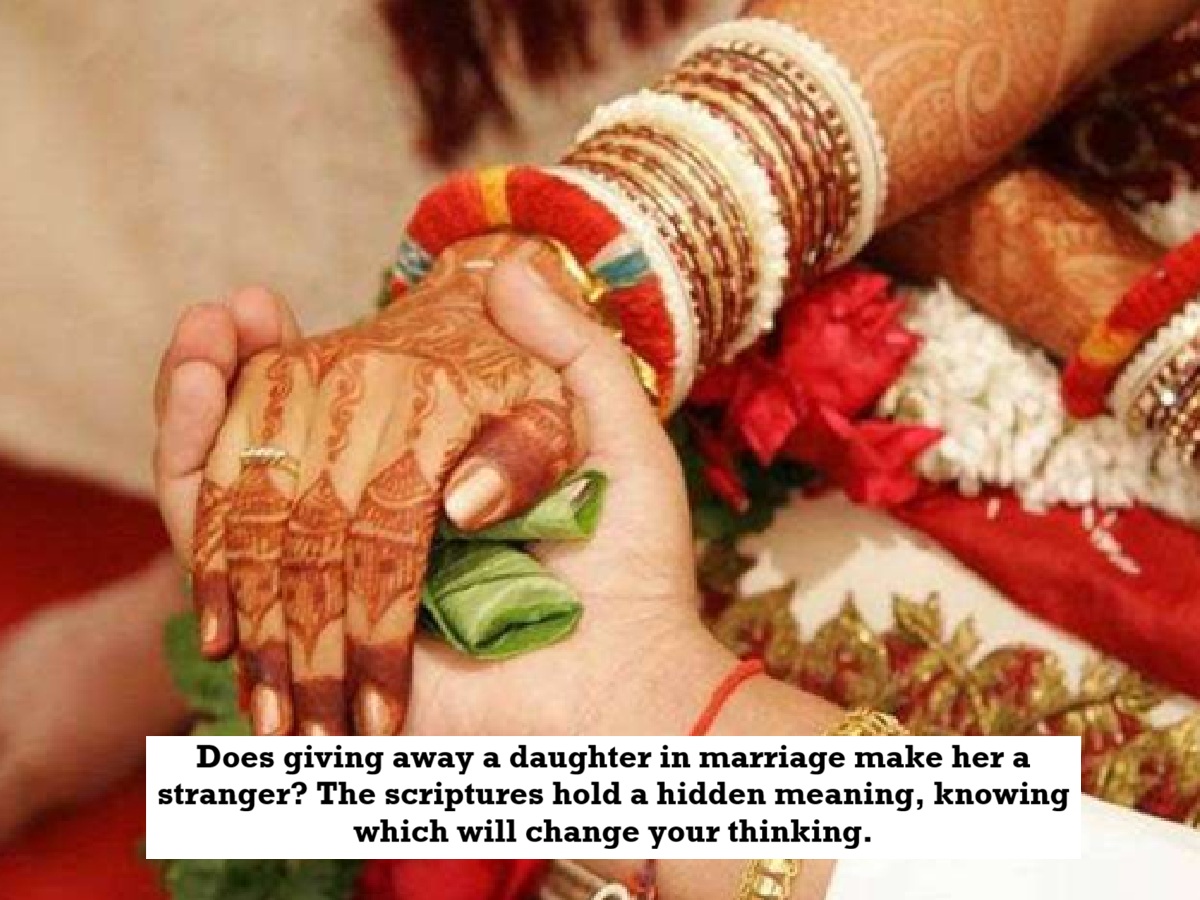
News Topical, Digital Desk : Marriage is one of the sixteen Hindu sacraments, where the bride and groom vow to be together for life. Many customs and rituals are performed in Hindu marriages, including Kanyadaan. Many people understand it to mean a father giving away his daughter. However, the scriptures give a different meaning. Let's read about it.
This description is found in the scriptures
You may be surprised to learn that the word "Kanyadaan" is not mentioned anywhere in Vedic or Puranic literature. Hindu scriptures replace "Kanyadaan" with the word "Panigrahan," which means "to hold hands" or "to hand over the bride's hand to the groom."
This ceremony, called the Pānigrahana ceremony, binds two individuals—a man and a woman—in a bond of lifelong love, support, and trust. The Pānigrahana ceremony is not just a social ceremony, but also a sacred symbol of mutual commitment and the beginning of a new life.
Lord Shri Krishna has said this
According to the story recounted in the Mahabharata , when Lord Krishna performed the Gandharva marriage of Arjuna and Subhadra, Balarama objected, arguing that Subhadra had not been given away in marriage, and therefore, the marriage could not be considered complete. Lord Krishna then told Balarama that a girl is not a livestock that can be donated. The true meaning of Kanyadaan is the exchange of a girl, not the gift of a girl.
True meaning of Kanyadaan
In Hinduism, donation means that you lose your right to an object. Donation is given of something you have earned or have rights to. However, a daughter is not a commodity and cannot be donated. Therefore, the Kanya Daan ritual performed during marriage does not mean that a father who has raised his daughter all his life will lose his rights to her.
Read More: Lord Rama recited this Sun God's mantra to conquer Ravana; it could change your fortunes too.
--Advertisement--