desk
desk Share
Share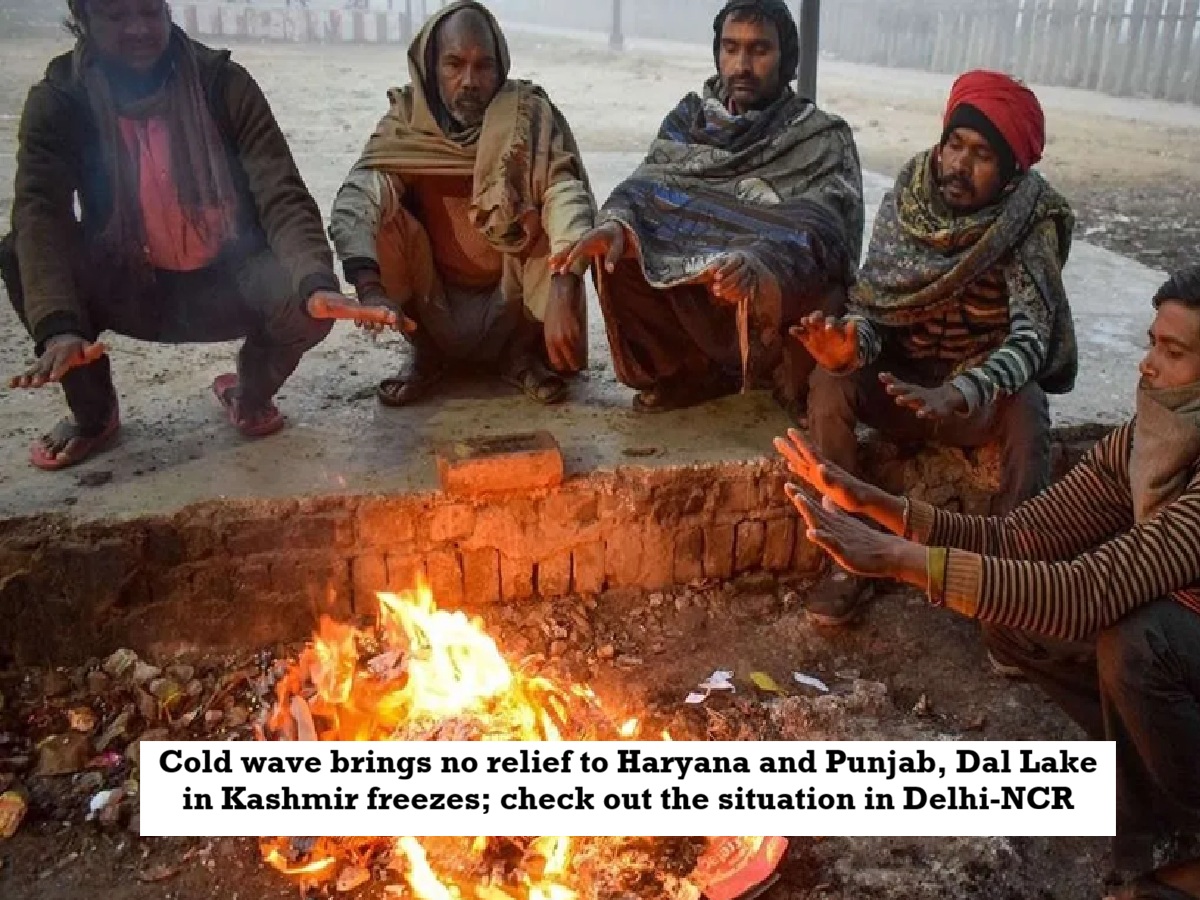
News Topical, Digital Desk : A severe cold wave continued to grip northern India on Wednesday, with no respite in sight. Maximum temperatures dropped nearly 10 degrees Celsius below normal in many areas of Punjab and Haryana. Several water bodies, including parts of Dal Lake in Kashmir, froze.
The capital Delhi got some relief from this severe cold.
The capital, Delhi, received some relief from the harsh cold. The Meteorological Department reported that the maximum temperature in Delhi was recorded at 20 degrees Celsius, just 0.1 degrees above normal. The minimum temperature dropped to 3.8 degrees Celsius, which is 3.6 degrees below the seasonal average.
cold wave warning
The Meteorological Department has issued a cold wave warning for Thursday, with temperatures expected to range between 5 degrees Celsius and 22 degrees Celsius. Parts of western Uttar Pradesh—Meerut, Muzaffarnagar, Aligarh, and Moradabad—saw a slight improvement in cold wave conditions. However, the Meteorological Department said cold wave conditions could persist until Thursday night, with frost possible in some areas.
Unlike Delhi, Haryana experienced a severe cold wave, leaving locals troubled. The Meteorological Department reported on Wednesday that the night temperature in Hisar was 0.5 degrees Celsius, six degrees below normal. Severe cold continued in many places in Punjab as well, with both minimum and maximum temperatures dropping.
Cold wave and dense fog to continue for two days
The IMD reported that maximum daytime temperatures in Punjab and Haryana were 8-10 degrees below normal. The minimum temperature in Hisar dropped to 0.5 degrees Celsius, while the ground in the outskirts of Gurugram was covered with a layer of ice.
Bathinda also saw temperatures hover around 1.6 degrees Celsius, and dense fog enveloped many areas, reducing visibility to zero. Traffic and flights were affected, while school holidays were extended. The International Monetary Fund (IMD) has issued a warning that the cold wave and dense fog will continue for the next two days, potentially affecting health, agriculture, and transportation.
The situation in the Kashmir Valley is even more serious.
The situation was even more grim in the Kashmir Valley. Srinagar recorded a minimum temperature of minus 5.2 degrees Celsius, while Shopian was the coldest place, dropping to minus 7.5 degrees Celsius. Pahalgam recorded minus 6 degrees Celsius and Gulmarg minus 3.8 degrees Celsius.
Parts of Dal Lake were covered in a thick layer of ice, images of which are going viral on social media. Other water bodies also froze, affecting local boaters and tourism.
Kashmir is currently in the peak of "Chillai-Kalan" (December 21 to January 30), when the cold is at its most intense. According to the IMD , a fresh western disturbance is expected to affect the region from January 16, bringing light snowfall.
There is an increased risk of traffic jams and accidents
According to the IMD , cold waves will persist in Himachal Pradesh, Uttarakhand, Punjab, Haryana, Chandigarh, western Uttar Pradesh, Rajasthan, Chhattisgarh, Jharkhand, and Odisha for the next two days before easing. Dense fog will persist in northwest India and Bihar until January 15, increasing the risk of traffic jams and accidents.
Experts say the cold wave is due to the lack of western disturbances and the flow of cold winds. People have been advised to wear warm clothing, stay indoors, and take special care of their health. Cases of cold-related illnesses are on the rise, especially among the elderly and children.
--Advertisement--