desk
desk Share
Share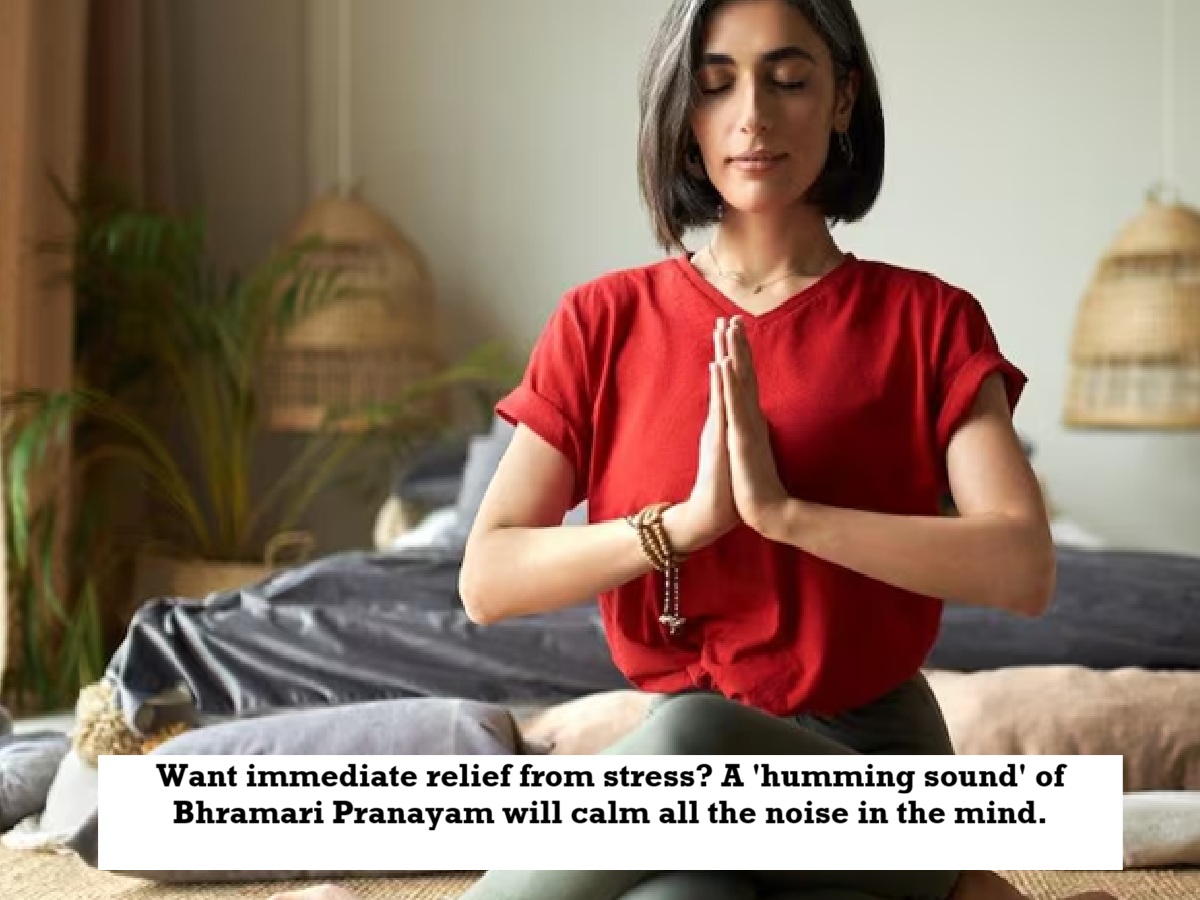
News Topical, Digital Desk : Bhramari Pranayama is a well-known yoga practice that calms the mind through the use of a bee-like humming sound. People often think of it as simply inhaling and exhaling, but Bhramari is a much more comprehensive practice. Proper body posture, breath control, hand position, and complete concentration play a crucial role. Unfortunately, Bhramari is often taught in an incomplete manner, as correct body posture helps direct the breath and hand position impacts the nervous system. All these aspects, combined, contribute to its profound impact on the mind and nervous system.
What do experts say?
Himalayan Siddha Akshar, a longtime practitioner of yoga and meditation, told Health Shots that Bhramari is not just a method of relaxation, but can also transform our mood and energy. He says that when he first performed Bhramari, it calmed his scattered thoughts and brought him into the present moment. This practice calms the mind by reducing inner restlessness.
interacts with the nervous system
In Bhramari Pranayama, sound is considered the fundamental element of life. History bears witness that many cultures have considered sound to be a force that shapes everything from microscopic particles to the entire universe. In the Siddha tradition, the universe is considered a complex rhythm of different frequencies, where matter, energy, and consciousness arise from systematic vibrations. While modern science views sound from a limited perspective, Bhramari considers it a real and measurable element that affects the body. In this practice, the vibrations generated by one's own breath spread within the body and interact with the nervous system.
Beneficial for health
Is Bhramari Pranayama Good For Stress: This humming practice is also considered beneficial for health. Siddhas understood that vibrations affect our tissues, body fluids, and nervous system. When you perform Bhramari, these vibrations spread through the skull and sinuses, benefiting surrounding tissues. Recent research suggests that rhythmic vibrations can synchronize brain pathways, improve vagal tone, and activate the parasympathetic nervous system, known as the body's "rest and digest" mode. This stabilizes the heart rate and reduces stress hormone levels.
How to do Bhramari?
Sit comfortably in a quiet place, keep your spine straight, and close your eyes. Inhale deeply through your nose and, while exhaling, make a bee-like humming sound with your lips closed. Feel the vibrations in your head and face. Repeat this 6 to 10 times, and finally, sit quietly for a while to savor the experience. Regular practice reduces stress, improves mental clarity, and improves emotional balance. Experts say that Bhramari not only calms external noise but also helps create a calm and balanced state within.
--Advertisement--