desk
desk Share
Share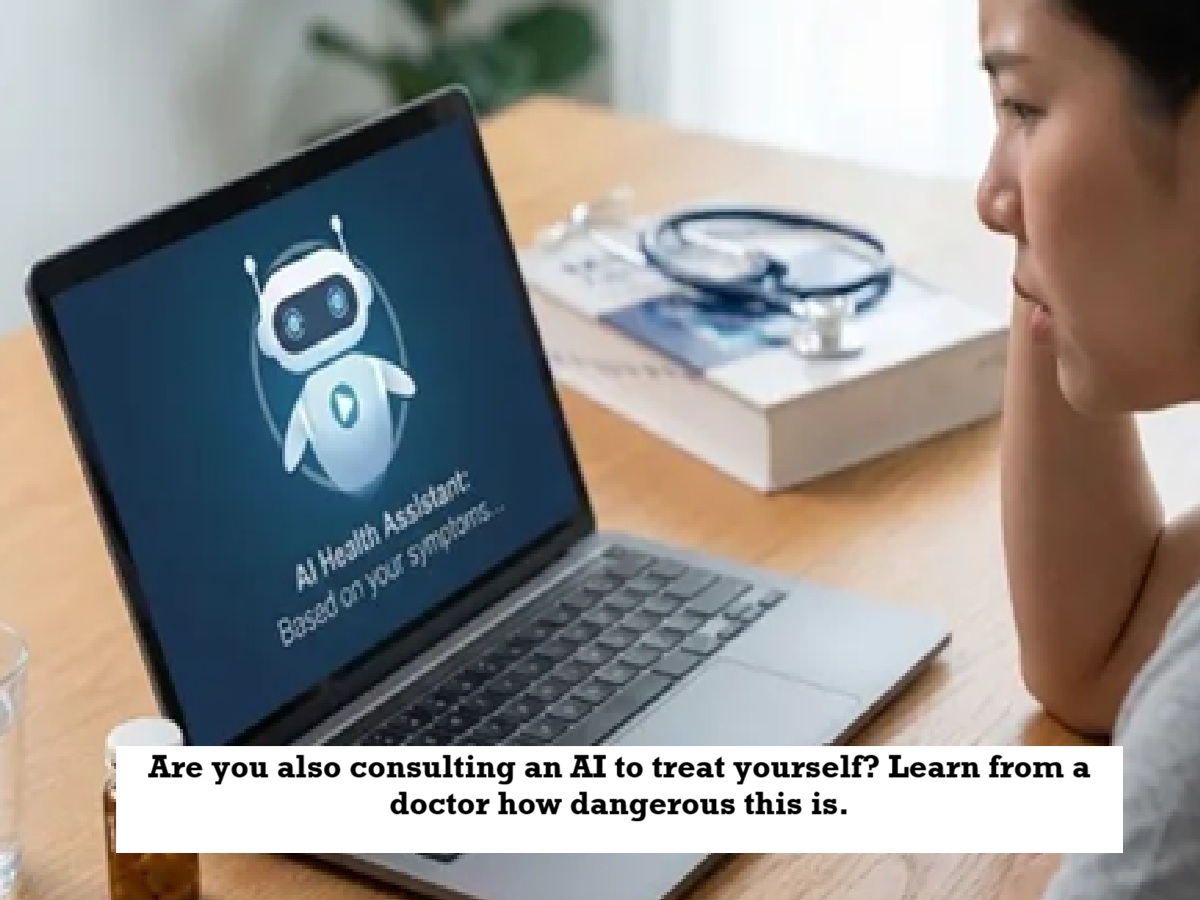
News Topical, Digital Desk : The increasing use of AI-generated tools for self-diagnosis and self-treatment is a major concern, a senior health expert said, adding that such tools cannot replace human intervention.
Dr Jitendra Nagpal, Deputy Medical Director, Sitaram Bhartia Institute of Science and Research, said that Artificial Intelligence is becoming an enabling layer in healthcare delivery, not a replacement for human decision-making.
He said that in India, where the healthcare system operates under limitations of time, workforce and scale, AI has the potential to improve efficiency, sustainability and safety.
Improvements in administrative and clinical processes
One of the most visible changes has been the speed and accuracy of administrative and clinical processes, such as recordkeeping, documentation, audits, and reporting, which typically consume a significant amount of doctors' time. By assisting with structured documentation, summarization, and review, AI helps healthcare professionals focus more directly on patient care. At a systems level, AI is also helping to better standardize processes.
It helps develop and update clinical protocols, standard operating procedures, and care pathways, thus reducing unnecessary variation in care delivery. Dr. Nagpal said that AI has shown significant promise in areas where vigilance is needed, but it must be adopted cautiously, ethically, and in a climate-specific manner.
"A major concern is the growing trend of self-diagnosis and self-treatment based on AI-generated outputs, which can be unsafe and misleading. AI tools are not a substitute for clinical judgment, a physical examination, or a proper understanding of a patient's social and medical background," he said.
AI will cause mistakes
He warned that over-reliance on AI output by both patients and healthcare professionals could lead to mistakes if the shortcomings are not clearly understood. Dr. Nagpal explained that another significant risk is using AI without adequate training or understanding what a particular tool is designed to do and, equally, what it is not designed to do. Regarding areas where caution is needed, Dr. Nagpal said that AI has shown considerable promise, but it should be adopted cautiously, ethically, and in a climate-appropriate manner.
AI can enhance patient care and research
He added that AI outputs also depend heavily on the quality and completeness of the information provided, adding that using these tools without the right clinical context can lead to inaccurate or biased outputs. Finally, issues related to data privacy, confidentiality, and governance must remain central, especially in healthcare systems that handle sensitive personal health information.
--Advertisement--