desk
desk Share
Share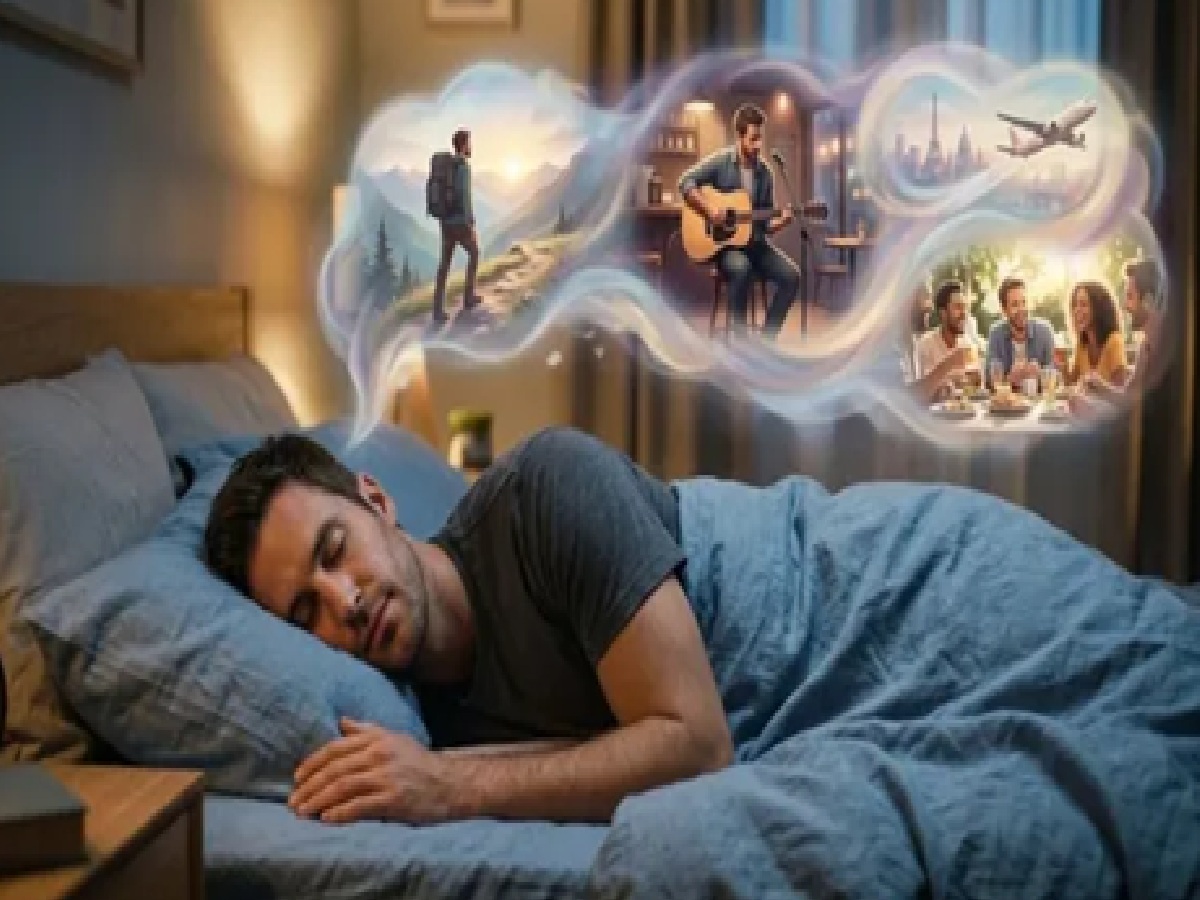
News Topical, Digital Desk : Our dreams are largely connected to our real life, thoughts, and concerns. The things we think about during the day often appear in our dreams at night.
According to a new study, dream content is not random or chaotic but may reflect a complex interaction between personal traits, such as mind-wandering tendencies, interest in dreams, and sleep quality, and external events, such as large-scale social experiences like the COVID-19 pandemic.
Italian research on 3700 dreams
Researchers at the IMT School for Advanced Studies in Lucca, Italy, analyzed reports of more than 3,700 dreams and waking experiences collected from 287 participants, aged between 18 and 70. Over the course of two weeks, participants recorded daily experiences, while researchers collected information on sleep patterns, cognitive abilities, personal traits, and psychological characteristics. The researchers analyzed the words participants used to describe daily life and dreams.
Dreams shape reality
They argued that dreams don't simply reproduce our waking experiences, but also reinterpret them. Elements of daily routines, such as work environments, healthcare settings, or education, don't reappear as they are but are reconstituted into vivid, holistic scenarios that often combine different contexts and shift perspectives on unfamiliar scenarios. The results suggest that dreams don't simply reflect reality, but actively reshape it. They integrate fragments of past experiences with imagined or anticipated experiences.
Dreams are a dynamic process.
The authors wrote that compared to waking reports, dreams shifted from self-referential, thought-centered narratives to sensory experiences filled with visual-spatial details, multiple characters, and strange events. They added that stable traits, including attitudes toward dreams, tendency to mind-wander, and subjective sleep quality, selectively influenced dream content.
"Our findings show that dreams are not simply a reflection of past experiences, but a dynamic process that depends on who we are and what we live," said lead author Valentina Elce, researcher at the IMT School for Advanced Studies in Lucca.
Studying during the COVID lockdown
"By combining large-scale data with computational methods, we were able to discover patterns in dream content that were previously difficult to identify," Else said. Variations in dreams were also found to vary between individuals. For example, people who are more prone to mind-wandering report more fragmented and rapidly changing dreams.
Read More: Heart Fights Cancer: A beating heart means it's fighting cancer, a new study raises hope
--Advertisement--