







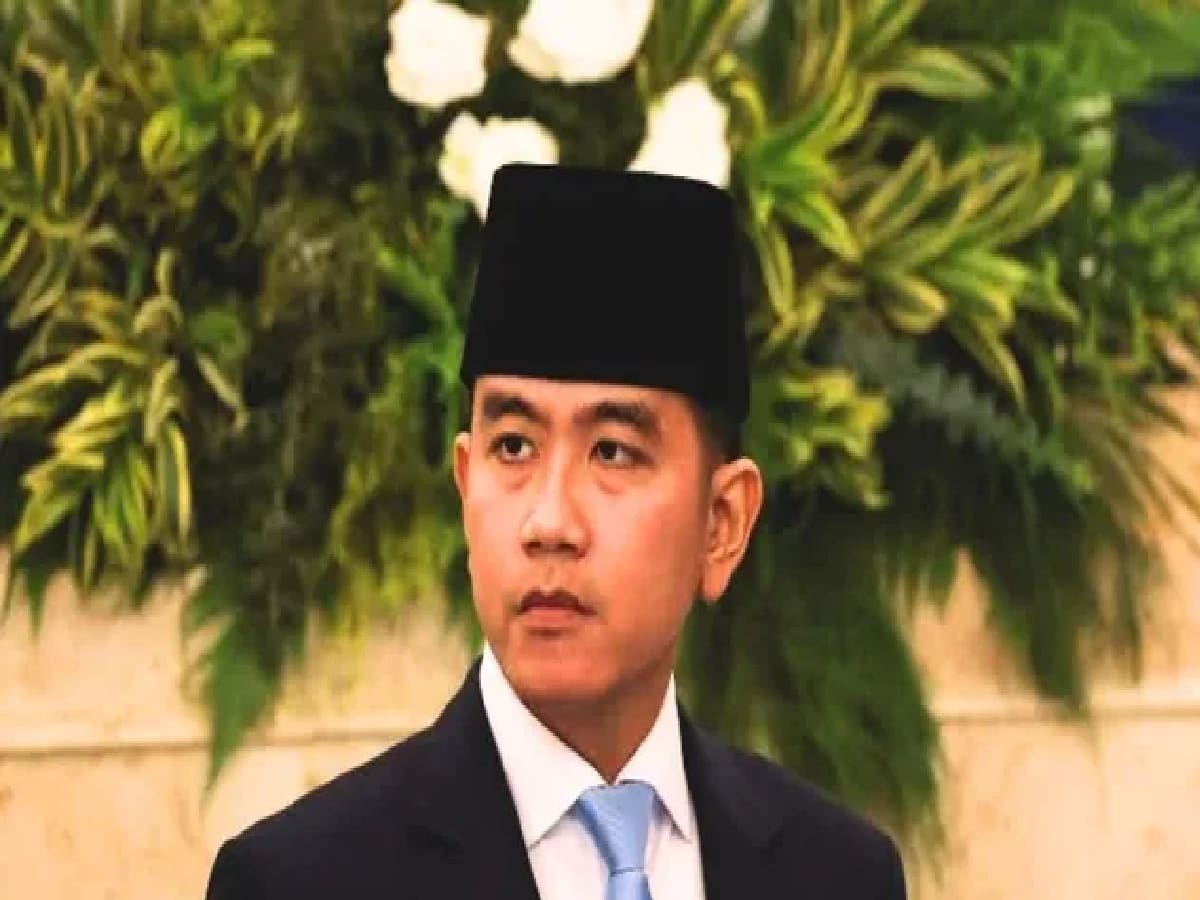
Indonesia VP Gibran Rakabuming Raka Resigns Over Degree Row
In a dramatic political upheaval shaking Southeast Asia’s largest democracy, Indonesian Vice President Gibran Rakabuming Raka formally tendered his resignation on Thursday, November 12, 2026, bringing an abrupt halt to his tenure amid an escalating constitutional crisis over his academic credentials. The 39-year-old leader—eldest son of former Indonesian President Joko "Jokowi" Widodo—arrived at the parliamentary complex in Jakarta early Thursday morning and handed his resignation letter directly to the leadership of the People’s Consultative Assembly (MPR). The move unfolded just hours before lawmakers were scheduled to deliberate on a sweeping parliamentary impeachment petition backed by 120 members across eight political parties. Raka’s decision to step down follows a series of landmark judicial setbacks last month in which both Indonesia’s Constitutional Court and the Supreme Court ruled that the foreign schooling documents he submitted to qualify for the 2024 presidential election failed to satisfy statutory senior high school equivalency requirements. As parliamentary leaders convene to process his exit and initiate the constitutional mechanism to select a successor, the resignation sends shockwaves through President Prabowo Subianto’s governing coalition and opens a new chapter of political uncertainty in Jakarta.
Resignation at Jakarta Parliament: Ending a Mounting Constitutional Crisis
Arriving at the Senayan parliamentary complex in central Jakarta on Thursday morning, Gibran Rakabuming Raka held a closed-door meeting lasting roughly twenty minutes with the leadership of the People’s Consultative Assembly, including MPR Speaker Ahmad Muzani. Speaking to reporters shortly after the meeting, Speaker Muzani confirmed that the outgoing Vice President had formally submitted his resignation documents and stated that assembly leaders would immediately convene a joint consultative session with parliamentary faction heads and the Regional Representatives Council (DPD) to chart the next constitutional steps.
For Raka, who swept into office in October 2024 as the youthful running mate of President Prabowo Subianto, stepping down ahead of completing his five-year term represents a calculated effort to defuse an intractable institutional standoff. Earlier on Tuesday, November 10, the Vice President held a private two-and-a-half-hour meeting with President Prabowo at the Presidential Palace, expressing his readiness to vacate office in order to spare the administration from a protracted political and legal battle. While State Secretary Minister Prasetyo Hadi indicated that President Prabowo initially advised Raka to pursue available legal defenses, intensifying street protests in Jakarta and coordinated legislative action left little room for political maneuver.
Court Rulings on Foreign Credentials: Why Raka's Eligibility Was Questioned
The crisis engulfing Indonesia’s second-highest constitutional office stems directly from legal challenges scrutinizing Gibran Rakabuming Raka’s overseas educational background. Under Indonesian electoral statutes, candidates contesting the presidency or vice presidency must demonstrate proof of graduating from senior high school or holding an officially recognized foreign educational equivalent. When registering his candidacy ahead of the 2024 general election, Raka—who pursued secondary and higher studies in Singapore and Australia—relied on an educational equivalency certificate issued by the Ministry of Primary and Secondary Education.
However, the validity of those academic records unraveled following twin judicial verdicts delivered in October 2026. On October 6, Indonesia’s Constitutional Court ruled that there was insufficient documentary evidence establishing that Raka possessed a foreign diploma or certificate equivalent to Indonesian senior high school graduation. Delivering a decisive second blow on October 30, the Supreme Court formally annulled the ministry-issued educational equivalency certificate that had underpinned his election registration, noting the absence of conclusive evidence verifying senior high school completion. Although Raka maintained that his subsequent bachelor’s degree from an institution in Singapore proved he had met university entry standards, Coordinating Minister for Law, Human Rights, Immigration and Corrections Yusril Ihza Mahendra publicly underscored that the rulings of both apex courts were final and binding, leaving the Vice President with no personal legal avenue to overturn the verdicts.
Impeachment Pressure Mounts: 120 Lawmakers Petition House Leadership
Armed with the Supreme Court’s annulment order, opposition figures and coalition lawmakers rapidly mobilized inside the House of Representatives (DPR). On Wednesday, November 11—just twenty-four hours prior to Raka’s formal resignation—a cross-party bloc of 120 parliamentarians representing eight distinct political factions submitted a formal petition to the House leadership. The petition invoked the legislature’s constitutional right to express an official opinion on executive misconduct and eligibility violations, a formal parliamentary mechanism designed to trigger impeachment proceedings.
House Deputy Speaker Saan Mustopa confirmed that the impeachment proposal had been scheduled for formal tabling at Thursday’s plenary session. Simultaneously, public pressure spilled onto the streets of Jakarta and several regional centers, where student organizations and civil society demonstrators staged rallies demanding institutional accountability and strict adherence to electoral eligibility laws. Facing the prospect of a humiliating parliamentary censure and a formal constitutional trial, Raka opted to submit his resignation directly to the MPR hours before the House plenary convened.
What Happens Next: MPR Special Committee and Replacement Timeline
Despite Raka’s formal submission, his departure from office is not immediately self-executing under Indonesian constitutional protocol. According to constitutional experts and parliamentary sources in Jakarta, the leadership of the People’s Consultative Assembly must now establish a special investigative committee to formally examine the allegations that Raka violated the Constitution by occupying the vice presidency without fulfilling mandatory electoral eligibility criteria. Even with a voluntary resignation on the table, parliamentary leadership must review the resignation letter, verify procedural compliance, and formally ratify the vacancy.
Crucially, under Article 8 of Indonesia’s 1945 Constitution, a mid-term vacancy in the vice presidency does not trigger a fresh national election. Instead, the office remains temporarily vacant while constitutional succession rules take effect. Once the MPR formally ratifies the vacancy, President Prabowo Subianto is constitutionally required to nominate two candidates to fill the post within 14 days. Thereafter, the People’s Consultative Assembly—comprising members of both the House of Representatives and the Regional Representatives Council—must convene a plenary session within 60 days to vote and elect Indonesia’s new Vice President from the two presidential nominees.
Political Fallout in Southeast Asia: Impact on Prabowo and Jokowi Alliance
The sudden exit of Gibran Rakabuming Raka carries profound geopolitical and domestic implications for Indonesia, reverberating across diplomatic circles in New Delhi and throughout the Indo-Pacific region. Raka’s rise from mayor of Surakarta to Vice President in 2024 had been forged through a historic political pact between President Prabowo Subianto and outgoing President Joko Widodo, whose backing proved instrumental in securing Prabowo’s electoral victory.
Political analysts in Jakarta observe that the credential controversy, compounded by recent friction between allies of Prabowo and loyalists of former President Jokowi, threatens to strain the governing coalition. How President Prabowo navigates the 14-day nomination window—and whether he selects a successor aligned with his own Gerindra Party or another coalition partner—will determine administrative stability and investor confidence across Southeast Asia’s economic powerhouse in the months ahead.




