







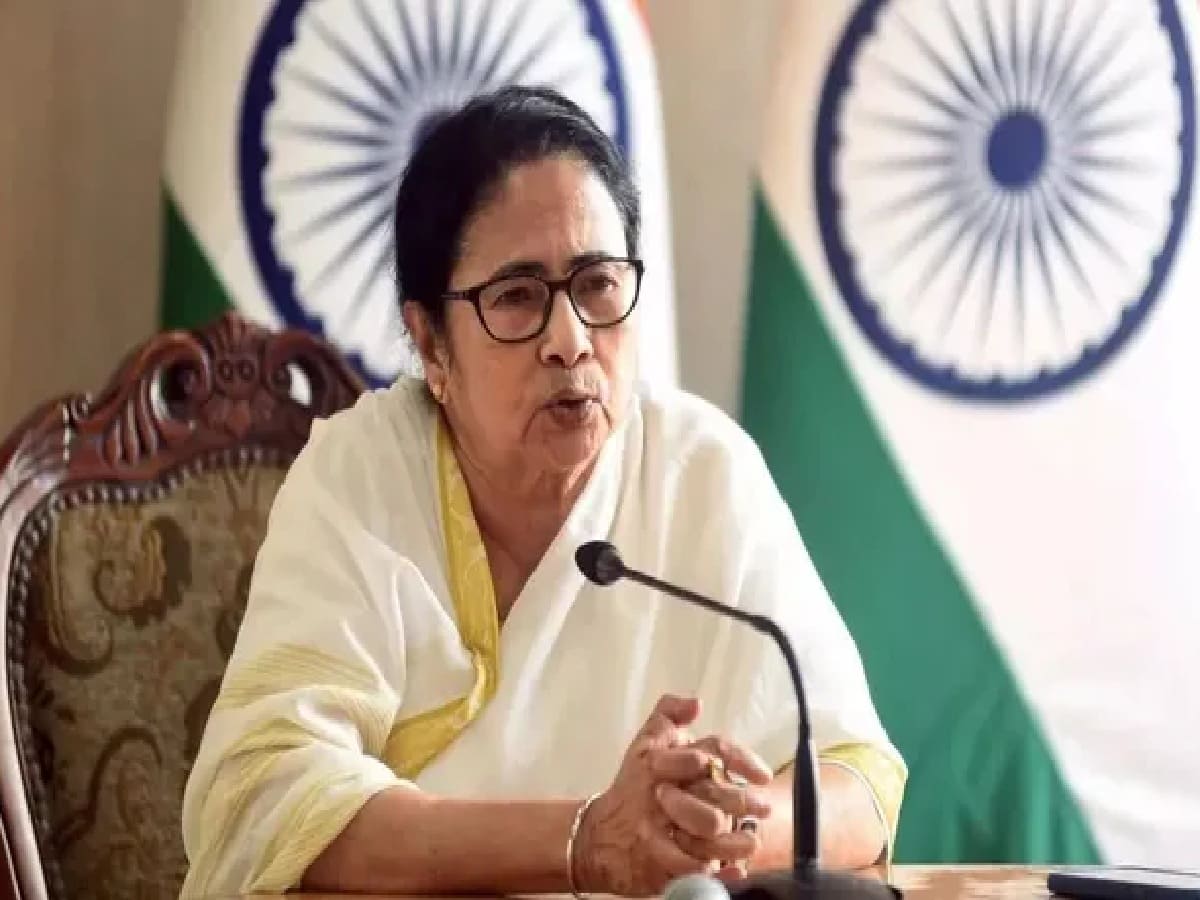
TMC Celebrates Bhaiya Dooj Without Mamata; Chandrima Applies Tilak
A striking reflection of the shifting political equations in West Bengal unfolded during the Bhaiya Dooj—locally celebrated as Bhai Phonta—festivities in Kolkata this week, as the Trinamool Congress (TMC) observed the annual sibling ritual without party supremo Mamata Banerjee for the first time in years. According to regional media reports, the traditional gathering that once drew crowds of cabinet ministers, lawmakers, and prominent public figures to Mamata Banerjee’s residence in Kalighat was completely absent this season. Instead, senior party leader and former minister Chandrima Bhattacharya stepped into the ceremonial role of the sister, hosting a party-level Bhaiya Dooj event at the Trinamool Bhavan headquarters along the Eastern Metropolitan Bypass. While party leaders described the subdued observance as an expression of solidarity with grassroots workers facing political adversity, opposition voices from the Bharatiya Janata Party (BJP) characterized the empty courtyard at Kalighat as evidence of waning political clout following the change of government in the state.
Shift from Kalighat to Trinamool Bhavan: Chandrima Applies Tilak to Leaders
For more than a decade, Harish Chatterjee Street in south Kolkata’s Kalighat neighborhood served as the nerve center of West Bengal’s political calendar on Bhai Phonta, with long queues of red-beacon vehicles and senior leaders waiting outside Mamata Banerjee’s modest home to receive her ceremonial blessing. On Wednesday, November 11, 2026, however, reporters noted an unusually quiet, deserted atmosphere outside the Kalighat residence, devoid of official convoys or festive fanfare.
In a notable departure from past custom, the familiar faces of the Trinamool Congress converged instead at Trinamool Bhavan in the Metropolitan area. There, Chandrima Bhattacharya performed the traditional rituals, applying sandalwood and vermilion tilak on the foreheads of several senior party colleagues while praying for their well-being. Among the prominent leaders who attended the headquarters event to receive phonta from Bhattacharya were Aroop Biswas, Madan Mitra, Javed Khan, Firhad Hakim, and Ritabrata Banerjee. In a lighthearted moment captured on video from the gathering, senior leader Madan Mitra drew bursts of laughter from Aroop Biswas and other attendees by enthusiastically chanting "Jai Bangla" immediately after receiving the ceremonial tilak from Bhattacharya.
Family Rift Surfaces: Mamata's Brother Babun Visits Party HQ Instead
Perhaps the most closely watched development of the day was the attendance of Mamata Banerjee’s younger brother, Babun Bandyopadhyay, at the Trinamool Bhavan celebration rather than at his sister's residence just steps away in Kalighat. Visuals of Babun sitting alongside senior party leaders and accepting the festive tilak from Chandrima Bhattacharya quickly sparked intense discussion across Kolkata’s political circles.
The appearance followed candid remarks made by Babun Bandyopadhyay to journalists on Tuesday, when he was asked whether he intended to visit Mamata Banerjee to receive Bhaiya Dooj blessings. Responding publicly, Babun stated that he had not been properly invited to the Kalighat residence and added firmly that he would not go even if an invitation were extended to him at the last minute. His subsequent decision to participate in the Trinamool Bhavan ceremony underscored the visible personal and organizational distance that has emerged within the first family of the party in recent months.
Bhawanipur Tensions and Kunal Ghosh's Defence of the Cancellation
The decision by Mamata Banerjee to abstain from hosting both the annual Vijayadashami Milan and Bhaiya Dooj gatherings stems from a turbulent sequence of events in south Kolkata earlier in the festive season. Just prior to Kali Puja, sharp tensions erupted in the Bhawanipur and Kalighat areas surrounding midnight birthday celebrations organized by supporters for Trinamool Congress MP Abhishek Banerjee. According to police and news accounts, the late-night gathering outside his residence escalated into street clashes between TMC workers and local BJP supporters, resulting in injuries on both sides, police intervention, and multiple cross-FIRs. Following that confrontation, Mamata Banerjee opted to cancel her traditional festive receptions.
Defending the party supremo’s decision to forego public celebrations, Trinamool Congress spokesperson Kunal Ghosh stated that refraining from festive get-togethers was a deliberate political protest. According to Ghosh, the party leadership chose not to hold celebratory events in response to ongoing attacks on Trinamool workers, instances of political violence, alleged police excesses, and what the party terms false criminal cases being lodged against its grassroots cadres across the state.
BJP Leader Dilip Ghosh's Jibe: 'No Power Left, So No Tilak'
The altered format of the Trinamool Congress's Bhaiya Dooj observance drew sharp sarcasm from the ruling Bharatiya Janata Party in West Bengal. Senior BJP leader Dilip Ghosh took a pointed dig at Mamata Banerjee over the cancellation of the Kalighat ceremony, attributing the quiet atmosphere at her residence to the party's loss of governmental authority in the state.
Speaking to reporters, Dilip Ghosh remarked that during previous years, political leaders and public figures did not visit Kalighat out of familial affection for Mamata Banerjee, but rather to receive the "tilak of power" from a sitting Chief Minister. Ghosh argued that now that she no longer holds the Chief Minister's chair and administrative influence has shifted, the enthusiasm surrounding Bhaiya Dooj at her residence has naturally evaporated, claiming that Banerjee cancelled the event to avoid the embarrassment of a low turnout.
Changing Political Landscape in West Bengal
In West Bengal’s socio-political culture, major autumn festivals such as Durga Puja, Vijayadashami, Kali Puja, and Bhai Phonta have historically functioned as vital barometers of political alignment and organizational cohesion. For years, the televised images of senior ministers and cultural icons gathering at Kalighat projected an image of unified authority around Mamata Banerjee.
This year’s contrast—a silent street in Kalighat alongside a decentralized celebration led by Chandrima Bhattacharya at Trinamool Bhavan—illustrates how profoundly the political terrain in Kolkata has evolved since the Assembly election verdict. As both the ruling BJP and the opposition Trinamool Congress recalibrate their strategies ahead of upcoming municipal and rural civic contests, even traditional family festivals remain deeply intertwined with the ongoing battle for political relevance across Bengal.




