







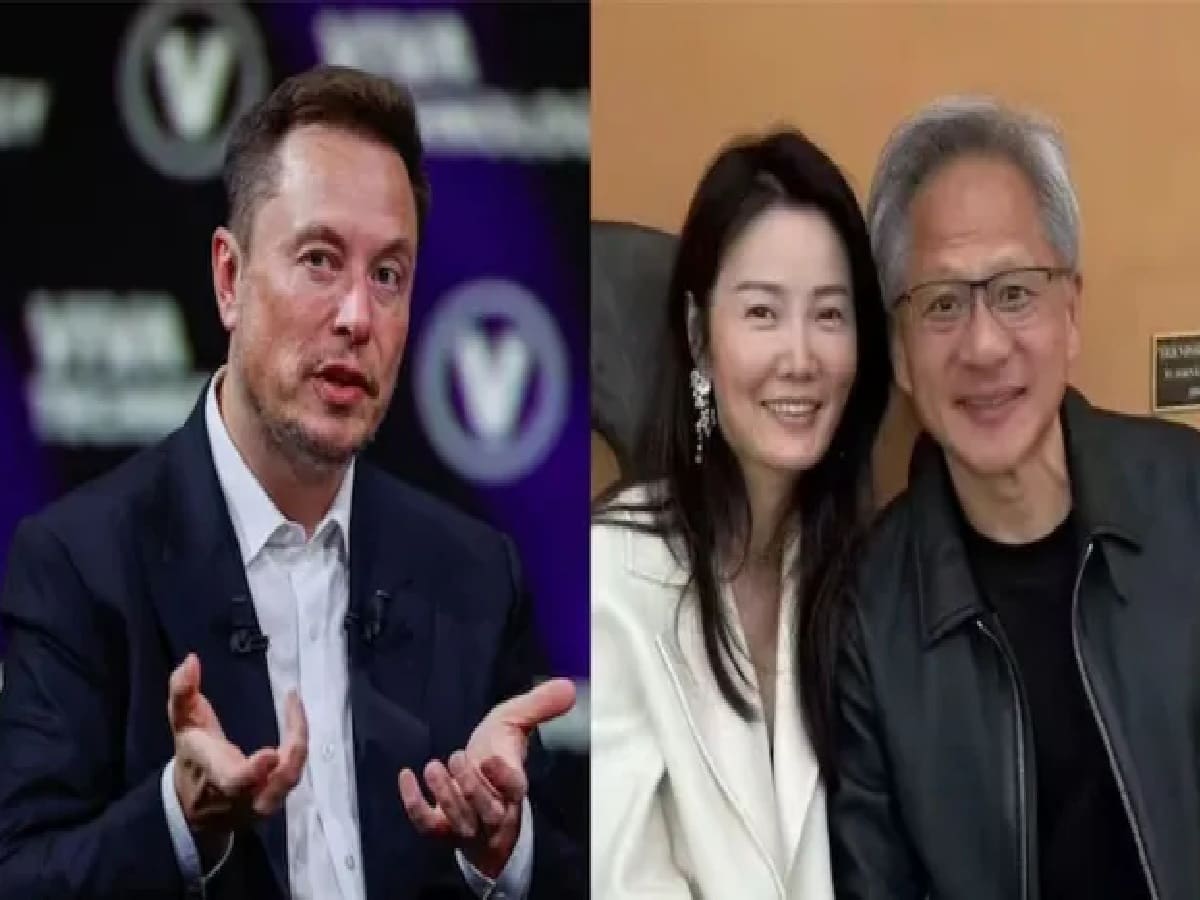
Elon Musk Says 'It Would Be an Honor' to Hire Nvidia's Jensen Huang
A dramatic convergence of Silicon Valley leadership drama and high-stakes national security scrutiny unfolded on Thursday, November 12, 2026, as billionaire entrepreneur Elon Musk publicly signaled his openness to recruiting embattled Nvidia Chief Executive Officer Jensen Huang. Responding to a viral plea on the social media platform X amid mounting reports that Nvidia’s board of directors is weighing whether to oust its longtime co-founder, the Tesla and SpaceX chief offered a striking vote of confidence in one of the artificial intelligence industry's most influential architects. The public exchange comes at a moment of unprecedented turmoil for the 63-year-old chipmaking executive, who is facing intense corporate and congressional investigations following revelations of two separate extramarital affairs. While one relationship involved Alice Huang, the founder of Singapore-based Megaspeed International who is suspected by U.S. intelligence agencies of maintaining links to Chinese intelligence services, a separate report by The New York Times has now implicated the Nvidia chief in a second affair with a senior female executive who reports directly to him.
Elon Musk's Viral X Reply: Standing by a Longtime AI Ally
As speculation swirled across global financial markets and technology circles regarding Jensen Huang’s survival at the helm of the trillion-dollar semiconductor giant, a user on X tagged Elon Musk with a direct appeal: "Elon, please hire Jensen". Musk, who oversees an expansive technology empire spanning Tesla, SpaceX, and artificial intelligence venture xAI, responded concisely, writing, "It would be an honor". While Musk’s three-word reply did not specify which of his companies might accommodate Huang nor constitute a formal employment offer, the remark reverberated across Wall Street and Silicon Valley as an unmistakable gesture of solidarity.
This was not the first time during the week-long scandal that Musk stepped forward to defend his fellow tech titan. Following Huang’s initial admission of marital infidelity over the weekend, Musk endorsed an online commentary arguing that while the Nvidia CEO had done "something incredibly dumb," he harbored "no bad intention" and remained "one of the greatest entrepreneurs of this generation" and "irreplaceable for America's AI leadership". Musk and Huang share a decade-long commercial partnership rooted in the rise of modern generative AI. In 2016, Huang personally hand-delivered the world’s first Nvidia DGX-1 AI supercomputer to Musk at OpenAI’s offices in San Francisco, and as recently as October 2025, Huang delivered an advanced DGX Spark system directly to Musk at SpaceX’s Starbase facility in Texas.
National Security Storm: US Lawmakers Question Chinese Intelligence Links
Beyond corporate boardroom ethics, the controversy surrounding Jensen Huang has triggered profound national security alarm in Washington, D.C.. Intelligence assessments cited in major media reports indicate that Alice Huang, a Chinese businesswoman who led Megaspeed International—a firm spun off from a Chinese gaming company that rapidly became a major Nvidia cloud partner—is suspected by U.S. authorities of having been recruited by China’s Ministry of State Security. Megaspeed has already been the subject of a U.S. Department of Justice criminal investigation over allegations that it diverted restricted, high-end Nvidia artificial intelligence processors to entities inside mainland China in violation of American export controls.
The revelation of a personal relationship between Nvidia’s chief executive and an executive linked to a firm under federal chip-smuggling scrutiny has prompted urgent inquiries from senior U.S. lawmakers. Congressional leaders, including House Foreign Affairs Committee Chair Brian Mast and House Select Committee on Strategic Competition with China Chair John Moolenaar, have raised pointed questions about whether Beijing orchestrated a classic "honeypot" intelligence operation to gain leverage over Nvidia’s leadership. Lawmakers are examining whether those alleged ties influenced corporate lobbying or U.S. policy deliberations surrounding the export of advanced AI chips to China, following closed-door intelligence briefings delivered to congressional leaders by CIA Director John Ratcliffe and Director of National Intelligence Jay Clayton. Meanwhile, China’s Ministry of Foreign Affairs has dismissed the espionage allegations as "groundless speculation" aimed at justifying American technology restrictions.
Second Affair Allegation: New York Times Report on Kimberly Powell
Compounding the geopolitical crisis, a separate investigative report published by The New York Times has exposed a second personal entanglement that strikes directly at Nvidia’s internal corporate governance. Citing five individuals who previously worked at the chipmaker, the newspaper reported that Jensen Huang also engaged in an extramarital affair with 48-year-old Kimberly Powell, Nvidia’s long-serving Vice President of Healthcare, an executive who reports directly to the chief executive. Powell, who joined Nvidia as a director in 2008 and rose through the ranks to spearhead the company’s medical imaging and healthcare AI divisions, is married, as is Huang.
According to sources cited in the report, Huang and Powell were observed behaving intimately at a hotel in San Jose, California, in March during Nvidia’s flagship annual GTC developer conference, with two sources stating that the interaction was captured on video. Neither Powell nor Nvidia’s corporate communications office responded immediately to requests for comment, while Huang declined to discuss the matter when contacted. Corporate governance specialists note that an undisclosed romantic relationship between a chief executive officer and a direct subordinate creates acute legal and ethical liabilities under Nvidia’s own Code of Conduct—a policy document introduced by a letter signed by Huang himself—which explicitly warns against personal relationships that generate conflicts of interest.
Nvidia Board Probe and Uncertain Future at the Chipmaking Giant
In an effort to get ahead of the cascading revelations, Jensen Huang sent an internal message to Nvidia employees over the weekend acknowledging that he had been unfaithful to his wife, Lori, and expressing deep remorse to his family. Addressing staff again during internal meetings on Monday and Tuesday, Huang pledged full cooperation with company reviews, though his internal memo did not identify the individuals involved. In response to the national security reports, Nvidia’s board of directors announced an independent investigation led by prominent New York law firm Wachtell, Lipton, Rosen & Katz to determine whether company secrets or national security interests were compromised.
However, following the secondary disclosures regarding Kimberly Powell, multiple media outlets—including The Wall Street Journal and CBS News—reported that Nvidia’s board is preparing to convene to weigh Huang’s future at the company, including discussions over potentially removing him and appointing an interim chief executive while conducting a permanent search. The turmoil has rattled global investors, dragging Nvidia’s stock price lower, pushing Huang out of the top ten on real-time billionaire rankings, and triggering a shareholder class-action lawsuit accusing the firm of concealing material risks. While U.S. President Donald Trump described Huang earlier this week as "an honourable guy" who has done an "amazing job" for the country, White House officials indicated the administration would not intervene in the board’s governance decisions.
Implications for Global AI Leadership and Semiconductor Supply Chains
Whether Jensen Huang survives the boardroom reckoning in Santa Clara or eventually accepts Elon Musk’s open invitation to join Tesla or xAI, the fallout carries profound consequences for the global technology ecosystem. Under Huang’s three-decade stewardship, Nvidia transformed from a niche graphics card designer into the indispensable backbone of global artificial intelligence computing, powering data centers across North America, Europe, and rapidly growing digital economies like India. Any abrupt leadership transition at Nvidia threatens to unsettle investor sentiment, complicate supply chain coordination with manufacturing partners in Taiwan, and reshape the competitive balance among hyperscale AI developers—making Musk’s public overture one of the most closely watched developments in modern corporate history.




