







Centre Seeks TN Law and Order Report Over Diwali Murders
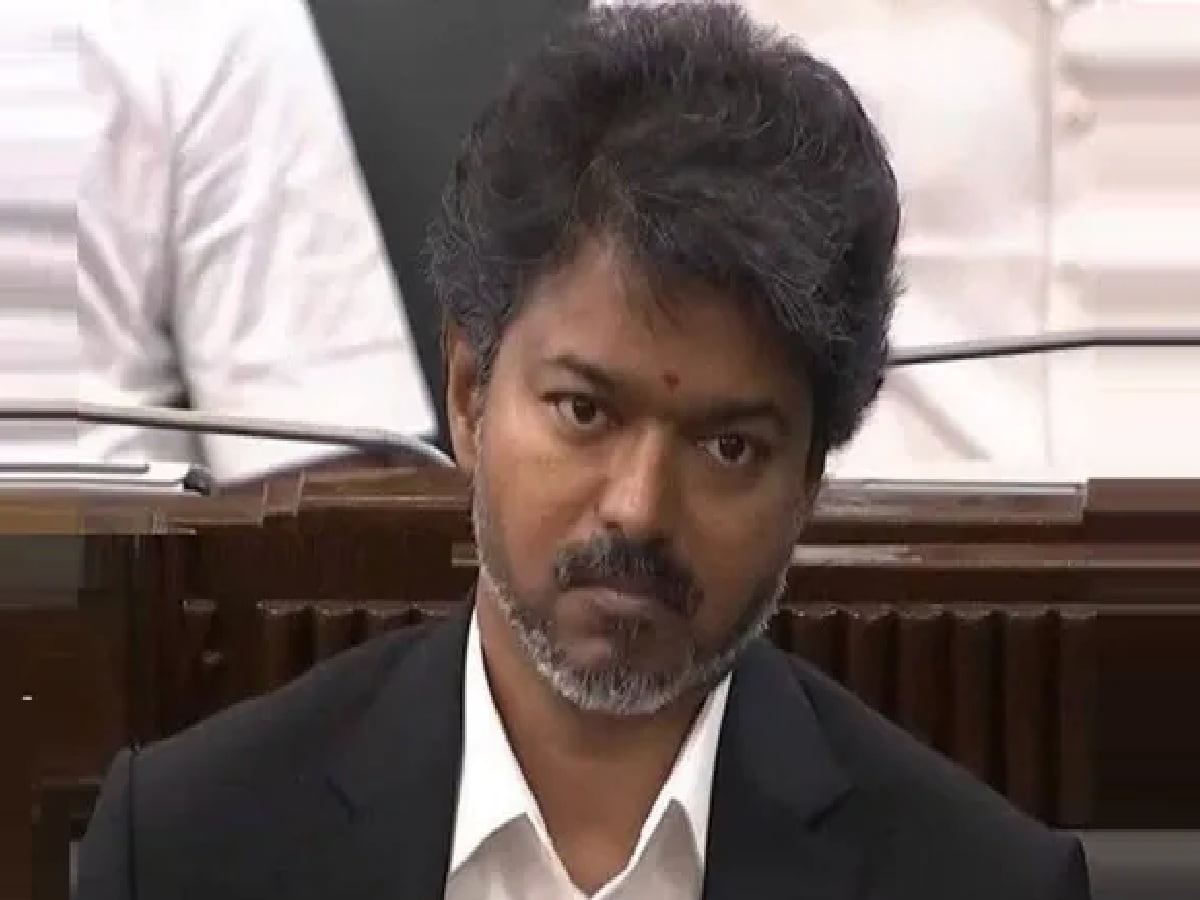
A sharp political and administrative storm has engulfed Tamil Nadu following a string of violent murders reported across the state during the Deepavali festivities. Taking serious cognizance of the deteriorating public safety narrative and intensifying opposition protests, the Union Ministry of Home Affairs (MHA) has sought a comprehensive assessment report from Tamil Nadu Governor Rajendra V. Arlekar regarding the prevailing law and order situation in the state. The central directive arrives just ahead of Governor Arlekar’s scheduled visit to New Delhi on Friday, November 13, 2026, where senior central authorities are expected to review the state’s policing response. Meanwhile, in Chennai, Chief Minister and Tamilaga Vettri Kazhagam (TVK) founder C. Joseph Vijay—who also holds the crucial Home portfolio—has moved swiftly to contain both the security fallout and internal political embarrassment. Alongside ordering statewide police crackdowns against history-sheeters and convening an emergency security review, the Chief Minister issued an unambiguous warning to ruling party legislators on Wednesday, instructing them to uphold public dignity and stay clear of controversies that tarnish the administration’s image.
Centre's Intervention: MHA Seeks Report Ahead of Governor's Delhi Trip
According to senior administrative sources in Chennai and New Delhi, the Union Home Ministry’s communication requests a detailed factual account of the violent incidents recorded across Tamil Nadu over the Deepavali period, alongside the preventive and investigative steps initiated by the state police to restore public confidence. The central intervention has injected a national dimension into an already volatile political standoff, handing fresh ammunition to principal opposition parties, including the Dravida Munnetra Kazhagam (DMK), the All India Anna Dravida Munnetra Kazhagam (AIADMK), and the Bharatiya Janata Party (BJP). Opposition leaders, led by former Chief Minister M.K. Stalin, have launched scathing attacks against the six-month-old TVK government, alleging that street-level policing has collapsed.
A fierce dispute has broken out between the ruling establishment and opposition benches over the exact number of fatalities recorded during the festival. Opposition parties have claimed that more than ten murders occurred on Deepavali alone—with some leaders citing up to fifteen killings around the holiday, including the fatal assault on a Special Sub-Inspector of Police in Theni district. Rejecting allegations of systemic lawlessness, the state administration has maintained that eight murders were recorded on the day of Deepavali, arguing that opposition tallies conflate pre-festival crimes with festive-day incidents. Senior officials noted that most cases stemmed from localized gang rivalries, personal enmities, and sudden drunken altercations rather than organized security failures. Ahead of the Governor's November 13 departure for the national capital, Chief Minister C. Joseph Vijay held an emergency law and order review with the Chief Secretary and Director General of Police (DGP) Mahesh Kumar Aggarwal, granting police field units full operational freedom to detain habitual offenders.
Tiruchirapalli Police Encounter: Double Murder Suspect Shot During Escape Bid
Even as political debates intensified in the state secretariat, Tamil Nadu Police escalated ground-level enforcement, punctuated by a dramatic custodial shooting in Tiruchirapalli district. According to district police officials, an accused identified as 21-year-old P. Sivanesan—arrested in connection with the sensational Deepavali double murder of two minor boys near Inam Samayapuram—attempted to flee police custody during an evidence-recovery and interrogation operation in the early hours of Wednesday. Police investigators had escorted Sivanesan, one of six young suspects apprehended in the case using CCTV footage and technical surveillance, to a secluded location near Samayapuram to recover lethal weapons concealed after the crime.
During the recovery procedure, Sivanesan allegedly turned violent, pelting stones and attacking police constable Mohan with a concealed weapon in a bid to break free and escape into surrounding fields. Despite repeated verbal warnings from the escort team to surrender, the suspect continued his assault. Acting in self-defense and to prevent a dangerous murder suspect from escaping, Inspector K. Gunasekaran opened fire, shooting Sivanesan in the left leg below the knee. The injured suspect was swiftly immobilized and shifted alongside injured Constable Mohan to the Mahatma Gandhi Memorial Government Hospital (MGMGH) in Tiruchirapalli. Tiruchirapalli District Superintendent of Police Dongare Pravin Umesh visited the hospital to inspect the condition of the injured constable and confirmed that strict legal procedures were followed while security around the hospitalized accused was fortified.
Discipline Crackdown: CM Joseph Vijay Warns TVK MLAs Against Misconduct
Compounding the pressure generated by the law and order scrutiny, Chief Minister C. Joseph Vijay convened a crucial closed-door meeting of TVK legislators at the party headquarters in Panaiyur on Wednesday, November 11. Addressing the assembled MLAs with visible firmness, the TVK founder issued a strict directive instructing elected representatives to stay away from controversies and refrain from any conduct that could damage the party’s public image, moral authority, and institutional dignity.
Vijay reminded the legislators that millions of voters had backed the TVK on the promise of clean, transparent, and citizen-friendly governance that breaks away from traditional political arrogance. He directed every MLA to maintain exemplary personal discipline, conduct themselves with humility in public life, and focus on resolving constituency grievances without abusing their official position. Party sources indicated that the Chief Minister underscored a zero-tolerance stance toward administrative high-handedness, warning that any legislator found misusing power or bringing disrepute to the movement would face swift disciplinary action regardless of seniority.
Legislative Controversies: Kallakurichi MLA and Deputy Speaker Under Scrutiny
The Chief Minister’s stern message on legislative ethics was prompted directly by two high-profile controversies involving ruling party lawmakers that have sparked widespread public debate across Tamil Nadu. In the first case, Kallakurichi MLA C. Arul Vignesh has been drawn into a major political row following serious allegations that he sent obscene WhatsApp messages to a woman district collector. While Arul Vignesh has publicly rejected the accusation and termed the claims a fabricated smear campaign, opposition parties and civil society groups have demanded an independent probe into the matter.
Simultaneously, Tamil Nadu Assembly Deputy Speaker and Thuraiyur MLA M. Ravishankar has come under sharp criticism after being accused of physically assaulting a resident of the Thuraiyur Assembly constituency who had approached him to raise a local civic grievance. Accounts of the alleged altercation have circulated widely on social media, putting the ruling party on the defensive over the conduct of a senior constitutional officeholder. According to senior party insiders, Chief Minister Joseph Vijay held separate, one-on-one discussions with both C. Arul Vignesh and M. Ravishankar following the legislators' meeting, seeking detailed explanations regarding their public conduct.
Governance Test: Navigating Law Enforcement and Political Accountability
The convergence of the Union Home Ministry’s law and order inquiry with internal legislative controversies marks the most significant governance test yet for Chief Minister C. Joseph Vijay’s administration since assuming office six months ago. Balancing assertive policing against violent offenders with strict ethical accountability among elected representatives is critical to preserving public trust. As Governor Rajendra V. Arlekar prepares to travel to New Delhi on November 13 to brief central authorities and opposition parties gear up to press the government inside and outside the legislature, decisive investigative outcomes and transparent internal discipline will determine how effectively the state administration weathers this political storm.




