







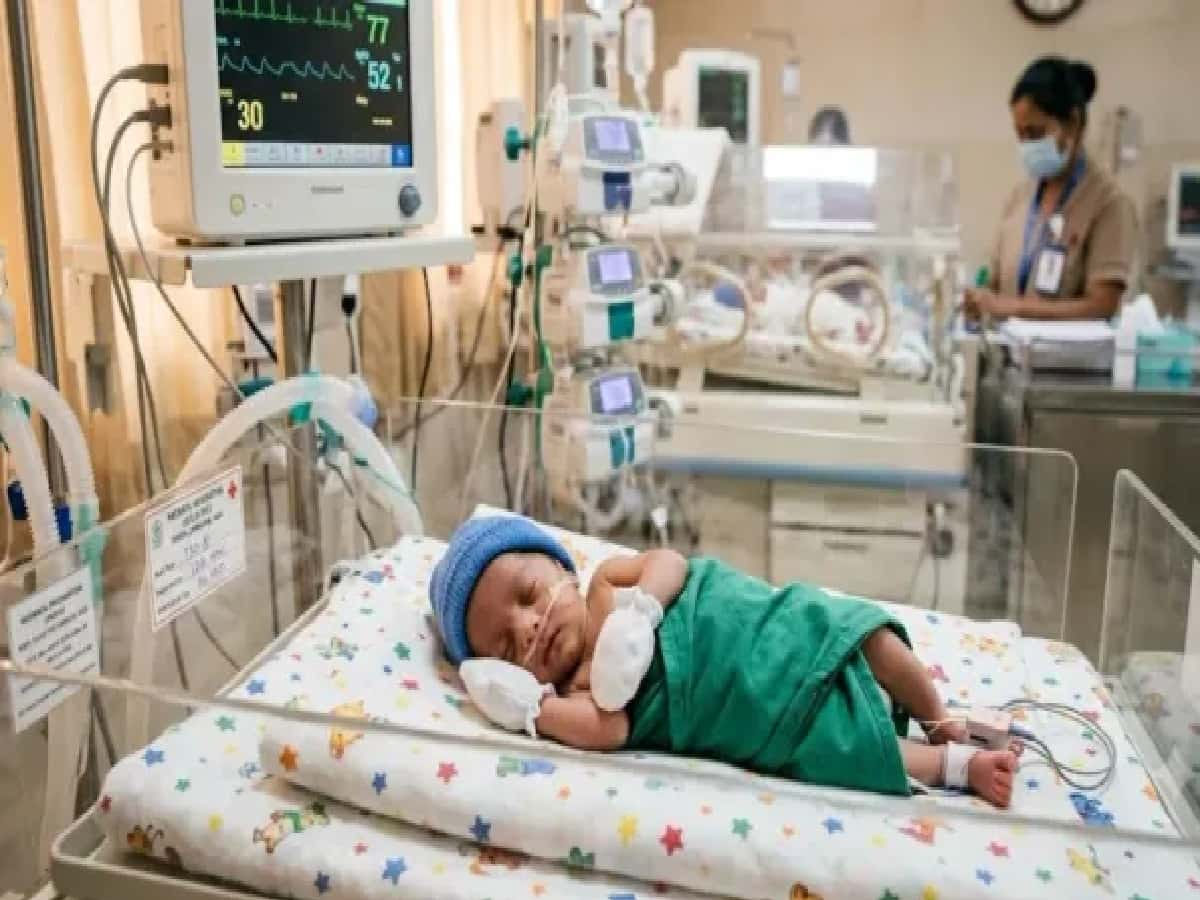
Kanpur Dehat Medical College to Build ₹1-Cr 10-Bed NICU
In a major breakthrough aimed at transforming infant survival rates and strengthening pediatric emergency infrastructure in rural Uttar Pradesh, the Autonomous State Medical College (ASMC) in Kanpur Dehat has finalized comprehensive plans to establish a state-of-the-art Neonatal Intensive Care Unit (NICU). To be constructed at an estimated capital outlay of approximately ₹1 crore within the premises of the college's Women’s Hospital wing, the proposed facility will host ten specialized intensive-care beds fitted with advanced life-support apparatus, including high-frequency mechanical ventilators, radiant warmers, phototherapy units, and multiparameter vital monitors. A detailed project proposal and budgetary estimate have been formally submitted to the Directorate General of Medical Education and Training and the state health department in Lucknow for administrative and financial sanction. Once approved, civil work and technical procurement will commence immediately, promising to deliver specialized critical care directly to neonates born with life-threatening complications across the rural heartland of the district and eliminating the dangerous practice of ferrying fragile infants across highway corridors to tertiary hospitals in neighboring cities.
Upgrading Rural Neonatal Care: A ₹1-Crore Healthcare Milestone
The initiative to build a dedicated neonatal intensive care wing at Kanpur Dehat’s apex medical institution comes at a crucial phase in the facility's institutional evolution. Situated at Kumbhi in the Akbarpur administrative block, the Autonomous State Medical College was established to bridge the stark gap between primary rural dispensaries and distant metropolitan healthcare centers. While the medical college has steadily expanded its undergraduate medical education, outpatient departments (OPDs), and general inpatient capacity, the absence of an advanced neonatal critical care ecosystem has remained a severe systemic challenge for maternity healthcare providers in the region.
Medical College Principal Prof. (Dr.) Ambrish Kumar Gupta formulated the ₹1-crore proposal after a comprehensive clinical review of neonatal admissions and distress referrals in the district. Recognizing that early intervention during the "golden hour" immediately following a complicated childbirth determines whether an infant survives without long-term neurological or physical deficits, Dr. Gupta underscored that establishing an on-campus NICU is no longer an optional institutional upgrade, but an urgent humanitarian necessity. The approaching winter season further accelerates the urgency, as plunging ambient temperatures routinely trigger an influx of respiratory infections, acute hypothermia, and neonatal distress cases that cannot be managed safely in standard maternity wards.
Critical Life-Support Infrastructure: Advanced Ventilators and Monitoring
The operational layout of the proposed 10-bed NICU has been engineered to adhere strictly to Level-III neonatal critical care benchmarks. In general hospital wards, medical staff can provide basic supplemental oxygen and warmth; however, newborns battling complex physiological breakdowns require intensive, round-the-clock biomedical interventions. According to the medical college leadership, the facility will be equipped with specialized micro-processor ventilators designed specifically for the fragile pulmonary systems of newborns, delivering synchronized intermittent mandatory ventilation and continuous positive airway pressure (CPAP) without causing lung barotrauma.
Under the initial deployment phase, the institution will install a high-end neonatal ventilator along with advanced servo-controlled radiant warmers and incubators that maintain optimal microenvironments for pre-term infants. Every single bed will feature continuous hemodynamic monitoring consoles capable of tracking heart rates, respiratory frequencies, arterial blood pressure, continuous core body temperatures, and blood oxygen saturation (SpO2) levels in real time. In addition, the facility will incorporate strict biocontainment zoning, dedicated milk-preparation stations, automated syringe infusion pumps for micro-dosing vital medications, and specialized LED phototherapy units to reverse severe neonatal hyperbilirubinemia, safeguarding critical infants from irreversible brain damage.
Battling Winter Complications: Addressing Prematurity and Hypothermia
The clinical necessity of the NICU is intimately linked to the epidemiological realities of childbirth in semi-rural agrarian communities. A substantial proportion of births in the district involve mothers hailing from economically disadvantaged backgrounds who experience nutritional deficiencies, anemia, or gestational complications. Consequently, doctors at the Women’s Hospital frequently encounter newborns suffering from severe birth asphyxia—where an infant fails to establish independent respiration immediately after delivery—as well as very low birth weight (VLBW) and extreme prematurity.
Premature infants are born with immature organ systems, compromised immune responses, and minimal subcutaneous fat, rendering them incapable of regulating their internal thermal equilibrium. As northern India transitions into chilly winter nights, environmental cold becomes an immediate threat, with neonatal hypothermia frequently leading to severe pulmonary hemorrhage, hypoglycemia, metabolic acidosis, and rapid clinical collapse. Dr. Ambrish Kumar Gupta noted that such vulnerable infants cannot survive in conventional post-natal wards, where environmental fluctuations and visitor movements elevate infection risks. The specialized NICU will provide a sterile, temperature-regulated sanctuary where trained pediatric intensivists and specialized nursing personnel maintain 24-hour observation, stabilizing volatile blood glucose levels and preventing systemic neonatal sepsis.
Ending Hazardous Inter-District Referrals to Kanpur and Lucknow
Beyond clinical mechanics, the establishment of the ₹1-crore unit carries life-saving socioeconomic implications for the rural populace of Kanpur Dehat. Historically, whenever a newborn entered respiratory failure or suffered birth-related trauma at local community health centers (CHCs) or the district hospital, doctors were forced to issue emergency referrals. Grieving and panicked parents were left with no choice but to transport unstable infants over distances of 50 to 90 kilometers along congested highways to reach tertiary hospitals such as the Lala Lajpat Rai (Hallet) Hospital in Kanpur Nagar, or further still to King George's Medical University (KGMU) and SGPGIMS in Lucknow.
These prolonged transit journeys, often conducted in ill-equipped basic ambulances without portable neonatal incubators or pediatric oxygen masks, frequently resulted in tragic transit fatalities. Furthermore, families unable to secure intensive-care beds in crowded state-run facilities in Kanpur Nagar were routinely forced into the hands of private neonatal nursing homes, incurring ruinous out-of-pocket expenses running into thousands of rupees per day. By establishing high-caliber neonatal intensive care in Akbarpur, the district administration ensures that families residing across Bhognipur, Derapur, Rasoolabad, Sikandra, and Rania tehsils can access world-class critical care within their home territory free of cost, preserving both infant lives and household financial security.
Institutional Evolution: Strengthening Tertiary Healthcare in Uttar Pradesh
The creation of the NICU at Kanpur Dehat Medical College aligns with the broader health policy roadmap implemented by the Uttar Pradesh government, which focuses on establishing robust tertiary care and medical education complexes in every district. By upgrading autonomous state medical colleges with super-specialized facilities such as pediatric trauma centers and neonatal intensive care wings, the state aims to systematically drive down its Infant Mortality Rate (IMR) and Neonatal Mortality Rate (NMR) in line with national Sustainable Development Goals.
As the file moves toward formal fiscal clearance in the state secretariat, administrative preparations are already taking shape at the Kumbhi campus to train dedicated nursing cohorts, establish biomedical waste pipelines, and configure emergency backup power systems to ensure uninterrupted ventilator function. The proposed 10-bed NICU represents more than a collection of high-tech monitors and pediatric cribs; it symbolizes a vital leap toward healthcare equity, guaranteeing that a child born in the rural hamlets of Kanpur Dehat receives the same fighting chance at life as an infant born in a premier metropolitan hospital.




