







Banda-Khurhand Train Speed Raised to 110 Kmph: NCR Jhansi Update
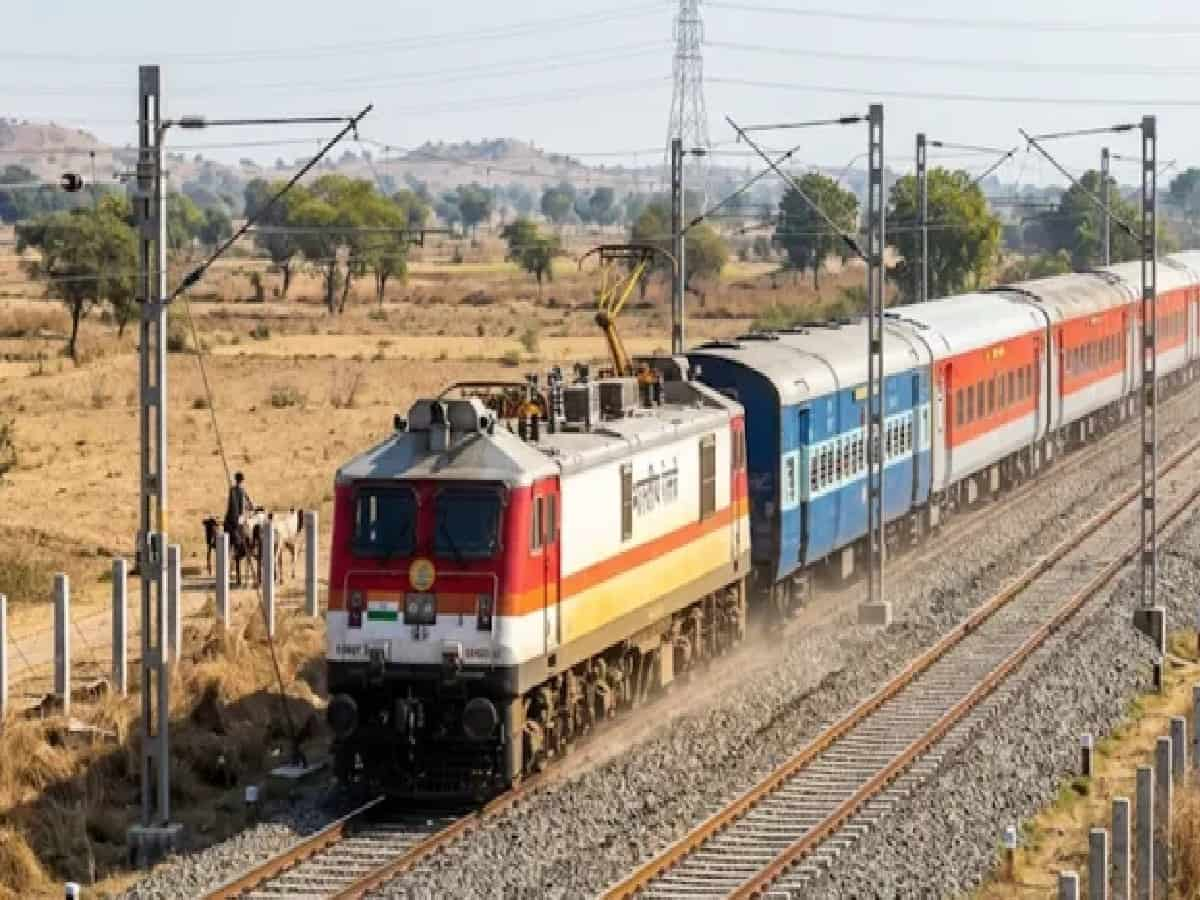
Train travel across the rugged terrain of Bundelkhand has received a major speed upgrade as North Central Railway (NCR) officially raised the maximum permissible operating speed on the newly laid double line between Banda and Khurhand to 110 kilometers per hour. Executed under the direct supervision of the Jhansi Railway Division, the speed revision applies to the newly commissioned down track along a critical 19.178-kilometer section that forms a cornerstone of the broader Khairar-Manikpur doubling and electrification corridor. Previously restricted to a ceiling of 100 km/h, the 10 km/h enhancement marks an important technical milestone in Indian Railways' mission to eliminate operational bottlenecks, reduce transit times, and bolster track capacity across southern Uttar Pradesh. The decision brings immediate benefits to thousands of daily commuters, long-distance travelers, and freight operators traversing the historic Bundelkhand corridor, transforming a once single-track bottleneck into a modern transit artery.
Operational Boost: Technical Scope of the Banda-Khurhand Doubling
The newly accelerated stretch spans precisely from kilometer marker 1320.002 at Banda station to kilometer marker 1339.180 toward Manikpur Junction. For decades, the single-line configuration of the Khairar-Banda-Manikpur route posed chronic operational challenges for railway traffic controllers, frequently forcing passenger expresses and heavy freight rakes into extended halts at wayside loop lines to allow oncoming trains to pass. The completion and subsequent speed certification of the down line between Banda and Khurhand effectively eliminates these operational choke points, permitting simultaneous bidirectional train movements and dynamic overtakes.
The speed escalation follows rigorous civil engineering upgrades, track stabilization procedures, and high-speed oscillatory trials overseen by the Commissioner of Railway Safety (CRS). Railway engineers reinforced the permanent way with heavy 60 kg/m rails laid on thick prestressed concrete sleepers, deepened the ballast cushions, adjusted curved alignments, and integrated thick-web switches designed to withstand high axle loads. Modern electronic interlocking, automated track circuiting, and upgraded overhead equipment (OHE) traction systems were installed to guarantee fail-safe signal visibility and uninterrupted power transmission for high-speed electric locomotives, paving the way for sustained, safe operations at 110 km/h.
Network-Wide Acceleration: Speed Revisions Across Jhansi Division
The upgrade between Banda and Khurhand is not an isolated improvement, but part of a systematic, division-wide mobility enhancement campaign spearheaded by the Jhansi Railway Division. Across multiple strategic sections linking Uttar Pradesh and Madhya Pradesh, track parameters have been comprehensively upgraded to permit passenger trains to operate at higher velocity thresholds. On the Lalitpur-Mohasa section, the permissible speed has been increased from 120 km/h to 130 km/h, significantly speeding up transit along the key north-south trunk route.
Similar technical strides have been achieved on several other high-density stretches within the division. The newly constructed third line between Jhansi and Datia, as well as the crucial Morena-Hetampur section, has seen maximum operating speeds jump from 110 km/h to 130 km/h. Furthermore, commercial trains have now been authorized to clock 130 km/h on the Antari-Sandalpur section. By systematically eliminating speed restrictions, deploying flash-butt welded long rails, and utilizing mechanized track tamping machines, North Central Railway is progressively transforming the regional network into a high-speed corridor capable of supporting premium semi-high-speed express services.
Punctuality and Sectional Capacity: Insights from DRM Anirudh Kumar
Addressing the strategic significance of these infrastructure upgrades, Divisional Railway Manager (DRM) Anirudh Kumar highlighted that raising track velocity goes far beyond shaving minutes off individual timetables. According to the DRM, higher sectional speeds directly enhance train punctuality across both passenger and goods sectors by allowing locomotives to recover lost time swiftly in the event of minor en-route delays. When trains clear block sections faster, the line headway decreases substantially, generating additional path capacity on routes that historically operated well above 100 percent saturation.
DRM Anirudh Kumar explained that expanding line capacity allows the railway administration to operate additional passenger services, including high-demand MEMU shuttle trains for daily commuters, while accommodating rising freight traffic without congesting main lines. Furthermore, the presence of a fully functional double track enables engineering divisions to conduct routine track maintenance and safety audits during daylight hours without completely shutting down train movement, preserving system safety while ensuring passenger services run strictly on schedule.
Regional Transformation: Economic and Commuter Impact on Bundelkhand
The acceleration of the Banda-Khurhand rail section carries profound economic and social ramifications for the wider Bundelkhand region, encompassing the districts of Banda, Chitrakoot, Mahoba, and Hamirpur. Historically considered one of the most economically disadvantaged regions in northern India, Bundelkhand has long suffered from infrastructure deficits that hindered industrial investment and tourism. The modernization of the Khairar-Manikpur line directly connects local agricultural centers and mining hubs to major commercial markets in Kanpur, Prayagraj, Jhansi, and Jabalpur.
For the regional economy, accelerated rail transit provides an immediate boost to the transportation of mineral resources, such as silica sand, riverbed aggregates, and granite, as well as seasonal agricultural products like pulses and oilseeds. Freight rakes carrying cement from the industrial belts of Satna and Rewa can now traverse the Banda corridor with far greater turnaround efficiency. On the passenger front, the speed boost brings smoother, faster connectivity for hundreds of thousands of pilgrims traveling toward the sacred pilgrimage city of Chitrakoot Dham Karwi, as well as domestic and international tourists heading toward the UNESCO World Heritage site of Khajuraho.
Sustainable Growth: A Stepping Stone for Modern Railway Transit
The transition of the Banda-Khurhand section to 110 km/h represents a vital stepping stone in the broader transformation of Indian Railways into a green, high-capacity transport backbone. With 100 percent electrification already implemented along the route, higher train speeds translate into improved energy efficiency, reduced locomotive idle times, and a measurable decrease in carbon emissions compared to road-based transport. Local residents and commuter associations in Banda and Khurhand have welcomed the development, noting that faster train links reduce their dependency on congested highway corridors while providing an affordable, punctual mode of travel.
As the Jhansi Railway Division continues to push forward with its remaining doubling and signaling modernization projects across the Manikpur and Bhimsen lines, the region is rapidly shedding its image of backwardness. The successful commissioning of higher speeds between Banda and Khurhand stands as concrete proof that modern railway engineering is actively redefining the socio-economic geography of Uttar Pradesh, knitting together remote rural outposts with bustling national economic corridors.




