







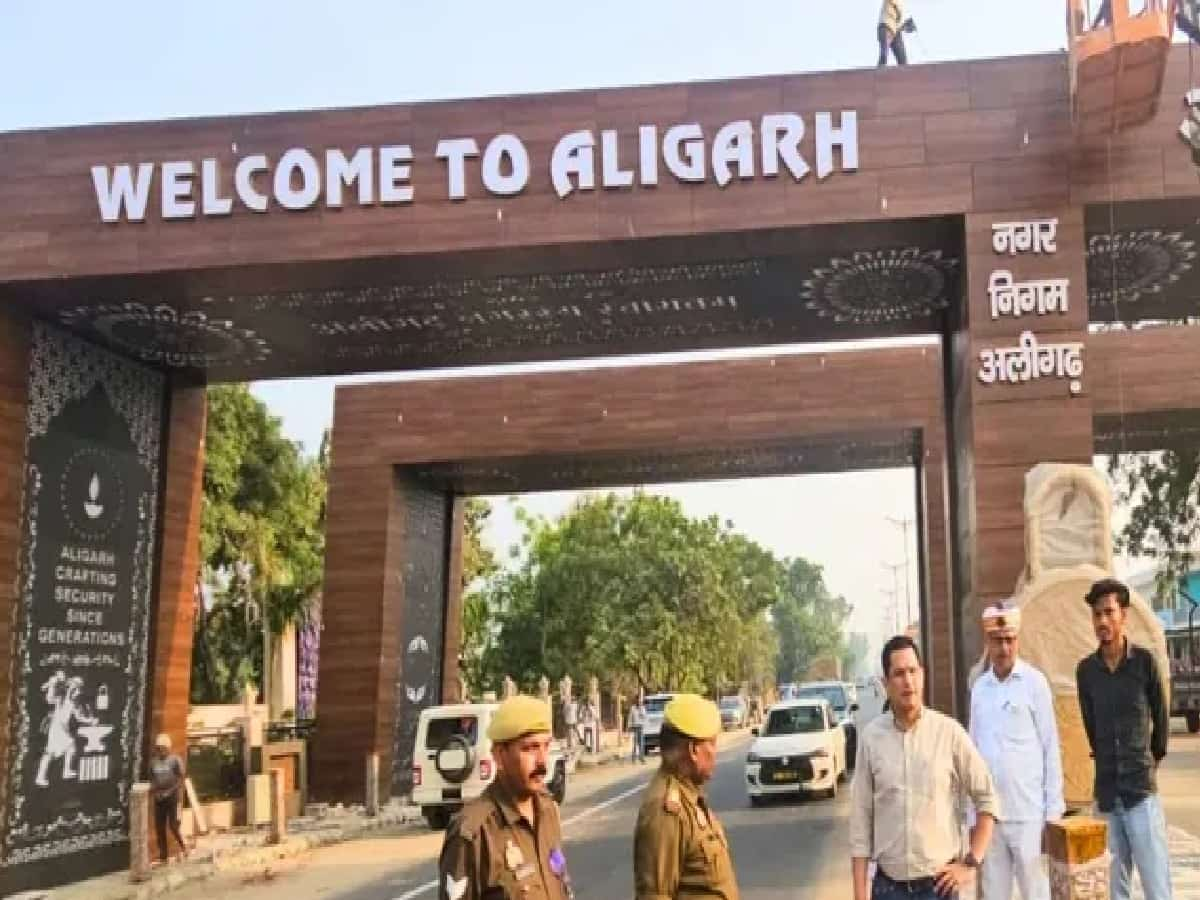
Aligarh's ₹72-Cr Welcome Corridor to Open on November 18
The historic industrial hub of Aligarh is on the verge of unveiling a major urban transformation designed to modernize its civic infrastructure while celebrating its centuries-old cultural legacy. Municipal authorities have completed the final phases of the ambitious "Welcome-to-Aligarh Corridor," a comprehensive civic development project constructed at an aggregate cost of ₹72.23 crore under the Smart City Mission. Scheduled for formal public inauguration on Wednesday, November 18, 2026, the corridor establishes a grand architectural entrance to the city alongside a 7-kilometer arterial road-widening initiative. Ahead of the official commissioning, Aligarh Municipal Commissioner Prem Prakash Meena conducted an extensive on-site inspection on Friday to assess civil structural integrity, security integrations, and aesthetic landscaping. As finishing touches are applied across Bhukrawali, Sutmil Square, and Nada Bridge, the completed corridor stands to redefine the city’s image from a congested manufacturing cluster into a progressive, well-connected urban center.
Grand Gateway at Bhukrawali: Architectural Tribute to Talanagari
The visual centerpiece of the newly constructed corridor is the monumental "Welcome to Aligarh" entrance gate erected at Bhukrawali along the Grand Trunk Road, executed by the Aligarh Municipal Corporation at a dedicated cost of ₹2.23 crore. Rising 26 feet into the skyline with a sweeping width of 102 feet, the entrance structure was engineered using approximately 60 metric tons of structural steel to withstand adverse environmental conditions. The gateway pays homage to Aligarh’s international reputation as "Talanagari" (the City of Locks), an artisanal identity that has anchored the local economy for generations. Installed prominently atop the portal are two handcrafted metal locks, each weighing around 200 kilograms, complemented by ornate ceremonial brass keys finished in lustrous gold tones.
Beyond its industrial symbolism, the architecture incorporates India's spiritual and literary heritage. The supporting stone columns are engraved with sacred Sanskrit shlokas extracted from the Bhagavad Gita and the Devi Bhagavata Purana, harmonizing contemporary engineering with classical cultural values. Nearby, an artisan plaza features a life-sized sculpture of a traditional craftsman seated with lock-making tools alongside a miniature terrestrial globe, illustrating the global reach of indigenous brassware. A curated selfie pavilion and pedestrian seating plaza have been arranged around the base, transforming what was once an ordinary transit point into an engaging public landmark for travelers.
Smart City Road Widening: 7-Kilometre Connectivity Upgrade
Complementing the architectural gate is an extensive infrastructure overhaul that addresses chronic vehicular congestion at the city’s primary entry arteries. Executed under the Smart City Project, the road-widening component spans two critical geographical stretches totaling nearly 7 kilometers. The first phase encompasses a 2.2-kilometer corridor extending from the heavily trafficked Sutmil Square to Nada Bridge, while the second phase widens a 4.7-kilometer arterial route connecting Sutmil Square directly to the Bhukrawali entrance gate.
For years, these transit stretches suffered from bottlenecking, heavy commercial freight traffic, and uneven road surfaces that hindered daily commuter mobility between industrial zones and the city center. The engineering teams widened the carriageways into multi-lane asphalt corridors equipped with reinforced storm-water drainage channels to prevent waterlogging during the monsoon season. Modernized intersections, reinforced road medians, high-visibility retro-reflective signage, and clearly demarcated pedestrian crosswalks have been installed along the entire 7-kilometer network. This infrastructure upgrade significantly cuts transit times between the outskirts and the urban core, streamlining freight movement for brassware exporters while providing safer daily travel for local commuters.
High-Tech Surveillance: ICCC Monitoring and Dedicated Police Outpost
Public safety and intelligent traffic management have been built directly into the operational framework of the Welcome-to-Aligarh Corridor. Municipal Commissioner Prem Prakash Meena highlighted that high-resolution, weatherproof Closed-Circuit Television (CCTV) cameras have been strategically deployed along the gateway pillars and surrounding road stretches. These optical sensors are integrated in real-time with the Integrated Command and Control Center (ICCC) located at the city's Habitat Center. Automated number plate recognition (ANPR) and live optical feeds will allow civic administrators and traffic police to monitor vehicular density, trace suspicious movement, and quickly identify traffic infractions without disrupting vehicle flow.
To bolster ground-level enforcement, the district administration has established a dedicated police outpost (chauki) adjacent to the welcome gate. Staffed around the clock, this facility will ensure continuous surveillance over interstate transport, maintain orderly vehicular movement during peak festival periods, and offer immediate emergency assistance to stranded motorists. The intersection of modern physical security with intelligent digital monitoring creates an efficient checkpoint that guarantees public safety without impeding commerce along the bustling GT Road corridor.
Urban Beautification: Green Belts, LED Illumination, and Public Amenities
The corridor design moves beyond raw civil construction by incorporating environmental aesthetics and pedestrian-centric urban planning. The gateway structure and its surrounding boulevards have been equipped with an advanced architectural illumination network featuring over 1.68 lakh energy-efficient LED fixtures. During evening hours, programmed illumination washes the arches, calligraphy, and metal sculptures in warm tones, creating an attractive visual entrance for travelers arriving after dusk.
Along the 7-kilometer transit stretch, civic teams developed continuous green belts lined with drought-resistant ornamental shrubbery, flowering beds, and shade trees encased in protective metal tree guards. Decorative ceramic planters and vertical greenery have been introduced along median dividers to absorb vehicular emissions and reduce particulate matter. Pedestrian walkways are lined with artistic murals depicting regional folklore, freedom fighters, and traditional handicraft techniques, offering visitors a cultural narrative of the region. Well-maintained public conveniences, water kiosks, and landscaped rest areas complete the public amenity package, establishing a welcoming civic standard for arriving guests.
Transforming Urban Identity: Economic and Cultural Revival for Aligarh
The November 18 commissioning of the Welcome-to-Aligarh Corridor marks an important milestone in western Uttar Pradesh’s regional development strategy. Historically celebrated for its lock craftsmanship, hardware manufacturing, and the academic heritage of Aligarh Muslim University, the city is positioning itself as a modern manufacturing hub along the Uttar Pradesh Defence Industrial Corridor and the Delhi-Kanpur economic belt. Civic leaders emphasize that modernizing the primary physical entrance of the city is essential for cultivating investor confidence, boosting domestic tourism, and instilling local civic pride.
By delivering a ₹72.23-crore project that blends heritage identity with modern infrastructure and intelligent digital surveillance, the Aligarh Municipal Corporation and Smart City Mission have established a practical model for tier-two urban rejuvenation. As the final countdown to the November 18 ribbon-cutting begins, the Welcome-to-Aligarh Corridor stands ready to serve not merely as an access road, but as a gateway to economic expansion, technological progress, and cultural continuity for the entire region.




