







3 Dead as Overloaded Bus Overturns on Lucknow-Agra Expressway
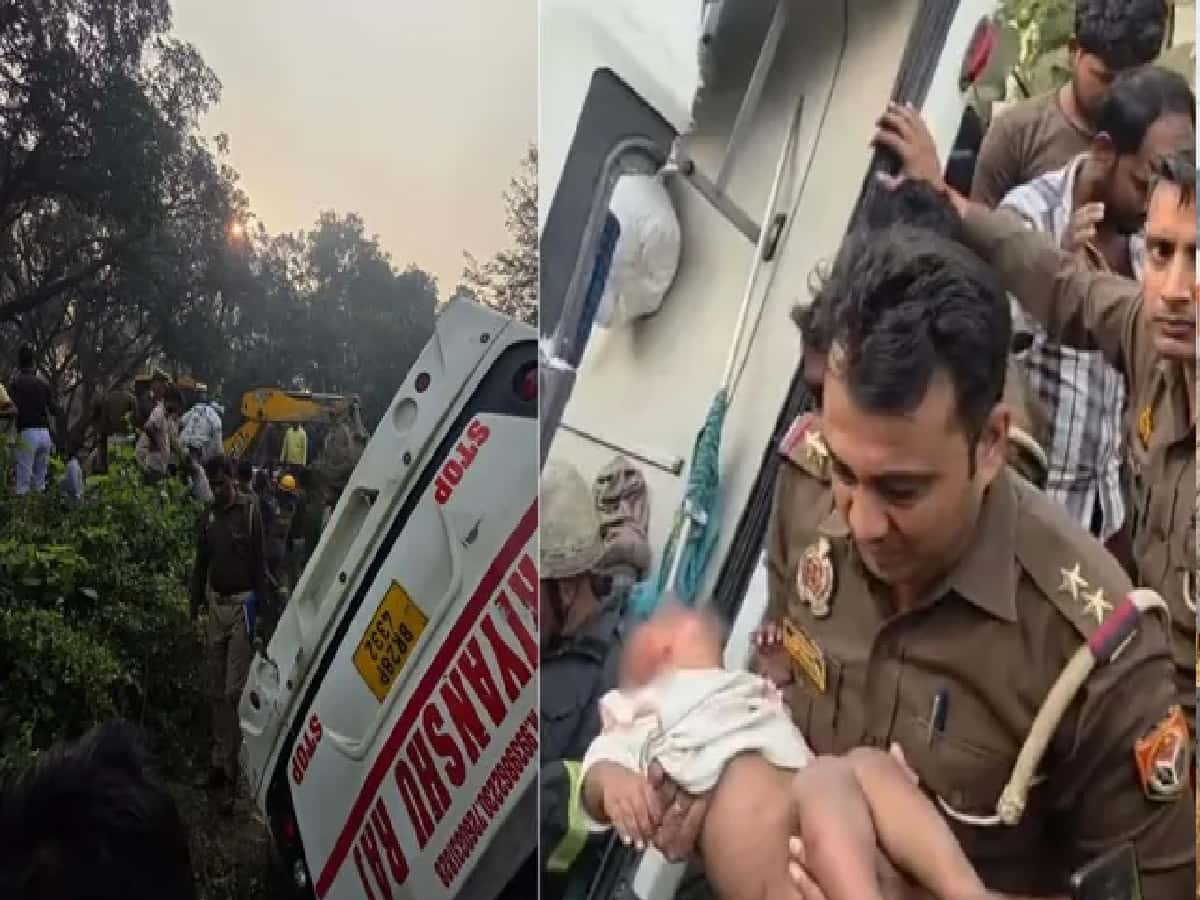
A devastating road accident turned the morning commute into a scene of horror on the Lucknow-Agra Expressway on Monday, November 9, 2026, when an overloaded double-decker passenger bus veered out of control, smashed through the steel crash barriers, and plunged into a 25-foot-deep roadside ravine. The tragic incident, which took place around 7:00 AM near Zero Point Mohan under the jurisdiction of the Lucknow Police Commissionerate, claimed the lives of three passengers and left thirty-five others severely injured. The ill-fated private bus, bearing registration number BR 28 P 4332, was carrying approximately 65 passengers—including women and young children—traveling from the industrial hub of Rewari toward Chhapra in Bihar. The casualty toll and the scale of the wreckage have exposed glaring lapses in interstate transport enforcement, as official records confirmed that the vehicle was operating with a sanctioned capacity of only 41 seats, transporting nearly two dozen passengers beyond its legally authorized limit at high speeds along one of India’s most prominent expressway corridors.
Horror at Zero Point Mohan: How the Dawn Crash Unfolded
The early morning journey along the high-speed transit corridor took a fatal turn as the vehicle approached the Mohan interchange on the outskirts of the state capital. Eyewitness accounts and preliminary technical assessments suggest that the bus was traveling at a high velocity when the driver abruptly lost directional control, possibly triggered by a sudden mechanical failure, extreme drowsy driving following an overnight run, or an evasive maneuver. Unable to stabilize the heavy vehicle, the bus violently struck the expressway's safety railing, tearing through the metal barriers before rolling multiple times down the steep embankment and landing upside down in the deep ditch below.
The violent impact shattered the bus frame, crushing the upper passenger berths and leaving dozens of commuters pinned inside the compressed wreckage. The calm of the autumn morning was shattered by frantic screams for help as survivors struggled to extricate themselves from the inverted cabin. Luggage, broken glass, and structural debris were strewn across the slope, while many victims were rendered unconscious after falling on top of one another during the rollover. Passing motorists immediately alerted the expressway emergency patrol and the local police control room, setting off a rapid multi-agency emergency response.
Swift 35-Minute Rescue: Tactical Deployment of the MDRV
Responding to distress calls with immediate urgency, specialized rescue teams from the Uttar Pradesh Police and the fire department converged at Zero Point Mohan to launch a coordinated life-saving operation. Under the direct leadership of Chief Fire Officer (CFO) Ankush Mittal, high-capacity fire engines and tactical rescue units were mobilized from the Alambagh Fire Station, specialized support vehicles were rushed from Sarojini Nagar, and the district’s flagship state-of-the-art Multi Disaster Rescue Vehicle (MDRV) was dispatched from Hazratganj to manage the complex structural extraction.
Upon arriving at the scene, rescue personnel confronted a precarious operational environment, with the crushed metal shell of the bus threatening to collapse further into the mud. Utilizing advanced hydraulic cutters, spreaders, and metal shears from the MDRV, firefighters cut through warped window frames and peeled back buckled roofing sheets to reach passengers trapped in the interior berths. In an intensive operation lasting approximately 35 minutes, emergency teams successfully extricated between 15 and 16 critically trapped passengers, including a terrified young child who was pulled from the mangled wreckage uninjured. Stretcher teams formed human chains along the slippery 25-foot slope, carrying the wounded up to a fleet of waiting government ambulances positioned along the expressway shoulder.
Casualties and Critical Care: Emergency Action at Lokbandhu and KGMU
Following the swift extraction, emergency medical teams triaged the victims and transported thirty-five injured passengers to Lokbandhu Rajnarayan Combined Hospital in Lucknow for immediate stabilization. Despite aggressive resuscitation efforts by attending emergency doctors, three male passengers were pronounced dead. Deputy Commissioner of Police (West) Jitendra Srivastava confirmed the identities of two of the deceased as 63-year-old Shankar Rajjak and 43-year-old Shamli Rai, both residents of Chhapra district in Bihar. The third victim, an unidentified male aged approximately 35 years, succumbed to severe blunt-force trauma, with administrative teams initiating identification procedures through personal belongings and fellow passengers.
Due to the severity of internal hemorrhages, compound fractures, and traumatic head injuries, attending physicians at Lokbandhu Hospital referred seven critically injured patients to the advanced Trauma Center at King George’s Medical University (KGMU) for specialized neurosurgical and orthopedic interventions. Several other victims with moderate lacerations and fractures remain admitted under continuous observation at Lokbandhu Hospital, while one passenger, identified as Shubham, was discharged after receiving primary wound treatment. Taking immediate cognizance of the tragedy, Uttar Pradesh Deputy Chief Minister Brajesh Pathak and Lucknow Police Commissioner Tarun Gaba visited the hospital wards to monitor medical arrangements. Deputy Chief Minister Pathak interacted with the injured commuters, assured them of state-sponsored treatment facilities, and instructed the hospital administration to ensure round-the-clock intensive care without requiring families to bear treatment expenses.
Enforcement Probe: Overloading Violations and Interstate Permit Scrutiny
The fatal crash has cast a sharp spotlight on the rampant violation of vehicular passenger capacities on long-distance interstate routes connecting the industrial belts of Haryana and Rajasthan with the eastern plains of Bihar. Following orders from senior administrative officials, Regional Transport Office (RTO) Enforcement Officer Prabhat Pandey and Assistant Regional Transport Office (ARTO) Enforcement Officer Alok Kumar Yadav arrived at the accident site to inspect the mechanical condition and regulatory paperwork of the ill-fated vehicle.
The technical inspection revealed that while the bus maintained valid third-party insurance, a current pollution under control certificate, and an active fitness certificate, it was operating in flagrant violation of passenger safety regulations. While the bus was officially registered to seat a maximum of 41 passengers, the transport department confirmed that approximately 65 travelers were crammed inside the passenger cabin and modified sleeper berths. Investigators are currently auditing the vehicle's national permit documentation, examining whether the interstate contract carriage permit authorized the specific operational route and stopping points. Transport officials noted that private bus operators frequently capitalize on festival travel surges and migrant passenger movements, packing cabins far beyond permissible weight thresholds. This reckless overloading compromises vehicle balance, strains suspension systems, and substantially elevates braking distances at high speeds, creating high-risk conditions on modern expressways.
Expressway Safety and the Urgency of Systematic Toll Enforcement
The disaster at Zero Point Mohan serves as a somber reminder of the pressing need for stringent surveillance and strict weight checks at the entry plazas of access-controlled highways across northern India. The Lucknow-Agra Expressway, built to facilitate rapid, seamless transit across central Uttar Pradesh, has repeatedly witnessed catastrophic high-speed collisions exacerbated by driver exhaustion, vehicle overloading, and unauthorized passenger seating arrangements.
Highway safety experts and local commuters have urged the Uttar Pradesh Expressways Industrial Development Authority (UPEIDA) and transport enforcement squads to implement automated passenger head-count sensors and dynamic weigh-in-motion systems at all toll gates. Halting overloaded commercial carriers before they enter high-speed corridors is vital to averting similar tragedies. As the families of Shankar Rajjak and Shamli Rai grieve the untimely loss of their loved ones and doctors battle to stabilize the injured at KGMU, the Mohan accident stands as an urgent wake-up call for regulatory agencies to hold negligent private bus operators accountable and ensure that passenger safety is never compromised for commercial gain.




