







Agra Voter List Revision: 6 Lakh Names Cut, 83 Booths Reduced
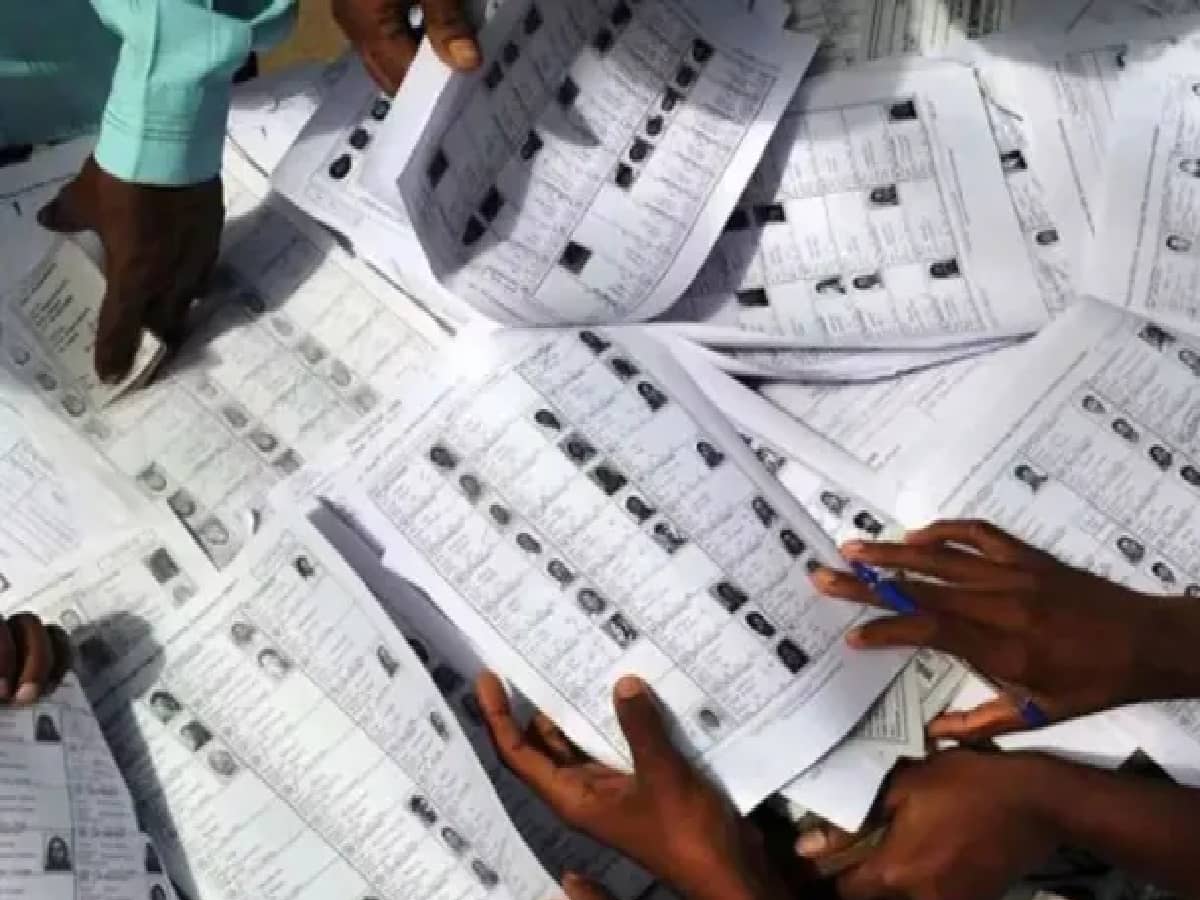
In one of the most comprehensive electoral roll cleanups in western Uttar Pradesh in more than two decades, the district administration of Agra has concluded a historic Special Intensive Revision (SIR) drive across all nine assembly constituencies. The exhaustive demographic audit, undertaken after a gap of twenty-three years under the directives of the Election Commission, has resulted in the deletion of approximately six lakh (600,000) duplicate, deceased, and permanently migrated entries from the district's voter database. As a direct consequence of this massive reduction in the registered voting population, the district election machinery has carried out a parallel rationalisation of polling stations, leading to a net reduction of 83 polling booths. Following the completion of field surveys, Agra district now hosts a total of 3,849 operational polling booths, strictly adhering to the revised ceiling that caps the voter strength at a maximum of 1,200 electors per booth to ensure seamless polling management.
Landmark Voter Revision: Inside Agra's Massive Electoral Cleanup
The execution of the Special Intensive Revision marks a significant watershed for local administrative governance in the Taj city and its surrounding rural belts. For over twenty-three years, the district electoral machinery had largely relied on summary revisions, which, despite routine annual updates, frequently allowed ghost entries, double registrations across rural-urban boundaries, and unverified deceased records to linger on the rolls. Rapid urbanization along the Delhi-Agra highway, outward expansion in areas bordering Fatehpur Sikri and Shamshabad, and continuous rural-to-urban migrations within the district had further complicated the accuracy of voter lists over the years.
To resolve these long-standing discrepancies, field teams initiated an exhaustive ground-level enumeration drive, surveying residential localities, housing colonies, and village panchayats to reconcile physical residents with digital electoral records. The resulting elimination of six lakh unverified names represents one of the largest single-phase voter roll purifications in recent memory. By removing phantom and untraceable entries, the exercise eliminates artificial voter inflation, ensuring that future election turnouts reflect genuine democratic participation while preventing procedural vulnerabilities on polling day.
Booth Rationalisation: District Count Drops to 3,849 Polling Stations
Following the sharp decline in registered electors, the State Election Commission instructed the Agra district administration to conduct a rigorous physical survey of existing polling locations to optimize human resources, security logistics, and electronic voting machine (EVM) deployment. Announcing the culmination of the rationalisation process, Deputy District Election Officer Yamunadhar Chauhan confirmed that 83 surplus polling booths have been officially decommissioned across the nine assembly seats, bringing the total tally down to 3,849 booths.
Central to this restructuring is the strict enforcement of the statutory threshold set by the election authorities, which dictates that no single polling booth can accommodate more than 1,200 registered voters. In previous election cycles, overcrowded urban booths often hosted in excess of 1,400 to 1,500 voters, resulting in serpentine queues, extended waiting times in extreme heat, and severe logistical strain on polling staff. Under the reorganized framework, electors have been redistributed systematically into neighboring stations within the same polling center premises. This redistribution eliminates congestion, guarantees equitable footfall distribution, and enhances accessibility for elderly citizens, disabled voters, and women.
Demographic Breakdown: 29.85 Lakh Voters Across Nine Assembly Seats
Following the intensive revision, the finalized electoral roll reveals a streamlined voter base of 29.85 lakh (2,985,000) electors distributed across the nine assembly segments of Agra district. A demographic breakdown of the revised rolls highlights significant gender and social compositions. Male voters form the majority with 16.35 lakh registered electors, while female voters stand at 13.50 lakh. In addition, the district has officially enrolled 83 third-gender voters, reflecting ongoing outreach initiatives aimed at inclusive civic participation among marginalized communities.
The distribution of the 3,849 polling booths across the nine assembly constituencies reflects the varying population densities of Agra’s urban and rural geography. Etmadpur assembly constituency leads the district with the highest allocation of 514 polling booths, driven by its expansive geographical expanse and peri-urban growth. It is followed closely by Agra Rural with 476 booths and the historically dense Agra Cantt. constituency with 468 booths. In the commercial and residential hubs of the city center, Agra North houses 434 booths, while Agra South accounts for 384 booths. Moving toward the agricultural belts and border constituencies, Fatehpur Sikri is configured with 413 booths, Fatehabad with 398 booths, Kheragarh with 387 booths, and Bah constituency concludes the tally with 375 polling booths.
Ground Mission for 3,849 BLOs: Correcting Errors and Enrolling Youth
To prevent legitimate voters from being inadvertently disenfranchised during such an extensive roll contraction, the administration has activated a robust ground correction mechanism. A dedicated cadre of 3,849 Booth Level Officers (BLOs)—matching the exact number of sanctioned polling stations—has been deployed across all urban wards and rural village circles. These officers are tasked with conducting door-to-door verifications to identify any genuine residents whose names might have been omitted during the survey, as well as rectifying typographical errors in existing voter identity cards.
The BLOs are actively screening for clerical discrepancies involving misprinted names, incorrect house numbers, swapped photographs, and erroneous age entries. Concurrently, a special administrative campaign is underway to target young adults who have recently reached the voting age of 18, utilizing Form 6 to ensure rapid enrollment into the digital register. College campuses, vocational training institutes, and village panchayat offices across Agra have been integrated into this registration drive, ensuring that first-time voters are seamlessly integrated into the democratic fold ahead of upcoming civic and legislative electoral challenges.
Electoral Transparency: What the 23-Year Overhaul Means for Democracy
The successful completion of Agra’s Special Intensive Revision establishes a critical benchmark for modern electoral administration, reflecting how contemporary data analytics and field verification can work hand-in-hand to safeguard electoral integrity. For administrative machinery and law enforcement agencies, operating with verified voter rolls drastically minimizes polling-day frictions, simplifies logistical planning for paramilitary deployments, and prevents procedural challenges by polling agents representing competing political parties.
More importantly, this sweeping overhaul enhances administrative efficiency across Uttar Pradesh's second-largest urban cluster. By aligning polling infrastructure with the actual physical presence of citizens, the district administration ensures that public resources are not squandered on redundant booths, while genuine citizens enjoy a smoother, more transparent voting experience. As Booth Level Officers continue their door-to-door rectification mission across Etmadpur, Agra Cantt., Fatehpur Sikri, and Bah, the purified voter registry stands as an essential foundation for fair, credible, and robust democratic engagement in the region.




