desk
desk Share
Share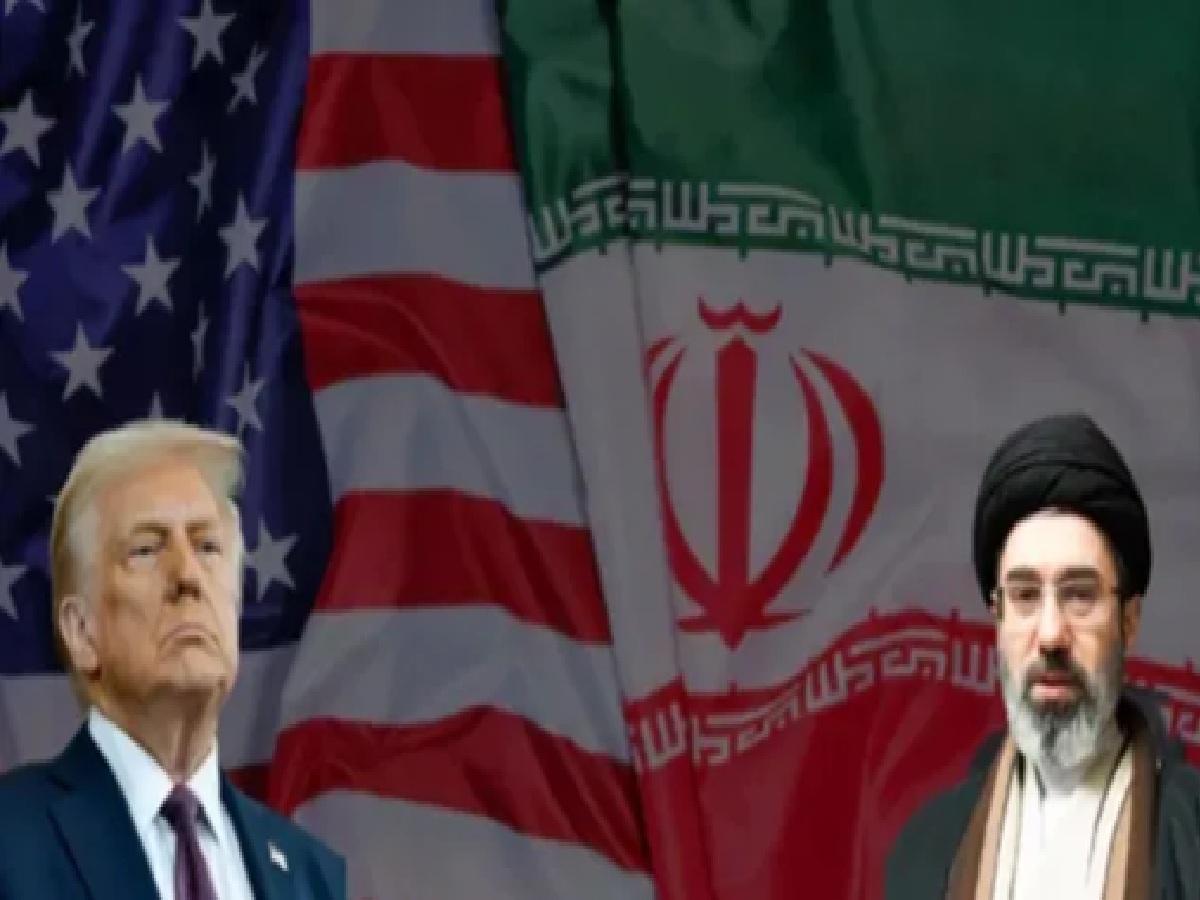
News Topical, Digital Desk : 21 hours of face-to-face talks between the US and Iran in Islamabad ended inconclusively on Saturday, casting a shadow over the fragile two-week ceasefire that expires on April 22.
According to US officials, the talks failed because Iran was unwilling to make a clear commitment not to pursue nuclear weapons. Iran, meanwhile , blamed the breakdown on unreasonable US demands. Frustrated by the failure of the talks, US President Donald Trump has ordered the Navy to begin a blockade of the Strait of Hormuz.
Trump threatens countries around the world
Trump has warned countries around the world that any country that pays Iran a toll to cross the Strait of Hormuz will be denied passage. Meanwhile, both sides blamed each other for the failure of the talks. US Vice President J.D. Vance stated that the US must ensure that Iran neither develops nor develops nuclear weapons.
What did Pakistan say when the talks failed?
Meanwhile, Iranian Parliament Speaker Mohammad Baqer Ghalibaf said the US now must decide whether it can win Iran's trust. Pakistan's Foreign Minister Eshaq Dar, who has been mediating the talks, said his country would try to facilitate new talks between the two sides and that maintaining the ceasefire was essential.
What was the proposal for talks?
The two sides arrived at the talks with different proposals. Iran's 10-point proposal demanded an end to the war and control of the Strait of Hormuz, while the US's 15-point proposal included provisions to monitor and limit Iran's nuclear program.
After nearly 40 days of fierce military conflict between the United States, Israel, and Iran, US President Donald Trump announced a two-week ceasefire on April 7. Following this, talks for a peace agreement between the two sides began on Saturday at the Serena Hotel in Islamabad, brokered by Pakistan.
Final agreement could not be reached
Three rounds of talks lasted 21 hours, ending at 6 a.m. local time. However, the talks were called off after no concrete results were reached. According to Reuters, Vice President J.D. Vance, who led the US side in the talks, told the media after the talks that the two sides reached agreement on some issues, but a final agreement was not reached.
What did America want?
Vance said the situation is worse for Iran, and the US delegation is returning without a deal. He explained that the US had made its red lines clear and shown flexibility on issues where possible, but Iran did not accept the US conditions.
He reiterated that Tehran wanted a concrete commitment not to develop nuclear weapons or related capabilities. According to Vance, the US has made a "final and best offer," and it remains to be seen whether Iran accepts it.
Iran blames America
According to Reuters, Iran's chief negotiator and parliament speaker, Mohammad Baqer Ghalibaf, blamed the US for the failure of the talks. He said that during the 21-hour talks, Iran presented visionary proposals, but the US failed to gain trust. He did not provide details, but according to Iranian state media, the nuclear program and guarantees of access to the Strait of Hormuz were the main issues of disagreement.
Foreign Ministry spokesman Esmail Baghaei stated that while understandings were reached on some issues, differences remained on two or three key topics. He added that an immediate agreement was not expected given the atmosphere of distrust following the 40-day war. According to Iranian sources, the ball is now in America's court, and Iran is in no hurry.
Trump said, talks with Iran were good
According to the New York Times, Trump stated that Vice President J.D. Vance had briefed him on the talks with Iran in Islamabad. He said the talks went well, with agreement reached on most issues, but only one issue, related to the nuclear program, remained unresolved.
The US President also said that the points reached with the Iranian leadership were better than continuing military operations to the end. Trump said that all of these considerations were insignificant compared to handing over nuclear energy to such unstable, difficult, and unpredictable people.
He stated that Iran will never be allowed to acquire a nuclear weapon. "We are fully prepared to deal with Iran," he said. He claimed that the US military could quickly finish the remaining work in Iran. The US is ready to take action at the appropriate time.
Trump also stated that the US Navy will not allow ships that pay Iranian tolls to pass through the Strait of Hormuz. Several other countries will also assist in this effort.
What does Iran want?
Let us tell you that in the terms of the agreement with America, Iran not only wants a guarantee of its rights over the Strait of Hormuz, but is also talking about imposing a fee on the commercial ships passing through it.
Trump said the Navy has been instructed to intercept all ships in international waters that pay "illegal tolls" to Iran. Any ship that does so will be denied safe passage. Trump said Iran had promised to open the Strait of Hormuz but has not fulfilled its promise.
Three rounds of talks continued throughout the night.
Earlier, delegations from both countries met with Prime Minister Shahbaz Sharif in Islamabad, according to PTI. The Pakistani side previously held separate meetings with both parties and exchanged messages.
The Pakistani delegation was also present at all levels of the talks, including Foreign Minister Ishaq Dar, Army Chief Field Marshal Asim Munir, and Home Minister Mohsin Raza Naqvi.
Following the exchange of messages, the first round of face-to-face talks between the two sides began, lasting approximately two and a half hours. In the next phase, a one-hour break was taken and the technical aspects of the demands presented by both sides were discussed at the expert level. The exchange of messages on technical aspects continued late into the night.
However, by Sunday morning it became clear that the differences could not be resolved, leading US Vice President JD Vance to announce in a brief press conference that the talks had ended without an agreement.
Sources said Pakistan remains hopeful for further rounds of talks, although no date or venue has been set yet. The Pakistani government had previously stated that it would continue to play a mediating role and expressed hope that the talks would be a step toward resolving the dispute.
Attacks in Lebanon, six killed The situation in Lebanon appears to be worsening. Despite the ceasefire, Israel continues to attack Hezbollah positions. According to a Lebanese government agency, six people were killed in an attack near the southern city of Tyre on Sunday.
--Advertisement--