desk
desk Share
Share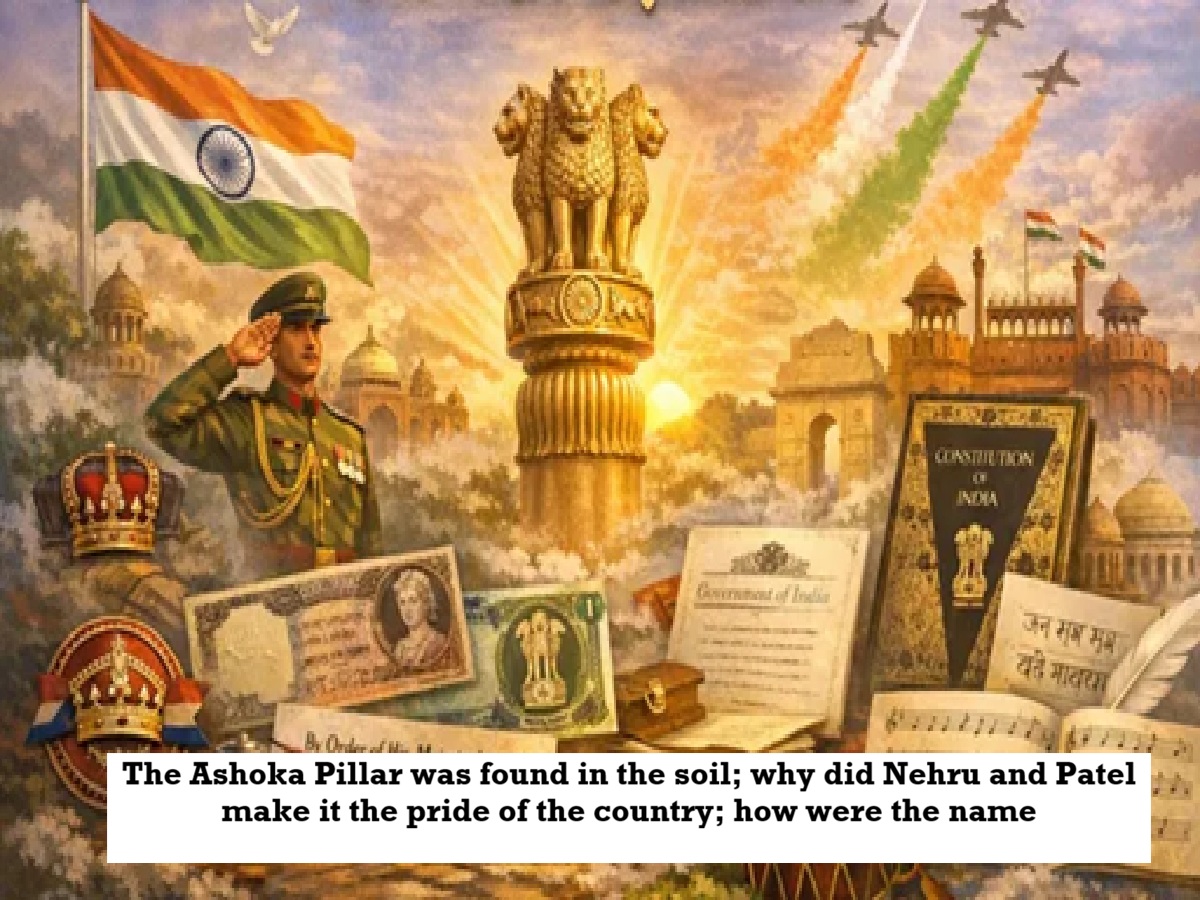
News Topical, Digital Desk : The morning of January 26, 1950, was no ordinary morning. The sky was shrouded in fog and the air was chilly, but that very day marked India's golden sunrise. Exactly two years, five months, and 11 days after independence, not only was the Constitution implemented that morning, but the names, currency notes, seals, flags, and symbols associated with the nation's identity also changed.
On that day, the stamp of British rule was erased from the seals of government offices and courts. The word "Royal" was removed from the military's name. The British Crown was removed from uniforms.
The Queen's image on banknotes became history. Letterheads bearing the words "By Order of His Majesty the King…" were no longer useful. The lyrics to "God Save the Queen" were also gradually forgotten.
Gradually, the Ashoka Pillar began to appear on Indian military uniforms, government documents, seals, and banknotes. The tricolor began to fly across the country, replacing the British flag, the Union Jack. "Government of India" appeared on letterheads for the first time. "Jana Gana Mana" was adopted as the national anthem and "Vande Mataram" as the national song.
The Constitution, the Ashoka Pillar, the "Satyameva Jayate" (truthful victory) and the tricolor—these were not mere changes, but a declaration that India was now a republic of citizens. Here, not individual whims, but the Constitution would rule.
The change began with a question
India gained independence on August 15, 1947, but military uniforms, currency, seals, flags, and government documents still bore the imprint of its colonial past. Soon after independence, a Constituent Assembly questioned whether independent India would continue to be governed by the symbol of the "Royal Crown."
The answer came, "No. The Royal Crown, the Union Jack, and colonial symbols will not remain in independent India. India must have its own indigenous and civilizational symbols."
Well, it took time to change the country's identity. It took nearly two and a half years to decide whether the face of the new India would be the Taj or the Ashoka Pillar.
Sardar Vallabhbhai Patel believed
The symbols of any nation are the basis of people's self-respect. If we continue to run the country with pre-independence symbols, the feeling of slavery will not go away from the people's minds.
Which names were proposed for the national emblem?
The process of changing the country's identity began. Debates then began over which symbol should replace the Royal Crown badge. Some leaders wanted religious symbols such as the Dharmachakra, a cow, images of gods and goddesses, and Om (ॐ), while others proposed modern symbols such as a factory, a globe, a crowd, a handshake, and electricity and a dam.
Leaders like Pandit Nehru, Sardar Patel and Dr. Bhim Rao Ambedkar rejected all these suggestions and said that the national emblem should reflect Swadeshi, civilization and secularism.
--Advertisement--