







What Is Sirsopta in Chhath Puja, Sacred Altar & Rituals
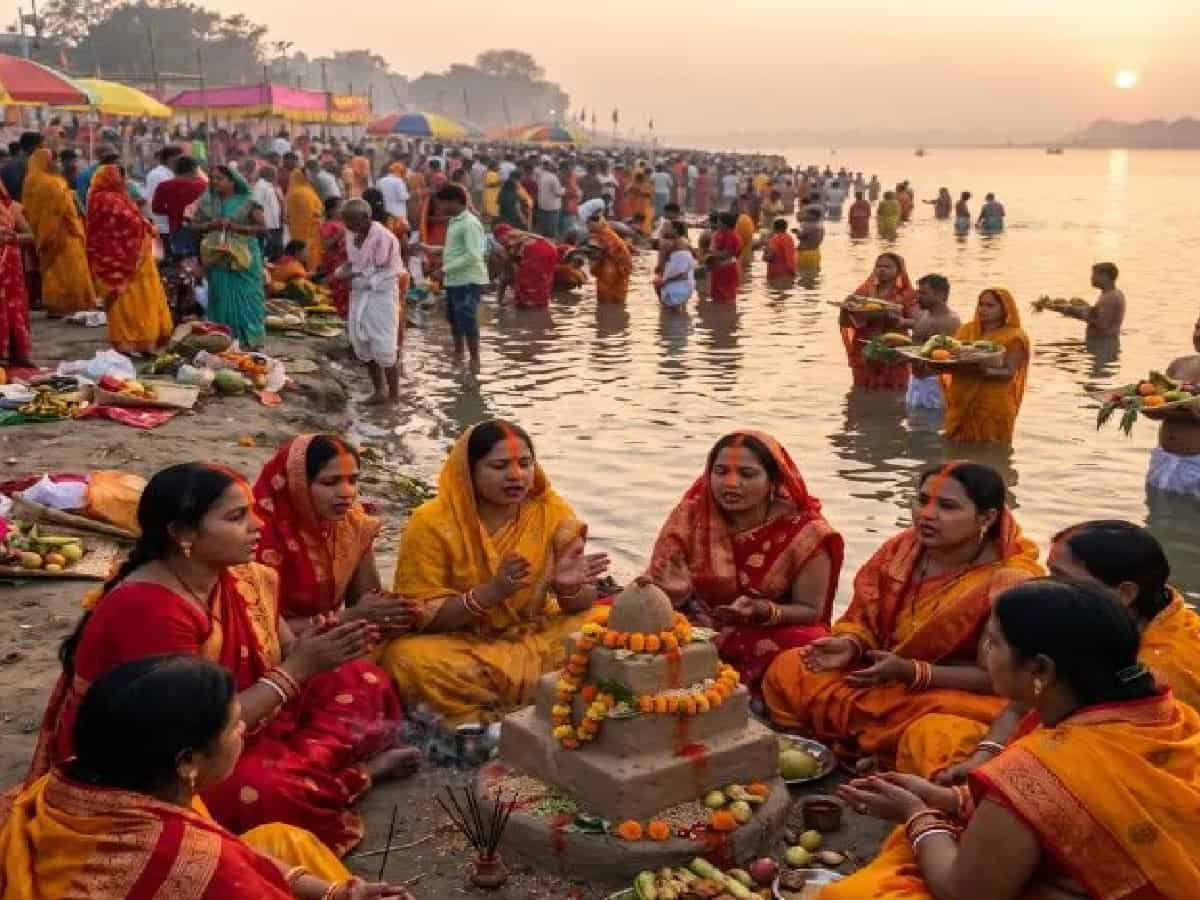
As the festive rhythm of northern India transitions from the sibling celebrations of Bhai Dooj toward the grandest ascetic festival of the folk calendar, the riverbanks and pond ghats across Bihar, Jharkhand, and eastern Uttar Pradesh are being prepared for Chhath Mahaparva. From the serene banks of the Gomti in Lucknow to the sacred currents of the Ganga in Patna and Varanasi, millions of devotees will congregate between November 13 and November 16, 2026, to offer their devotion to the Sun God and Chhathi Maiya. While the most recognizable visual of Chhath involves fasting women, known as Vratis, standing waist-deep in water to offer arghya to the setting and rising sun, another deeply sacred and ancient ritual unfolds right on the shoreline. Along the steps of the ghats, women gather around intricate earthen mounds sculpted from wet river clay, anointing them with vermilion and singing folk melodies deep into the evening and early dawn. Known in regional dialects as "Sirsopta," this traditional shrine serves as a central devotional altar during the four-day festival, carrying centuries of oral folklore, feminine solidarity, and spiritual reverence.
The Sacred Clay Altar: Decoding the Meaning of Sirsopta
In the vernacular cultural geography of Purvanchal and Bihar, the term Sirsopta (often pronounced as Sirsopta or Sirsopata) designates a sanctified earthen altar crafted directly on the soil or river silt by devotees. Far from being a random mound of dirt, it is carefully sculpted in the form of a stepped, pyramidal pedestal or an elevated rectangular miniature shrine that represents the terrestrial throne and symbolic form of Chhathi Maiya—the goddess Shashti, who is revered as the divine sister of the Sun God and the supreme protector of children.
Once the wet clay is shaped, devotees treat the Sirsopta as a living sanctum sanctorum on the riverbank. The structure is coated with a paste of freshly ground raw rice flour known as pithar, an auspicious white base upon which bold vertical streaks of vibrant red and orange vermilion (sindoor) are ceremoniously applied. Around this sacred earthen mound, devotees place lit clay lamps filled with pure mustard oil or cow ghee, incense sticks, bunches of raw bananas, stalks of turmeric and ginger, betel leaves, unbroken areca nuts, and grains of holy akshat. Fasting women and their female relatives sit in a circle surrounding the Sirsopta, making it the focal point of domestic rituals before and after they enter the cold water to present their offerings to the sun.
Chhath Mahaparva 2026: Key Dates and Auspicious Timings
The sacred observance of Chhath Mahaparva in 2026 unfolds across four rigorous days of physical cleansing, mental discipline, and continuous prayers, beginning on Shukla Paksha Chaturthi and culminating on Shukla Paksha Saptami in the Hindu month of Kartik.
The spiritual journey commences on Friday, November 13, 2026, with the ritual of Nahay-Khay. On this inaugural day, Vratis take a purifying bath in holy water bodies, clean their households thoroughly, and consume a single satvik meal of bottle gourd curry (kaddu-bhat) and chana dal cooked in brass or earthen utensils without onions or garlic. The second day, Kharna, falls on Saturday, November 14, 2026, marking the beginning of the rigorous 36-hour nirjala (waterless) fast. On Kharna evening, devotees prepare a sacred offering of jaggery-infused rice pudding (rasiao-kheer) and handmade rotis on an earthen stove using mango wood, partake of it in absolute silence, and distribute it as prasad.
The high point of the festival arrives on Sunday, November 15, 2026, with the observance of Sandhya Arghya (evening offering). Devotees carry bamboo winnows (soop) and baskets (daura) loaded with thekua, sugarcane, and seasonal fruits to the decorated river ghats to offer oblation to the setting Sun God. The festival concludes at dawn on Monday, November 16, 2026, with Usha Arghya, where prayers are offered to the radiant rays of the rising sun, after which the fasting women break their 36-hour fast by drinking ginger water and raw milk, sharing festive blessings across the community.
The Vigil and the Melodies: Why Women Gather Beside the Shrine
One of the most moving aspects of Chhath is the nocturnal vigil kept beside the Sirsopta. While some devotees return home after the evening arghya, many families—especially those who have pledged special vows—remain at the ghat throughout the night or return during the early hours of the morning to sit beside the clay shrine. Surrounded by canopies of whole sugarcane stalks tied together at their leafy tops, women sit cross-legged on reed mats, keeping the lamps burning and singing traditional Maithili, Magahi, and Bhojpuri folk songs that have been passed down orally across generations.
These folk melodies, popularized globally by legendary vocalists like the late Sharda Sinha, are far more than musical performances; they are heartfelt conversations with the divine mother. The lyrics narrate the emotional pleas of mothers praying for the longevity and health of their offspring (santati ki dirghayu), the prosperity of their households, and the well-being of their brothers and husbands. Songs like "Kelwa ke paat par uga ho surajdev" and "Kaanch hi baans ke bahangiya" reverberate across the river banks, their melancholic yet uplifting cadences creating an atmosphere of deep spiritual devotion. The women believe that sitting beside the Sirsopta while singing these hymns invites the benevolent presence of Chhathi Maiya to rest upon their offerings, infusing their families with divine protection and wiping away lingering sorrows.
Standing in Water vs. Bowing to Sirsopta: Cosmic and Terrestrial Harmony
Visitors observing Chhath often wonder whether there is a theological contradiction between standing deep in the river currents and sitting onshore to worship the Sirsopta. In reality, the two rituals represent two complementary dimensions of the same cosmic philosophy: the worship of the celestial visible deity and the reverence for terrestrial maternal nature.
When a Vrati stands waist-deep in flowing water facing the horizon, she is offering direct veneration to Surya Dev as Pratyaksha Devata—the visible embodiment of cosmic light, solar energy, and life force. Water acts as a purifying medium that conducts this solar energy directly to the human body, cleansing the practitioner’s energetic aura. Conversely, the Sirsopta represents the earth element (Prithvi Tattva) and the maternal aspect of creation embodied by Shashti Devi, the sixth creative power of nature. While the sun sustains cosmic life, Chhathi Maiya nurtures human lineages, protecting infants in the womb and granting children health and fortune. By balancing the solar oblation in water with the earthen veneration at the Sirsopta, the devotee honors both the celestial heavens and the fertile earth, uniting cosmic fire and earthly soil into a unified spiritual prayer.
Kosi Bharna and Regional Heritage Across UP and Bihar
The reverence shown to the Sirsopta is intimately intertwined with the elaborate domestic ritual known as Kosi Bharna or Kosiya. Performed by families when a long-cherished prayer—such as the birth of a child, recovery from a severe illness, or a major family milestone—is fulfilled, the Kosi ceremony transforms the area around the Sirsopta into a miniature forest of abundance. Devotees craft an earthen canopy using four or five tall sugarcane stalks with leaves intact, beneath which a multi-tiered clay elephant (haathi) is installed alongside dozens of earthen oil lamps.
In eastern Uttar Pradesh, spanning districts like Gorakhpur, Deoria, Ballia, Azamgarh, and the residential communities along the Gomti River in Lucknow, the tradition of Sirsopta underscores the deeply egalitarian and collective nature of Chhath. Unlike traditional temple rituals that require the mediation of institutional priests, the sculpting of the Sirsopta, the arrangement of the offerings, and the chanting of the hymns are conducted entirely by the women of the family. Every woman, regardless of social background, is welcomed to sit beside the altar, apply the sacred orange sindoor extending from the bridge of the nose to the hairline, and join in the sacred choruses. As Chhath Mahaparva approaches in mid-November 2026, the humble earthen Sirsopta stands as an enduring monument to feminine faith, ecological reverence, and the unbreakable cultural roots of the Purvanchal and Bihari diaspora.




