







Bhai Dooj 2026: Why Sisters Apply Tilak, Shubh Muhurat & Story
Discover why sisters apply tilak on Bhai Dooj 2026, the auspicious muhurat timings on November 11, the legend of Yamraj and Yamuna, and sacred rituals.
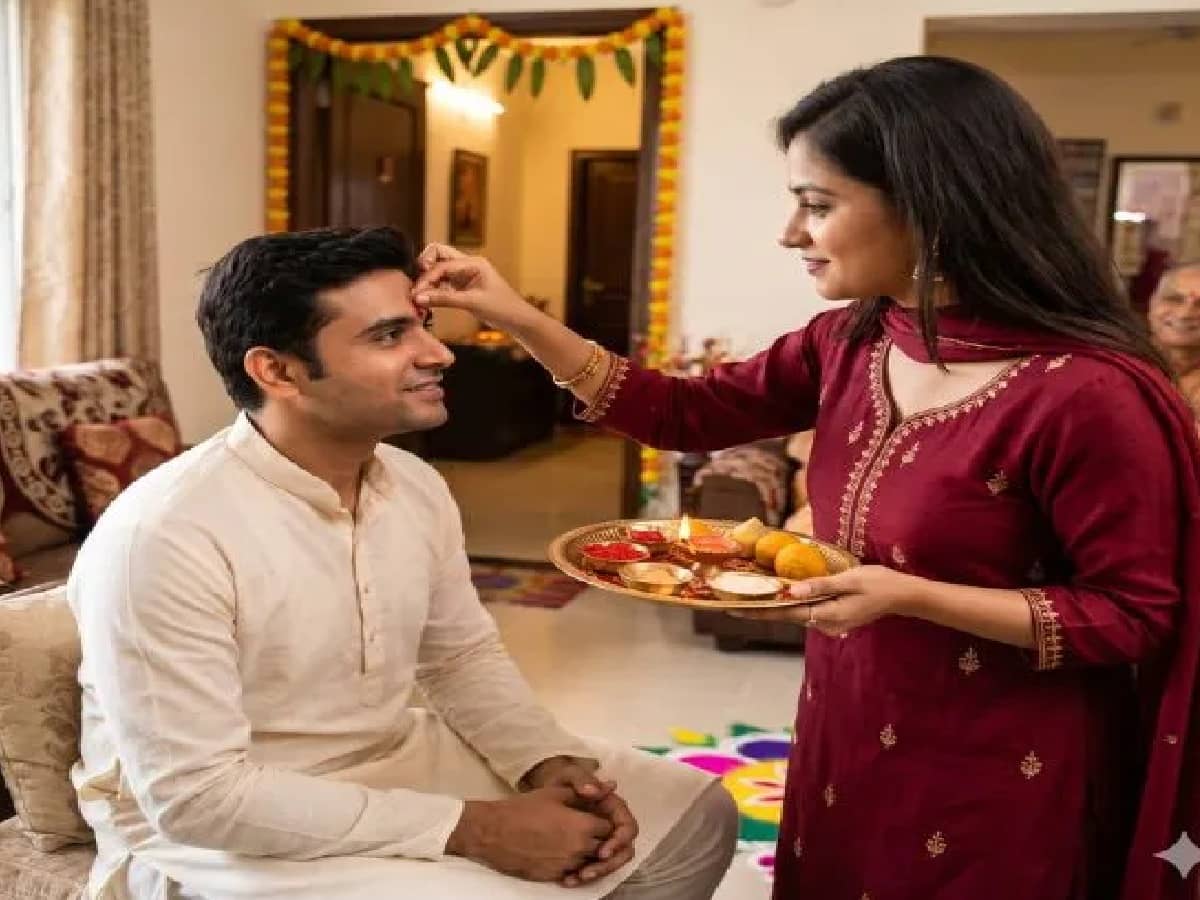
As the earthen diyas of Diwali and the pastoral celebrations of Govardhan Puja draw to a close, households across India are preparing to observe the final and emotionally profound chapter of the five-day Deepavali festive cycle: Bhai Dooj. Celebrated with immense reverence across the Northern plains, particularly within the historic cultural corridors of Uttar Pradesh spanning Lucknow, Ayodhya, Varanasi, and the Brij heartland, the festival honors the sacred and unbreakable bond shared between brothers and sisters. Known variously as Yama Dwitiya, Bhratri Dwitiya, and Bhai Phota, this revered festival mirrors the affectionate spirit of Raksha Bandhan while carrying its own unique domestic rituals. On this auspicious day, sisters invite their brothers home, seat them on decorated wooden platforms, apply a ceremonial mark of vermilion and unbroken rice to their foreheads, perform a protective aarti, and pray for their longevity, health, and prosperity. Yet behind this tender ritual lies an ancient Puranic decree dating back thousands of years—a sacred narrative that explains why anointing a brother’s brow with holy sandalwood and roli is believed to grant immunity from untimely distress and divine protection from mortality itself.
Auspicious Timings: Shubh Muhurat for Bhai Dooj 2026 Tilak
Navigating the astronomical calendar for 2026 requires careful alignment with the lunar transits of the Hindu panchang. According to Vedic astrological calculations, the festival of Bhai Dooj is observed on the Pratipada-concluding second lunar day, known as the Dwitiya Tithi of the Shukla Paksha in the holy month of Kartik. In the year 2026, the auspicious tithi prevails during the daytime on Wednesday, November 11, 2026, marking it as the official date for conducting all festival ceremonies.
Vedic scholars and religious calendar authorities emphasize that performing the tilak ceremony during the designated Aparahna Muhurat—the auspicious afternoon window—yields the highest spiritual efficacy. For Bhai Dooj 2026, the primary auspicious time (Shubh Muhurat) for applying the tilak commences at 01:10 PM in the afternoon and extends until 03:20 PM. This provides families with an ideal window of two hours and ten minutes to conclude the sacred rituals. Astrologers advise that sisters and brothers conclude their fasting and festive ceremonies within this afternoon window, as the cosmic planetary alignments during this period are considered exceptionally auspicious for strengthening familial harmony and bestowing long life.
The Sacred Lore: How Yamraj and Yamuna Conceived Yama Dwitiya
The foundational mythological origins of Bhai Dooj are recorded in the ancient Puranas, rooted in the divine relationship between Lord Yamraj, the cosmic arbiter of justice and god of death, and the holy river goddess Yamuna. Both were celestial siblings, born as the divine children of Lord Surya Dev (the Sun God) and his consort Sandhya (Saranyu). While Yamraj was burdened with the eternal responsibility of managing the afterlife and evaluating the karmic deeds of mortal souls across the cosmos, Yamuna flowed across the earthly plane with boundless compassion and maternal grace.
Despite her brother's consuming cosmological duties, Yamuna continually sent messages inviting Yamraj to visit her home on earth, longing to serve him a home-cooked meal. However, Yamraj’s perpetual obligations across the realms of mortality prevented him from answering her calls. Finally, on the auspicious day of Kartik Shukla Dwitiya, Yamraj arrived at Yamuna’s serene dwelling along the riverbank. Overjoyed by her brother’s sudden arrival, Yamuna welcomed him with boundless joy, washed his feet with holy water, applied an auspicious tilak to his forehead to ward off negative influences, and laid out an elaborate feast of sanctified delicacies.
Deeply touched by his sister’s unconditional love, selfless hospitality, and affectionate prayers, Yamraj felt profound contentment. Before taking his departure, the god of death invited Yamuna to ask for any celestial boon her heart desired. Demonstrating divine magnanimity, Yamuna did not ask for wealth or personal boons; instead, she sought a blessing that would protect humanity for eternity. Yamuna asked that any brother who visits his sister’s home on this sacred day, partakes of food lovingly prepared by her hands, and receives her sacred tilak should be shielded from the fear of untimely demise (Akal Mrityu), spared from the torment of the Yamadutas, and blessed with peace, longevity, and flourishing worldly prosperity. Moved by her noble wish, Yamraj granted the boon instantly, establishing the eternal tradition of Yama Dwitiya.
The Spiritual Alchemy: Why the Tilak Protects the Brother
The application of the tilak is far more than a decorative festive adornment; it is a profound spiritual act anchored in esoteric yogic science and Vedic symbolism. When a sister applies the tilak on her brother’s forehead, she places it directly upon the Ajna Chakra, also known as the Third Eye or the seat of intuitive consciousness. In yogic philosophy, this sacred energy vortex regulates mental clarity, emotional steadiness, and spiritual vitality. By anointing this precise center, the sister awakens protective cosmic vibrations around her brother’s being.
The materials utilized in preparing the ceremonial tilak carry specific energetic properties. Pure Roli (sacred vermilion made from turmeric and lime) represents dynamic spiritual vitality, life-force energy, and auspiciousness. Fragrant Chandan (sandalwood paste) is applied alongside the vermilion to impart mental serenity, cool aggressive temperaments, and protect the mind from worldly anxieties. Over this mixture, the sister places grains of Akshat—unbroken raw rice grains. In Sanskrit, "Akshat" translates literally to that which cannot be destroyed or broken; its presence on the brow signifies wholeness, resilience against physical harm, and an unending cycle of abundance. Completing the ritual, the sister places a dry coconut (gola or shrifal) into her brother’s hands, a sacred offering that symbolizes divine fullness, fruitful health, and perpetual prosperity.
The Aarti and Bhaiya Bhoj: Celebrating at the Sister's Abode
A critical cultural distinction that differentiates Bhai Dooj from Raksha Bandhan lies in the direction of the journey. While Raksha Bandhan frequently sees sisters visiting their maternal homes to tie the sacred thread, Bhai Dooj tradition explicitly mandates that the brother must travel to the residence of his sister, especially if she is married. In regional folk culture, this custom is known as Bhaiya Bhoj. The act of the brother crossing thresholds to enter his sister’s matrimonial home honors her sovereign authority as a homemaker and reaffirms that she remains a cherished pillar of her birth family.
Once the brother arrives, the sister seats him facing either east or north, directions aligned with positive solar energy. After applying the sacred tilak and placing the dry coconut in his hands, she takes a polished brass plate containing a burning ghee lamp, fresh flowers, and sweets to perform the protective Aarti. Circulating the sacred flame in a clockwise motion before her brother’s countenance, the sister recites ancient mantras to cast away negative energies (drishti dosha) and misfortune. Following the aarti, she feeds him traditional festive sweets with her own hands. In return, the brother presents thoughtful gifts, clothing, or financial tokens of affection, bowing before elder sisters to seek their blessings and reaffirming his lifelong pledge to support and protect her dignity through every season of life.
Cultural Resonance in Uttar Pradesh: Living Heritage Across the Yamuna
Across the northern state of Uttar Pradesh, Bhai Dooj holds a place of deep cultural reverence that unites urban metropolises and pastoral rural villages. In cities like Lucknow, the occasion brings families together across generations, filling homes with the traditional aroma of festive delicacies like gujiya, malpua, and seasonal vegetable preparations cooked with affectionate care. The festival serves as an indispensable social fabric that bridges geographical distances, bringing siblings together amidst demanding modern routines.
Nowhere is the spiritual intensity of this festival more vivid than in Mathura, the sacred Brij city situated on the banks of the Yamuna River. On the day of Yama Dwitiya, hundreds of thousands of pilgrims and sibling pairs gather at the historic Vishram Ghat. Following an ancient tradition believed to cleanse all sins and eliminate the fear of mortality, brothers and sisters hold hands and take a simultaneous holy dip in the sacred waters of the Yamuna River before performing mutual prayers at the adjacent Yamraj-Yamuna temple—the only temple of its kind where the deities are worshipped together. As families celebrate on November 11, 2026, the timeless festival of Bhai Dooj stands as an enduring testament to the beauty of sibling affection, proving that love, gratitude, and mutual prayer remain humanity’s most powerful shields against the uncertainties of life.




