







Govardhan Puja: Why Cow Footprints Are Drawn at Home Entrances
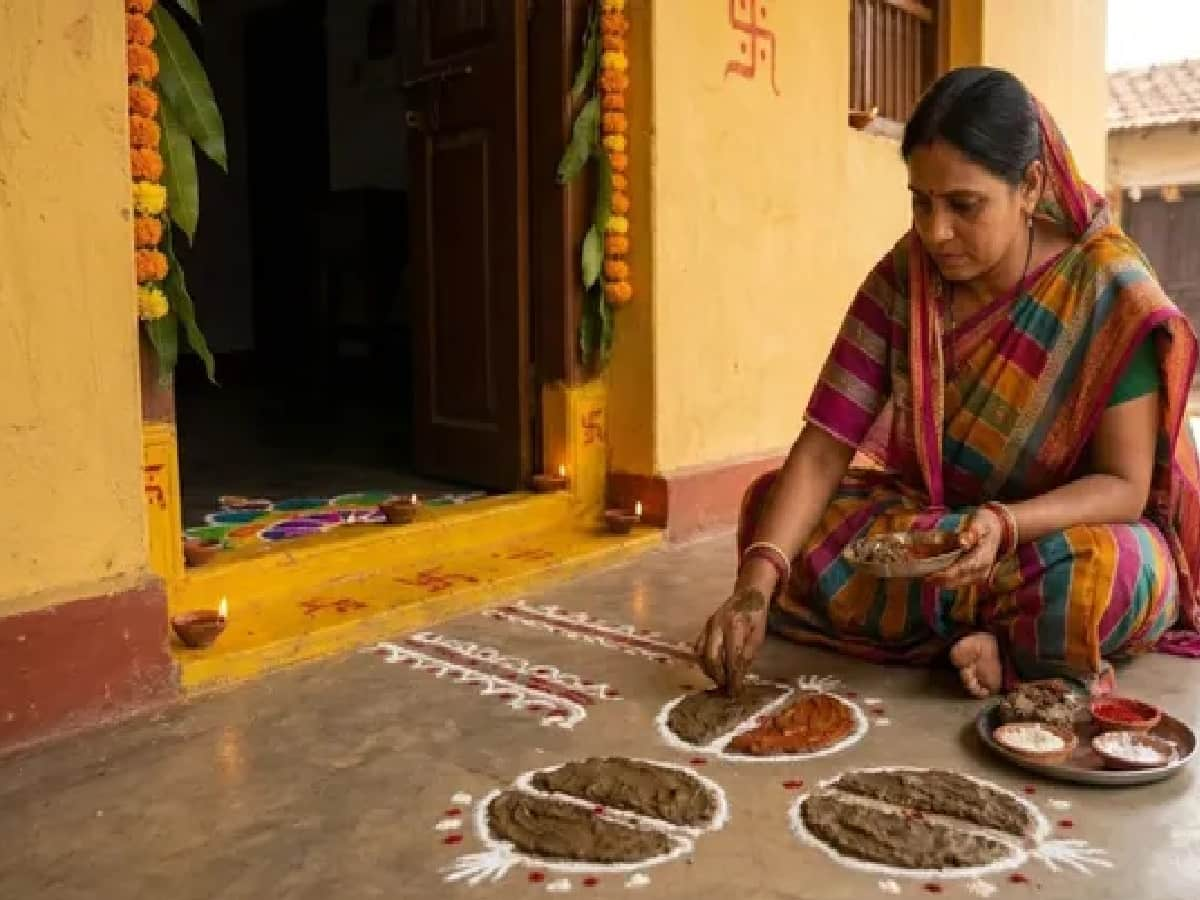
As the festive illumination of Diwali transforms into the agrarian and pastoral devotions of Govardhan Puja, courtyards across northern India are adorned with sacred symbols of earth and gratitude. Celebrated on the Pratipada Tithi of Shukla Paksha in the holy month of Kartik, this revered festival holds immense spiritual resonance across Uttar Pradesh, especially within the sacred geography of Mathura, Vrindavan, and the wider Brij and Awadh regions. While the day is widely recognized for constructing the symbolic hillock of Giriraj Maharaj out of cow dung and offering monumental feasts of Annakut, an equally intimate ritual quietly unfolds at the threshold of traditional households. Early on the morning of the festival, homemakers carefully sketch the miniature footprints of a cow—known locally as Gau Charan or Gau Padachinha—starting from the exterior entryway and leading directly into the interior sanctum of the home. Drawn using sacred cow dung, vibrant geru (red ochre), or freshly ground white rice paste (pithar), this ancient decorative act is far more than rural folk aesthetics; it embodies an intricate metaphysical science, invoking the celestial blessings of thirty-three crore deities, inviting Goddess Lakshmi across the threshold, and honoring Lord Krishna’s divine affection for the mother cow.
The Sacred Abode: Why 33 Crore Deities Reside in Gau Mata
The foundational reason for drawing cow footprints at the primary threshold lies in the revered status of the cow within Sanatan Dharma, where the animal is venerated not merely as livestock, but as Gau Mata—the universal mother and living altar of divinity. According to sacred Vedic scriptures, including the Bhavishya Purana and the Atharva Veda, the physical form of the indigenous Indian cow represents a living cosmos housing thirty-three categories (Koti) of celestial beings. Within this sacred taxonomy, Lord Brahma resides at the crown of the cow's horns, Lord Vishnu dwells within the throat, Lord Shiva manifests across the forehead, while the divine solar deities (Adityas) and storm gods (Rudras) govern the eyes and spine.
Consequently, the physical step of a sacred cow is believed to sanctify any ground it touches. When an individual marks the front doorway with the impression of cow hooves on Govardhan Puja, they are symbolically rolling out a welcoming carpet for the entire celestial pantheon. In ancient household philosophy, the main doorway (Chaukhat or Dehli) serves as the energetic diaphragm of the residence, dictating what vibrations may enter. By stamping the impression of the divine mother’s hooves onto the threshold, the household invokes an impenetrable spiritual shield, establishing that the home is consecrated under the protection of the higher cosmic powers and immunizing the premises against discord, grief, and negative planetary afflictions.
Welcoming Goddess Lakshmi: The Symbolism of Inward Footprints
A vital technical detail observed by traditional elders when drawing these sacred impressions is the deliberate direction of the stride: the footprints are meticulously drawn pointing inward from the exterior courtyard toward the inner chambers, never outward. This intentional alignment is directly linked to the invocation of Goddess Lakshmi, the divine arbiter of wealth, auspiciousness, and spiritual opulence. In Hindu mythology, Goddess Lakshmi shares an eternal and unbroken bond with Gau Mata, with scriptural texts recording that during the cosmic churning of the celestial ocean (Samudra Manthan), both the divine cow Kamadhenu and Goddess Lakshmi emerged as twin blessings of material and spiritual sustenance for creation.
Classical Sanskrit treatises embody this connection in the timeless aphorism "Gomaye Vasate Lakshmi", affirming that the radiant presence of the goddess of wealth eternally resides within the pure by-products of the cow. Marking the entrance with cow footprints symbolizes the auspicious arrival of the cow stepping into the family's living quarters, trailing the divine aura of Goddess Lakshmi in her wake. Devotees believe that a household whose entrance bears the sacred marks of the cow becomes an irresistible sanctuary for steady wealth (Sthir Lakshmi), ensuring that the financial gains celebrated during Diwali do not evaporate, but remain firmly anchored within the home to support honest livelihood and generosity.
The Purity of Cow Dung: Vedic Science and Threshold Purification
Beyond metaphysical symbolism, the ancient custom of utilizing cow dung (Gomaya) to draw these footprints highlights a profound understanding of natural sanitation and energy dynamics. In traditional Indian domestic architecture, particularly across rural settlements and ancestral homes in Uttar Pradesh, cow dung has been celebrated for millennia as the ultimate natural purifying agent. Daily plastering (Lepan) of mud courtyards and threshold stones with cow dung was an indispensable morning ritual practiced to maintain physical cleanliness and spiritual purity.
Modern scientific evaluations have corroborated what ancient Ayurvedic sages intuited centuries ago: indigenous cow dung possesses potent natural antibacterial, antifungal, and insect-repelling properties. Plastering the threshold with this organic substance creates an invisible biological barrier that prevents harmful pathogens and dust from infiltrating living quarters. Spiritually, the entrance of a house is considered vulnerable to fluctuating atmospheric energies and subtle psychic disturbances (Vastu Dosha). Applying cow dung in the shape of auspicious footprints neutralizes dense, stagnant vibrations, infusing the home's primary aperture with high-frequency organic vitality, ensuring that everyone who crosses the threshold is cleansed of external stress before entering family life.
Lord Krishna’s Eternal Bond: Gau Seva as the Path to Devotion
The ritual of marking cow footprints on Govardhan Puja is also an act of profound devotion toward Lord Shri Krishna, who is celebrated across scriptures under the names Gopala (the protector of cows) and Govinda (he who brings satisfaction to cows). During the Dwapara Yuga, when Krishna spent his pastoral youth in the meadows of Gokul, Vrindavan, and Barsana, he actively broke the rigid conventions of his era by placing the welfare of cows above formal, transactional Vedic sacrifices. Sacred lore recounts that Krishna never wore footwear while grazing his beloved Surabhi cows, declaring that stepping upon the dust kicked up by their hooves was the highest spiritual honor a devotee could receive.
When the cowherd boy lifted Mount Govardhan on his little finger to shield the inhabitants of Braj from the tempestuous wrath of Devraj Indra, he prioritized the safety of his grazing herds alongside his human companions. The legendary victory cemented the truth that divine love is intimately intertwined with the care and reverence shown to silent creatures. By drawing cow footprints at the door on the anniversary of this miracle, devotees recreate the sacred pastoral atmosphere of Gokul within their modern dwellings. It serves as an emotional statement that the household belongs to Krishna and cherishes the very creatures he held dear, inviting the Lord to step into the house alongside his playful herd to bestow grace, harmony, and peace upon all occupants.
Cultural Heritage in Uttar Pradesh: Living Traditions of the Brij and Awadh
Across the vast cultural heartlands of Uttar Pradesh, from the historic lanes of Old Lucknow to the vibrant village settlements along the Gomti, Yamuna, and Ganga rivers, this tradition remains an indispensable element of the post-Diwali calendar. In traditional households, the ritual begins at sunrise following the ceremonial bath. Women prepare a ceremonial solution of fresh cow dung mixed with sacred Ganga water, applying the foundational coat at the front doorstep. Using the side of their closed fists dipped in the mixture, followed by deliberate finger dabs to represent individual hooves, they craft delicate trails of footprints that wind their way from the main gate directly to the family puja altar and the storehouse of grains.
Later in the day, the cows themselves are treated with royal reverence. Families bathe their domestic cattle, rub their coats with fragrant mustard oil, decorate their horns with bright vermilion and peacock feathers, and hang brass bells around their necks that chime melodiously with their movements. The animals are lovingly fed fresh green grass, jaggery, and freshly cooked wheat preparations before the community gathers to offer prayers to the cow-dung sculpture of Giriraj Govardhan. Through these acts of reverence, the marking of cow footprints on the threshold bridges ancient folklore and contemporary domestic life, serving as an enduring reminder that true human prosperity thrives only when society lives in reverent, harmonious alignment with nature and its gentlest protectors.




