







Bhai Dooj 2026: Why Sisters Apply Roli & Akshat Tilak
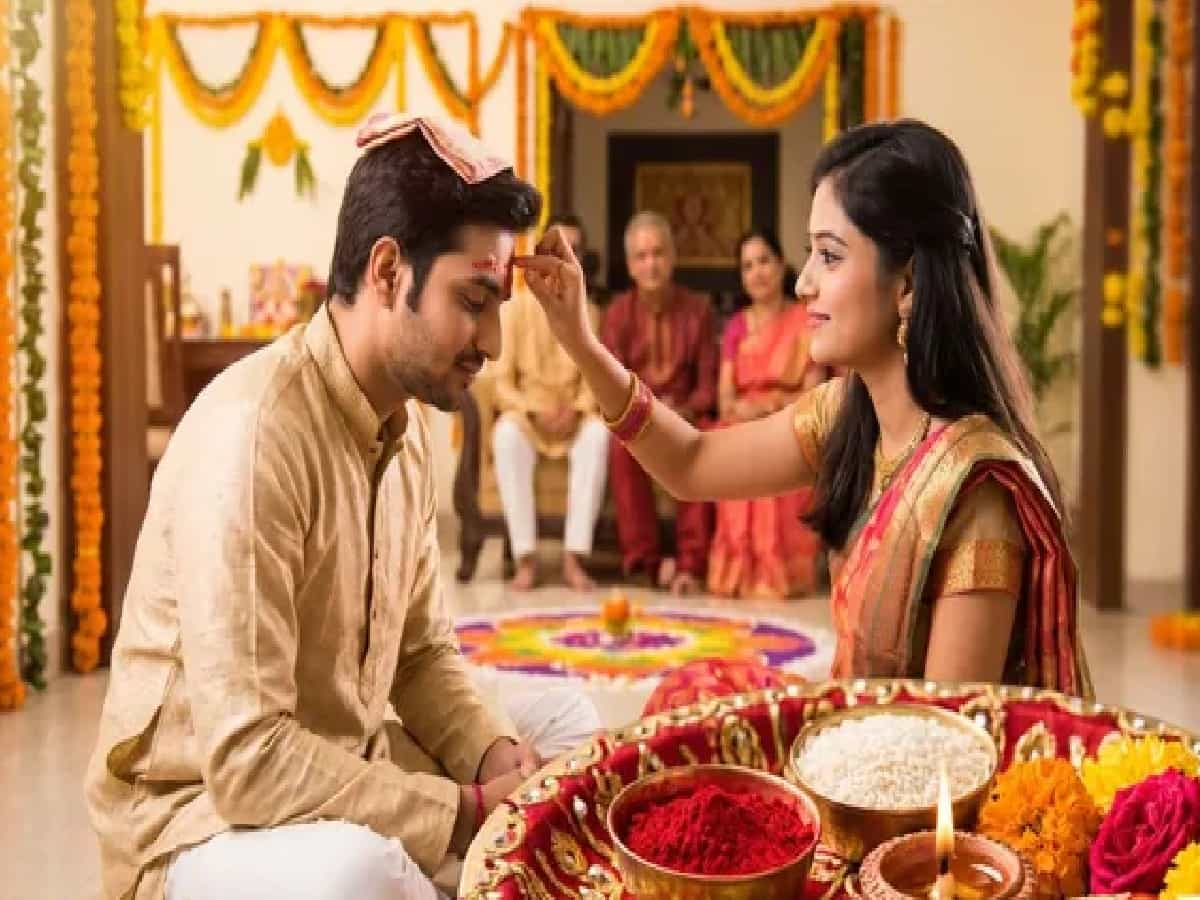
As the earthen diyas of Diwali begin to dim and the five-day Deepavali festive season reaches its celebratory conclusion, households across northern India are preparing for the sacred observance of Bhai Dooj. Also commemorated as Yama Dwitiya and Bhratri Dwitiya, this revered festival celebrates the enduring bond of trust, mutual devotion, and protective affection between brothers and sisters. Across Uttar Pradesh—from the historical cultural neighborhoods of Lucknow to the temple-lined ghats of Varanasi and Mathura—the celebratory morning begins with an intimate family ritual. Brothers sit upon hand-decorated wooden seats, facing east, while sisters carry polished brass platters adorned with sweetmeats, fresh blossoms, an earthen lamp, and the traditional ingredients of the ceremonial forehead mark: vibrant red roli and pristine grains of unbroken white rice, known as akshat. While the gesture is familiar to every Indian household, the deeper religious, metaphysical, and Ayurvedic significance behind choosing specifically roli and akshat is rarely understood. Far from being a mere decorative or cosmetic tradition, the combination of these two natural elements represents a conscious invocation of cosmic energy, mental balance, and lifelong protection.
The Spiritual Power of Roli: Energy, Victory, and Auspiciousness
At the core of the ceremonial tilak is roli, also widely identified in religious literature as pure kumkum. Prepared traditionally through an ancient alchemical process of mixing raw organic turmeric powder with slaked lime (chuna) and purified water, the mixture undergoes a natural chemical transformation that turns the golden root into an intense, brilliant crimson hue. In Vedic theology, the color red is not merely an aesthetic choice; it is the visual vibration of Agni (the sacred fire element), Shakti (primal creative power), and Surya (the life-giving solar force). It embodies vitality, courage, willpower, and divine victory (vijay).
When a sister blends roli with sacred water or fragrant rose essence and presses her right thumb onto her brother's brow, she is directly targeting the Ajna Chakra, commonly referred to in yogic anatomy as the third eye or the center of intuition. Positioned between the eyebrows, this vital nerve junction commands mental clarity, decision-making, and emotional stability. By applying cooling yet invigorating turmeric-based roli to this precise anatomical center, the sister symbolically and energetically clears negative vibrations. In Sanatan philosophy, this vibrant red mark functions as an energetic seal, transmitting a sister's silent prayer that her brother will face the trials of the worldly world with unwavering courage, moral integrity, and honorable triumph.
The Sacred Science of Akshat: Unbroken Grains for Unbroken Fortune
Complementing the crimson base of the roli is the careful placement of akshat, the sacred whole rice grains that adhere to the moist paste. The term Akshat is derived from the classical Sanskrit root "a-kshata", which literally translates to "unbroken," "uninjured," or "that which cannot be destroyed." In Hindu liturgical rituals, the physical condition of the rice used for worship is held to exacting standards: every single grain must be complete, flawless, and free of cracks or damage. Fragmented, crushed, or polished broken grains are strictly prohibited on the puja altar because damaged offerings are believed to attract fragmented or incomplete energies.
Rice represents the primordial grain of Indian agriculture (dhanya), celebrated in ancient scriptures as the sovereign food that sustains human life and physical form. In astrological and astrological traditions, whole rice is governed by Lord Chandra (the Moon) and associated with the divine blessings of Goddess Mahalakshmi, the embodiment of auspicious fortune and material plenty. By applying intact grains to the brother’s forehead, the sister conveys a profound visual prayer: that her brother’s lifespan, honor, family lineage, and material prosperity remain complete, unbroken, and resilient against the erosive forces of time. Just as a wholesome grain of rice possesses the dormant potential to sprout into an abundant harvest, akshat symbolizes perpetual abundance and spiritual wholeness.
Cosmic Fusion: Why Roli and Akshat Must Be Applied Together
The pairing of roli and akshat on Bhai Dooj represents a harmonious synthesis of opposing universal forces. In classical Hindu cosmology, balance is achieved through the union of the solar and lunar principles. Roli, representing the Sun and Mars, brings warmth, active ambition, dynamic energy, and defensive strength. Conversely, akshat, ruled by the Moon and Venus, introduces cooling composure, emotional stillness, peace, and spiritual purity.
Applying either element in isolation creates an incomplete energetic equation. A brother endowed purely with fiery courage and ambition risks succumbing to impulsive aggression, pride, or restlessness. Conversely, a temperament governed solely by gentleness and passive contemplation may lack the decisive strength required to navigate worldly adversities and protect his loved ones. When red roli and white akshat are fused on the Ajna Chakra, they bestow an equilibrium of dynamic power tempered by conscious wisdom. Furthermore, the natural adhesive property of moist roli holds the akshat grains firmly in place, presenting a metaphor for the sibling relationship itself: an unbreakable emotional bond where brother and sister support, anchor, and elevate each other through every fluctuating season of life.
Regional Heritage: Living Traditions Across Uttar Pradesh
Across the towns and villages of Uttar Pradesh, this symbolic ritual is deeply rooted in local cultural heritage. In traditional Awadhi homes in Lucknow, sisters prepare the tilak platter using heirloom silver or brass katoris passed down through maternal generations. Alongside the roli and akshat, a drop of pure desi cow ghee, fragrant chandan (white sandalwood paste), and a carved dry coconut (gola or shrifal) are placed reverently on the tray. The ritual begins with the sister wrapping a sacred red kalawa thread around the brother's wrist, followed by the application of the dual tilak, a protective circling of the brass aarti lamp, and the offering of handmade regional delicacies such as mawa gujiya and seasonal laddoos.
The cultural memory of the state remains intimately tied to the Puranic legend of Yama Dwitiya, wherein Yamraj, the cosmic judge of mortality, visited his sister, the holy river goddess Yamuna, at her home. Yamuna applied this exact sanctified tilak, fed her brother with loving devotion, and extracted a celestial boon ensuring that any brother who receives such affection on Kartik Shukla Dwitiya would be liberated from the torment of untimely distress (Akal Mrityu). In pilgrimage towns like Mathura and Vrindavan, sibling pairs assemble at historic ghats to perform a ritual holy dip in the sacred Yamuna River before the tilak is applied, reaffirming an ancient covenant of protection that has survived millennia of cultural transitions.
Ancient Wisdom for Contemporary Lives: An Enduring Anchor
In our fast-paced modern society, where familial interactions are frequently reduced to digital greetings, text exchanges, and rushed voice notes, the tactile intimacy of Bhai Dooj provides an essential emotional anchor. Sitting across from one another, applying sacred herbal ingredients with one's own hands, and looking directly into a sibling’s eyes reaffirms unconditional familial duty. It reminds both brothers and sisters that beyond individual professional ambitions and personal pursuits, their shared origin and lifelong commitment to each other's welfare remain paramount.
The simple mixture of red roli and unbroken rice carries the accumulated wisdom of ancient sages who understood how physical symbols can shape human consciousness. As sisters across India and the global diaspora prepare their puja thalis for Bhai Dooj on Wednesday, November 11, 2026, the application of roli and akshat stands as an enduring testament to the beauty of Sanatan traditions—a timeless visual prayer that weaves cosmic harmony, sacred protection, and pure familial love onto the human brow.




