







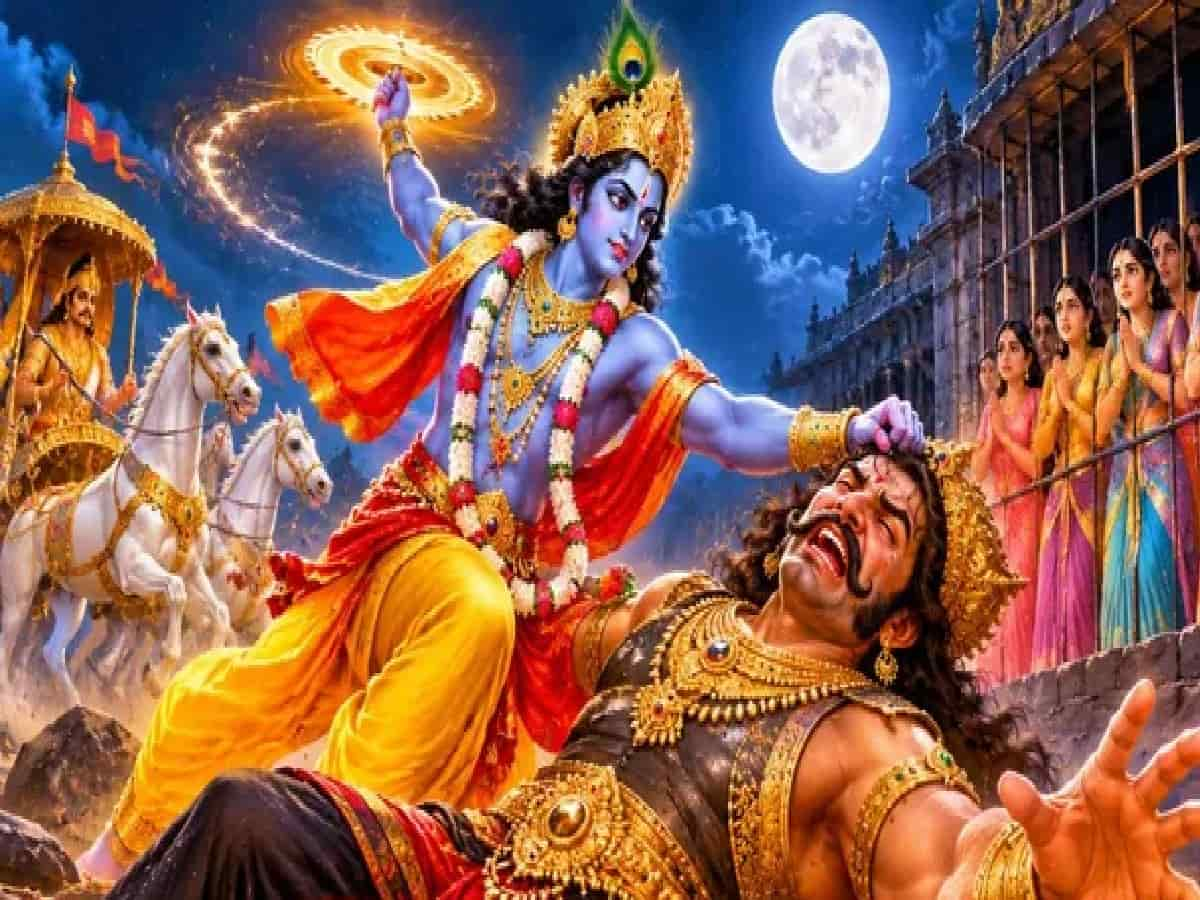
Naraka Chaturdashi & Kali Puja: The Mystery of Narakasura
Celebrated on the fourteenth day of the dark fortnight in the month of Kartik, Naraka Chaturdashi stands as one of the most enigmatic and multifaceted observances in the Hindu festive calendar. Known variously across Indian regions as Choti Diwali, Roop Chaturdashi, and Kali Chaudas, the festival serves as the critical spiritual bridge leading into the radiant night of Diwali. While popular devotion primarily celebrates Lord Krishna's decisive triumph over the tyrannical demon king Narakasura, millions of households across eastern and western India simultaneously dedicate this sacred nocturnal window to the fierce, protective worship of Goddess Mahakali. The convergence of these two traditions is neither coincidental nor superficial; it reflects an ancient cosmological union celebrating the annihilation of negative forces, the liberation of trapped consciousness, and the awakening of inner spiritual beauty. Unraveling the mythological origins of Narakasura, his celestial birth, and his audacious imprisonment of 16,100 royal maidens reveals the profound esoteric ties that bind the legend of Choti Diwali directly to the altar of the Divine Mother.
The Cosmic Origins: How Bhaumasura Was Born from Varaha and Bhudevi
To understand the tragedy and menace of Narakasura, one must trace his lineage back to the dawn of cosmic preservation. According to the Bhagavata Purana, Vishnu Purana, and Kalika Purana, Narakasura was not of ordinary demonic descent; he was born from the direct union of Lord Vishnu in his third incarnation as Varaha (the divine boar) and the Earth Goddess, Bhudevi. When the cosmic demon Hiranyaksha dragged the earth into the murky depths of the primordial ocean, Lord Vishnu assumed the colossal form of Varaha, dived into the abyss, slew the demon, and hoisted the planet back into the heavens upon his celestial tusks. During this monumental restoration, the sacred touch between the preserver deity and Bhudevi gave rise to a child endowed with supreme strength. Because he was born from the soil of the earth, he was reverently named Bhaumasura—the son of Bhumi.
Recognizing the immense celestial power dwelling within her newborn offspring, Mother Earth sought an extraordinary boon from Lord Vishnu to guarantee the child's eternal protection. Granting her devotion, the Lord declared that Bhaumasura would wield unmatched physical prowess, possess the formidable divine weapon known as the Vaishnavastra, and live a life unthreatened by mortal or celestial weapons. Crucially, a cosmic safeguard was woven into his destiny: Bhaumasura could only be brought to his ultimate end through the direct intervention of his own mother. In his formative years, under the tutelage of enlightened sages and righteous kings, the young prince ruled the kingdom of Pragjyotishpura (located in modern-day Assam) with wisdom and virtue. However, fate took a darker turn as he fell under the corrupting influence of power-hungry monarchs, notably Banasura. Intoxicated by his near-absolute invulnerability, Bhaumasura abandoned the tenets of righteousness, adopted the moniker Narakasura—the one who creates hell for others—and initiated an era of cosmic terror across all three worlds.
Reign of Terror: The Imprisonment of 16,100 Princesses in Pragjyotishpura
As Narakasura’s unchecked hubris expanded into megalomania, he declared war against both the mortal earth and the heavenly realm of Swarga. Armed with boons and ancient mystical sciences, the demon king laid siege to the abode of Indra, looting the sacred white umbrella of celestial majesty and violently tearing away the luminous nectar-yielding earrings of Aditi, the primordial mother of the Devas. Yet, his most notorious and grievous offense lay in his systemic campaign of terrestrial conquest, during which he kidnapped and incarcerated 16,100 princesses, noble maidens, and women of royal lineages from across various kingdoms. He locked these thousands of captives within his heavily fortified mountain fortress of Audaka, surrounded by impassable rings of elemental fire, water, wind, and lethal illusionary enchantments.
In classical Puranic allegory, this mass captivity carried deep spiritual and sociological symbolism. Narakasura understood that the ultimate strength of any civilization resides in the sanctity, freedom, and honoring of its feminine creative energy, or Shakti. By subjugating 16,100 women under brutal imprisonment, the demon sought to break the spiritual backbone of the universe, accumulating the dormant feminine power for his personal occult supremacy. The captive women spent months in prayer and penance, pleading for divine deliverance from the tyrant who held them under the looming threat of forced subjugation once his conquest of the cosmos was complete.
The Divine Fulfilment: Satyabhama, Krishna, and the Midnight Battle
When Indra arrived at the gates of Dwarka to plead for assistance, Lord Krishna resolved to end the menace of Pragjyotishpura once and for all. However, doing so required bypassing the ancient boon granting Narakasura protection against all beings except his birth mother. To fulfill this cosmic condition without violating the universal order, Krishna invited his beloved warrior queen, Satyabhama, to accompany him into the warzone. Unknown to casual observers, Satyabhama was a direct earthly incarnation of Bhudevi herself, uniquely positioned by destiny to play the decisive role in Narakasura's downfall.
Mounted upon the back of the divine eagle Garuda, Krishna and Satyabhama breached the seemingly impenetrable perimeter of Pragjyotishpura, systematically dismantling the demon Mura—whose defeat earned Krishna the epithet Murari—and neutralizing thousands of specialized defenses. When the final duel commenced on the battlefield, Narakasura unleashed fierce mystical weaponry against the Lord. At a pivotal juncture during the clash, Krishna staged a tactical feint, collapsing into a temporary swoon after being struck by an arrow. Incensed at seeing her husband injured and filled with righteous fury, Satyabhama seized the celestial bow, stepped to the forefront of the chariot, and unleashed a volley of enchanted arrows that mortally pierced Narakasura's chest.
As the life force ebbed from the dying tyrant, the veil of demonic delusion lifted from his consciousness, allowing him to recognize the divine form of his mother standing alongside Lord Vishnu. In his final breath, Narakasura made a heartfelt plea to the divine couple: that the anniversary of his demise should not be mourned in sorrow, but celebrated across the earth as an occasion of boundless light, liberation, and joy, reminding humanity that righteousness will always triumph over darkness. Granting his dying wish, Krishna and Satyabhama liberated all 16,100 women from the dungeons. In an act of profound social compassion in an era where formerly captive women were cruelly ostracized by society, Lord Krishna extended his royal name, protection, and legitimate societal status to each of the 16,100 maidens by accepting them into his household in Dwarka, fully restoring their honor, security, and dignity.
Kali Chaudas and Naraka Chaturdashi: The Esoteric Connection to Goddess Kali
The convergence between Naraka Chaturdashi and the worship of Goddess Kali is rooted deeply in the astrological timing of the Hindu lunar calendar and shared esoteric philosophy. In the Sanskrit computational calendar, the fourteenth day (Chaturdashi) of the dark fortnight (Krishna Paksha) of Kartik is governed by aggressive celestial energies ideal for dismantling negative thought patterns, chronic illness, and negative spiritual influences. In Gujarat, Maharashtra, and across northern India, this nocturnal observance is venerated as Kali Chaudas. Devotees stay awake through the midnight hours, invoking Mahakali and Lord Bhairava through specialized rituals to banish dark planetary afflictions, overcome lingering phobias, and seek divine protection against malevolent entities.
Simultaneously, in the cultural traditions of West Bengal, Assam, and Odisha, this period marks the commencement of Maha Kali Puja, celebrated during the midnight hours (Nishita Kaal) of Kartik Amavasya. Goddess Kali represents the untamed, primordial aspect of time (Kala) and the ferocious maternal energy that consumes ignorance, ego, and death itself. Just as Satyabhama—embodying feminine fury—slayed Narakasura to restore universal order, Goddess Kali wields the severed head of the demon Raktabija to protect her cosmic children. The two festivals are inherently interconnected: Naraka Chaturdashi marks the physical annihilation of the demon in the material plane, while the nocturnal invocation of Goddess Kali cleanses the subtle psychological realm of internal demons like anger, greed, and ego, preparing the soul for the welcoming of Goddess Mahalakshmi on Diwali night.
Cultural Resonance: From Abhyanga Snan to Bengal's Shyama Puja
The living traditions of Naraka Chaturdashi reflect this rich synthesis of physical renewal and spiritual purification. Across southern and western India, the day begins long before dawn with the sacred ritual of Abhyanga Snan. Commemorating the moment Lord Krishna bathed with fragrant herbal pastes to cleanse the grime and blood of the battlefield after slaying Narakasura, millions of devotees apply warm sesame oil and aromatic herbal powders (ubtan) across their bodies before taking a ceremonial bath. Tradition holds that on this sacred dawn, Goddess Lakshmi resides within the sesame oil while the holy waters of Ganga infuse all flowing water, transforming a simple morning bath into an act of profound cellular rejuvenation and spiritual renewal—a concept that earned this day the name Roop Chaturdashi.
Further east, in Bengal, the eve of Kali Puja sees homes illuminated with fourteen clay lamps, known as Choddo Pradip, placed strategically at domestic thresholds to honor fourteen generations of ancestral spirits and drive away the lingering shadow of Alakshmi. Temples dedicated to Dakshina Kali and Tara resonate with the hypnotic rhythm of the dhak drum and the fragrant haze of burning camphor, invoking the Mother who crushes arrogance beneath her feet. Whether honored through the warrior bow of Satyabhama, the restorative oil bath of Dwarka, or the midnight hymns dedicated to Shyama Kali, Naraka Chaturdashi stands as a timeless reminder that authentic light cannot enter a home until the darkness within has been fiercely confronted, purified, and permanently dissolved.




