







Chhath Puja: Why Devotees Stand Half-Submerged for Arghya
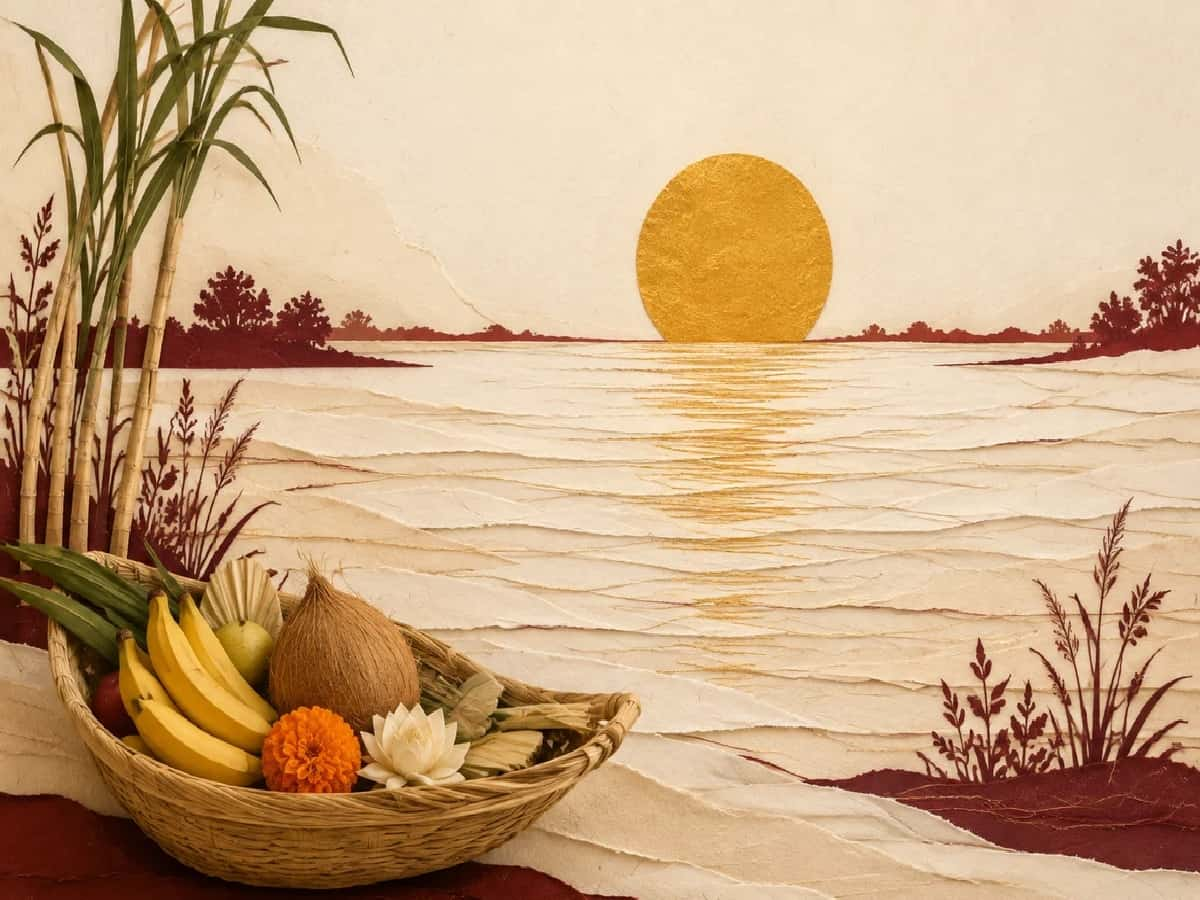
As dusk and dawn settle across the ghats of the Ganges, Yamuna, Gandak, and urban water bodies nationwide, the sacred festival of Chhath Mahaparv presents one of the most mesmerizing spectacles of Indian spiritual devotion. Standing motionless in natural rivers, sacred lakes, and community ponds, thousands of fasting devotees—known as Vratins—hold decorated bamboo winnows (soop) filled with seasonal fruits, harvest grains, and traditional thekua, offering their prayers to the Sun God, Surya Dev, and his cosmic energy consort, Chhathi Maiya. One defining visual stands at the center of this ancient penance: devotees perform the core ritual of Arghya while standing waist-deep or chest-deep in water. This deliberate posture of being half-submerged in cold, flowing currents is far from a mere theatrical convention; it represents a sophisticated synthesis of Vedic cosmology, bio-energetic grounding, solar science, and profound ecological philosophy that has guided the civilization of the eastern plains for millennia.
Uniting Fire and Water: The Cosmic Harmony of Surya and Jala Tattva
In the philosophical framework of Sanatana Dharma, the universe is manifested through the interplay of the Pancha Mahabhuta, the five fundamental elements: Earth (Prithvi), Water (Jala), Fire (Agni/Tejas), Air (Vayu), and Space (Akasha). Among these primal forces, the Sun represents the eternal source of Agni and Tejas—the primordial fire, warmth, and conscious vitality that activates all biological existence on earth. Water, on the other hand, represents Jala Tattva—the cooling, receptive, life-giving nectar that sustains terrestrial life, purifies organic toxins, and preserves vitality.
When a devotee wades into waist-deep water to present the Arghya, they place themselves directly at the physical and energetic convergence of these two opposing yet complementary elements. The lower half of the human vessel remains immersed in cooling water, while the upper torso faces the radiant solar disc in the open sky. This deliberate alignment establishes an elemental conduit within the human body. Ancient texts suggest that invoking fire without the stabilizing counterbalance of water can lead to thermal and psychological agitation, whereas water without solar warmth leads to stagnation. By standing half-submerged, the worshiper balances solar heat with fluid coolness, ensuring that the solar energy absorbed during prayer is grounded, soothing, and spiritually fruitful.
The Spiritual Circuit: Why Waist-Deep Immersion Calms Mind and Body
The act of immersion carries immense significance within yogic physiology and the science of internal energy channels (Nadis). The human physical framework possesses distinct focal energy vortexes, or Chakras. The lower energetic centers—namely the Muladhara (root), Swadhisthana (sacral), and Manipura (solar plexus)—govern physical stability, primal survival instincts, and internal metabolic heat. By submerging the body up to the navel or chest in natural water, these lower instinctual centers are cooled, quieted, and electromagnetically grounded into the earth’s magnetic field.
Simultaneously, the upper spiritual centers—the Anahata (heart chakra), Vishuddhi (throat chakra), and Ajna (brow center)—remain elevated above the waterline, fully exposed to the cosmic rays of the Sun. This configuration creates a natural bio-energetic circuit. The natural chill of the river currents constricts peripheral blood vessels in the lower limbs, gently directing blood circulation and vital life-force energy (Prana) upward toward the thoracic cavity, vocal center, and cranial meridians. In this heightened state of sensory equilibrium, the mental chatter of the mind subsides, allowing the fasting devotee to sustain unbroken concentration (Dhyana) and absolute mental tranquility despite the physical demands of an arduous 36-hour waterless fast (Nirjala Upavash).
Solar Optics and Bio-Rhythms: The Science of Refracted Sun Rays
Beyond metaphysical and scriptural doctrines, standing half-submerged in water during Chhath aligns with practical biophysical principles. The offerings of Sandhya Arghya (evening offering) and Usha Arghya (morning offering) take place exclusively during solar twilight, when the sun hovers along the horizon. During these twilight intervals, solar radiation passes through a thicker layer of the Earth's atmosphere, naturally filtering out harmful high-frequency ultraviolet radiation while permitting therapeutic infrared and soft visible light waves to reach the Earth's surface.
When the devotee pours an unbroken stream of clean water or raw cow's milk from a consecrated brass vessel (Lota) while standing in the river, a natural optical prism is created. The gentle twilight rays strike the cascading fluid and reflect off the surrounding water surface, refracting into the seven primary spectral colors (VIBGYOR). Observing this soft, luminous illumination through the falling stream of water provides a natural form of solar therapy (Chromotherapy) that is safe for the human eye, stimulating the retina without causing optical strain. This visual and cutaneous exposure stimulates the pineal and pituitary glands, aiding the synchronization of the body's internal biological clock (circadian rhythm), boosting melatonin and serotonin balance, and facilitating natural Vitamin D precursor synthesis after a period of intense metabolic detoxification.
Respecting the Setting Sun: A Profound Philosophy of Life's Cycles
What makes Chhath Puja universally celebrated among philosophical traditions is its unique ritual sequence: devotees offer worship to the setting sun (Astaachalgami Surya) on the evening of Shukla Shashthi before venerating the rising sun (Udayaachalgami Surya) on Shukla Saptami. In ordinary mundane society, praise and reverence are almost universally reserved for rising power, newfound wealth, and expanding influence. Society routinely applauds the ascending, while neglecting that which is fading or retiring.
Chhath fundamentally inverts this transactional worldview. By standing half-immersed in the quiet waters of dusk as the light gradually recedes into darkness, the devotee demonstrates unconditional reverence for endings, aging, closure, and periods of decline. It is an acknowledgment that without the setting of the sun, there can be no rest, no night of rejuvenation, and no glorious dawn. Standing steady amidst the cold evening ripples reminds humanity that adversity and darkness are natural, temporary phases of the cosmic order. The subsequent dawn offering celebrates renewal, hope, and resurrection, teaching that true emotional resilience requires equanimity in both triumph and surrender.
Vedic Hydrology and Nature Worship: Ancient Environmental Consciousness
At its core, Chhath Puja represents one of the world's oldest surviving forms of pure, unfiltered nature worship, requiring neither temple precincts, priestly intermediaries, nor complex clerical intercessions. The rituals take place in the public commons—at riverbanks, lakes, and communal water bodies. Standing shoulder-to-shoulder in the water, without distinctions of caste, economic wealth, or social rank, devotees experience an egalitarian communion with nature.
The physical requirement of stepping into a river reinforces community responsibility toward the conservation of water resources. For centuries, the arrival of Chhath has served as an annual community mobilization driver: villages, towns, and municipal neighborhoods unite to dredge ponds, clear floating debris, scrub riverbanks, and sanitize approach pathways. Standing directly within the water body cultivates an intimate, sensory relationship with the aquatic habitat; one cannot worship while standing in contaminated currents without recognizing the sacred imperative to protect that water from desecration. In an era dominated by acute climate challenges and environmental degradation, the ancient practice of standing half-submerged to thank the Sun and the waters stands as a timeless call for environmental reverence, reminding humanity that our survival remains inextricably bound to the purity of our rivers and the warmth of our sky.




