







Bhai Dooj: Why Eating at Sister's House Grants Long Life
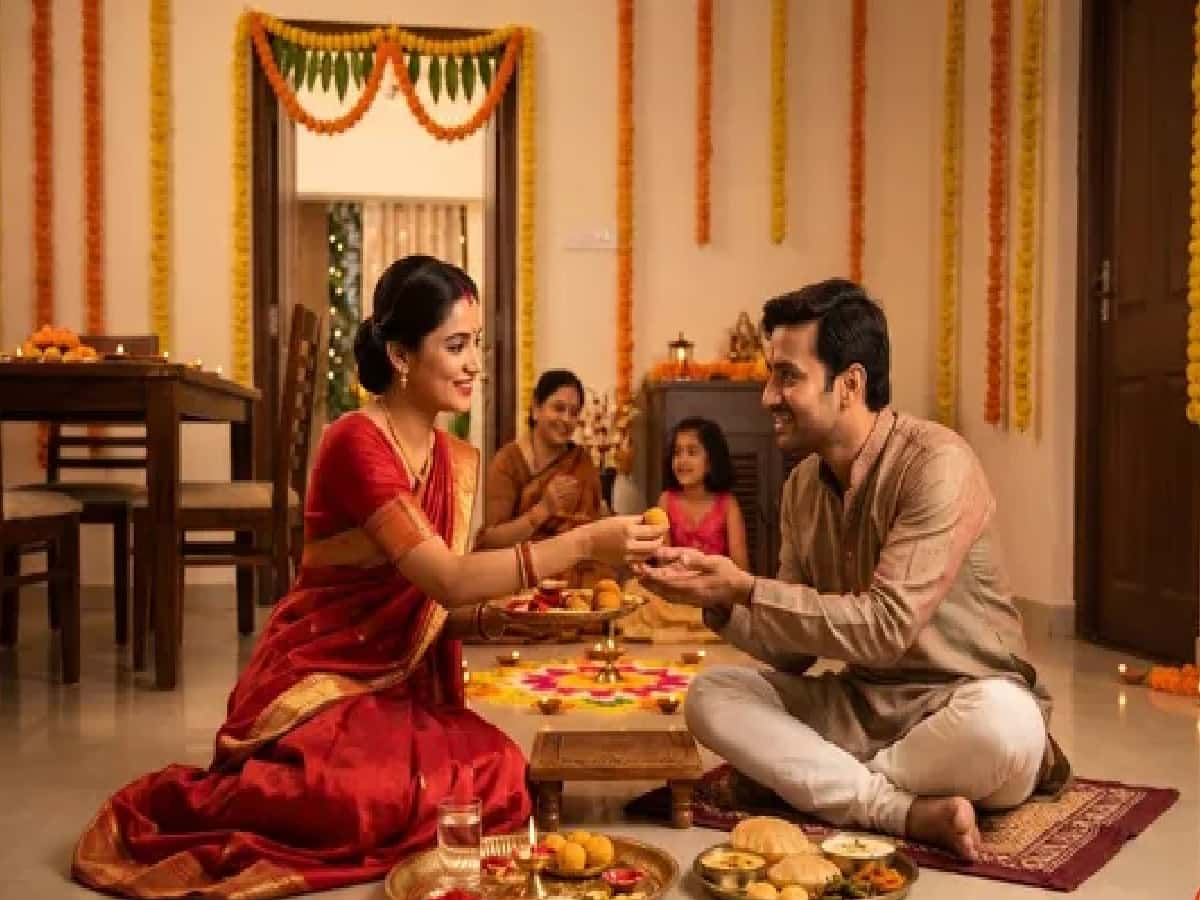
As the nationwide illumination of Deepavali gently makes way for the concluding rites of the five-day festive corridor, households across India turn their hearts toward one of the most intimate celebrations of familial kinship: Bhai Dooj. Celebrated on the second lunar day of the bright fortnight in the sacred month of Kartik, known in Sanskrit scriptures as Shukla Dwitiya or Yama Dwitiya, this festival commemorates the eternal bond of protection, affection, and mutual respect between brothers and sisters. While the application of an auspicious tilak upon the brother's forehead remains the central visual hallmark of the day, ancient Puranic scriptures mandate another essential ritual that holds equal spiritual weight: every brother must visit his sister’s residence and partake of a meal prepared lovingly with her own hands. Far from being a mere social courtesy or an excuse for a festive gathering, this sacred dining custom is rooted in ancient metaphysical lore, carrying a divine promise that eating at a sister’s hearth on this specific tithi liberates a person from the dread of premature demise (Akaal Mrityu) and secures a life endowed with health, prosperity, and peace.
The Divine Encounter: How Yamuna Welcomed Yamraj on Kartik Dwitiya
The sacred origins of this custom are anchored in the timeless lore of the Vedic twins Yamraj, the god of death and justice (Dharmaraja), and his sister Yamuna, the holy river of devotion and purification. Born to the Sun God Surya and his consort Sanjna, both siblings were endowed with immense cosmic duties. Yamraj was tasked with the stern, relentless administration of mortality, maintaining the ledger of mortal deeds (Karma) and guiding departed souls into the afterlife. Because of the grave, solitary nature of his cosmic duties, Yamraj remained perpetually occupied in his ethereal realm of Samyamani, seldom finding time to visit his beloved sister on Earth.
Scriptural texts such as the Padma Purana and the Bhavishya Purana recount that the river goddess Yamuna repeatedly extended heartfelt invitations to her brother, longing to host him at her abode. For eons, Yamraj hesitated, reasoning that mortals feared his arrival and that a lord of death had no place at celebratory feasts. However, on the auspicious day of Kartik Shukla Dwitiya, moved by his sister’s unwavering affection, Yamraj finally crossed the cosmic threshold to visit Yamuna's riverside dwelling. Overjoyed by her brother’s unexpected arrival, Yamuna welcomed him with traditional honors: washing his feet with pure mountain waters, applying a fragrant sandalwood tilak upon his brow, draping him in celestial silks, and preparing an opulent feast of dishes tailored specifically to his tastes.
The Sacred Boon: Why Sister-Cooked Food Banishes the Fear of Untimely Death
Deeply touched by the pure devotion and warmth of his sister’s hospitality, Yamraj felt an overwhelming surge of fraternal gratitude. In that moment of joy, the stern god of justice urged Yamuna to ask for any divine boon she desired. Showing boundless maternal compassion for all living beings, Yamuna asked for two interconnected boons. First, she requested that on this specific tithi every year, Yamraj must return to visit her and partake of a meal at her hearth. Second, and most profoundly, she petitioned: "O brother, let any man on earth who visits his sister’s home on Kartik Shukla Dwitiya, receives her loving tilak, and consumes the meal prepared by her hands be granted a full lifespan and forever liberated from the agony of Akaal Mrityu (untimely death) and the terrifying custody of the Yamadootas."
Moved by her selfless compassion, Yamraj granted the wish without hesitation. He declared that on Yama Dwitiya, the grim messengers of death would possess no authority over any brother who honors his sister and accepts her hospitality. In Hindu cosmology, untimely death is considered one of the greatest misfortunes, terminating an individual's earthly existence before their spiritual duties and life purposes are resolved. Consuming food prepared by a sister on this consecrated day is viewed as receiving a protective energetic shield, transforming everyday sustenance into an ambrosial offering that cleanses past sins and reinforces the brother's vital life energy (Ayushya).
Breaking Social Barriers: Honoring the Married Sister at Her In-Laws' Home
Beyond its mythological resonance, the mandate of dining at a sister's home carries immense sociological significance within the Indian cultural fabric. In ancient and orthodox agrarian societies, a patriarchal custom often discouraged parents and elder brothers from eating food or drinking water at a married daughter’s or sister's matrimonial residence (Sasural), fearing that consuming food from her home incurred a spiritual debt. While this custom was rooted in ideas of self-reliance, it frequently isolated married women from their maternal kin, creating emotional distance after marriage.
Bhai Dooj directly dismantles this restrictive social norm. By establishing that it is an imperative religious duty for a brother to travel to his sister’s house, sit beneath her roof, and accept her cooked food, Sanatana Dharma purposefully elevated the status of married women within their marital homes. When a brother visits his sister’s matrimonial family bearing thoughtful gifts, honors her in front of her in-laws, and accepts food prepared under her direction, it elevates her standing and reaffirms that she remains cherished by her maternal lineage. In return, the brother presents her with generous cash offerings, traditional apparel, or precious tokens (Dakshina), reinforcing an economic and emotional safety net that endures through every life phase.
The Culinary Ritual: Annapurna Bhava, Nourishment, and Sacred Blessings
The act of dining on Bhai Dooj transcends ordinary nutritional consumption; it is elevated into a ritual of Annapurna Bhava—the divine attitude of reverent nourishment. In the Hindu spiritual worldview, food (Anna) carries the subtle emotional and psychological energy of the person who prepares it. When an elder or younger sister steps into the kitchen on Bhai Dooj, her heart is filled with pure, selfless prayers for her brother’s longevity, well-being, and triumph over life's challenges. As she stirs the pots and kneads the dough, this emotional devotion infuses the meals with an uplifting spiritual vibration (Sattvik Spandana).
Across different linguistic and cultural regions of India, this feast takes on diverse culinary expressions. In northern Indian homes across Uttar Pradesh, Bihar, and Delhi, sisters prepare crispy fried pooris paired with spicy pumpkin curry (kaddu ki sabzi), rich curd-based dishes, and traditional rice kheer sweetened with jaggery or sugar. In Maharashtra and Gujarat, brothers are treated to sweet stuffed flatbreads (Puran Poli) and aromatic Basundi, accompanied by seasonal vegetable curries. In West Bengal, the feast following Bhai Phota is legendary, featuring rich preparations of fish, slow-cooked mutton curry, and artisanal sweets like Sandesh and Rosogolla. As the brother sits cross-legged on a sanctified mat, the sister serves each dish with her own hands, ensuring that he eats to his heart's content before she breaks her own ritual fast.
Sacred Alternatives: What If a Brother Does Not Have a Sister?
Given the profound spiritual stakes associated with Yama Dwitiya, classical scriptures also offer compassionate alternative pathways for individuals who do not have an immediate biological sister. The Skanda Purana notes that the spiritual essence of the relationship lies in honoring the feminine principle of kinship and maternal care. Therefore, if a man has no direct biological sister, he may visit a first cousin, a maternal or paternal aunt’s daughter, or a close female friend whom he regards as a sister with equal spiritual efficacy.
In instances where no such familial relation is accessible, ancient traditions advise worshiping Mother Yamuna directly. Taking a ceremonial dip in the sacred waters of the Yamuna River at historic pilgrimage ghats like Mathura, Vrindavan, or Prayagraj on Kartik Shukla Dwitiya is believed to confer identical benefits, liberating the devotee from karmic debts and spiritual distress. Furthermore, feeding a sacred cow (Gau Mata), offering cooked grains to an elderly woman in the community, or sharing a meal with an ascetic can be performed in substitution. The underlying metaphysical truth remains identical: prosperity, safety, and longevity flow naturally toward those who acknowledge and honor the sacred feminine bond through hospitality and unreserved affection.
Ultimately, Bhai Dooj serves as a timeless reminder that authentic security is not forged through worldly armaments or material wealth, but through the purity of familial love and spiritual devotion. When a brother sits across from his sister, accepts her sanctified tilak, and relishes the feast laid out before him, he participates in an ancient covenant of life and protection. In a fast-paced modern world marked by geographic distances and hectic schedules, the simple yet profound act of sharing a home-cooked meal at a sister's table preserves an unbreakable lifeline of warmth, ensuring that peace, love, and longevity abide permanently within the family lineage.




