







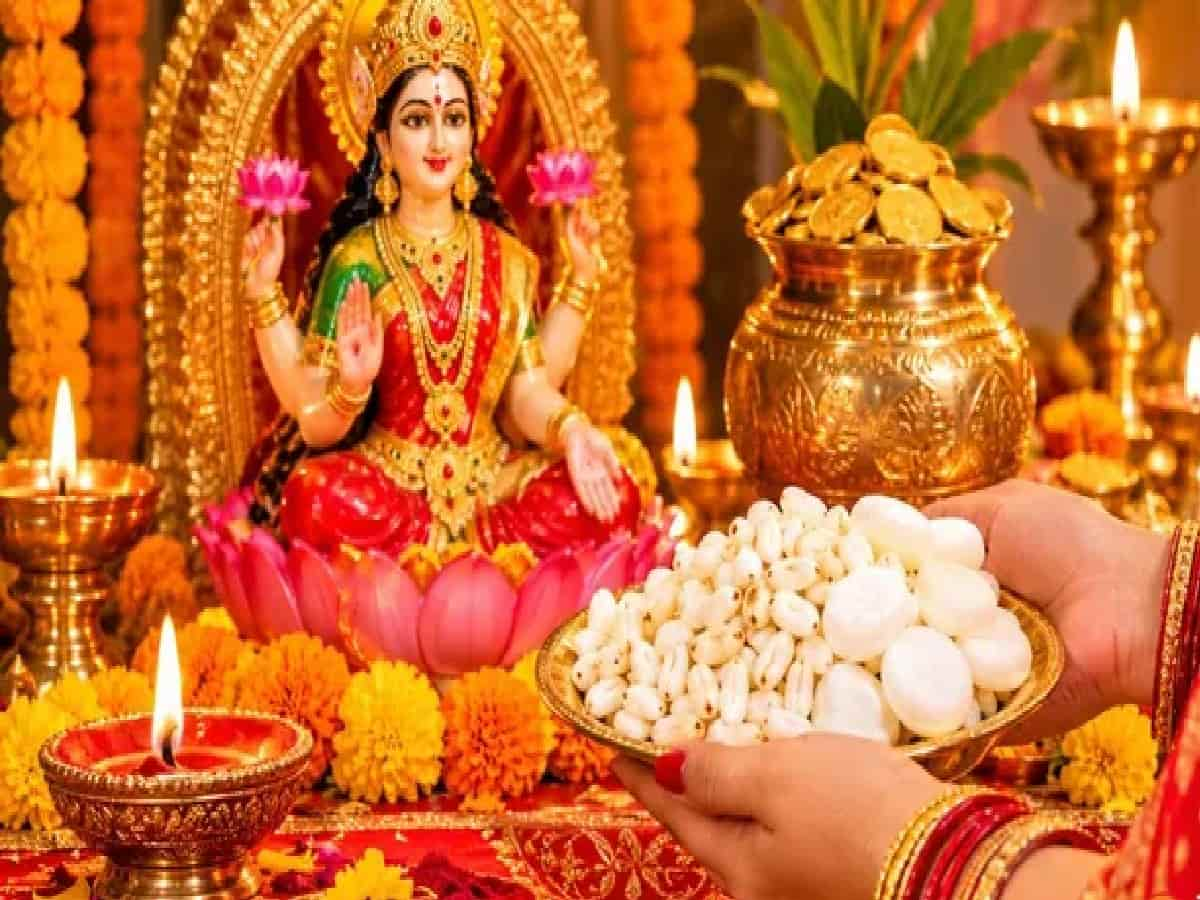
Why Kheel and Batasha Are Offered on Diwali: Sacred Secrets
As the festive season reaches its peak on Kartik Amavasya, markets across northern, central, and eastern India transform into vibrant spectacles of light and devotion. Alongside rows of terracotta diyas, floral marigold garlands, and elaborate boxes of dry-fruit confections, every neighborhood bazaar from Delhi-NCR and Lucknow to Patna and Varanasi features towering mounds of two humble, snowy-white offerings: Kheel (puffed paddy) and Batasha (crystallized sugar coins), often accompanied by brightly colored sugar figurines known as Khilone. While modern households frequently adorn their festive tables with expensive artisanal chocolates and gourmet delicacies, the ritual sanctity of the Diwali puja thali remains fundamentally incomplete without this timeless duo. The mandatory inclusion of Kheel and Batasha during the worship of Goddess Lakshmi and Lord Ganesha is far more than a nostalgic customary habit; it represents an ancient synthesis of agrarian gratitude, Vedic ritual purity, planetary astrology, and Ayurvedic science passed down through generations.
The Agrarian Gratitude: Honoring the First Harvest of Paddy
At the heart of the tradition lies India's foundational agrarian heritage. Diwali coincides precisely with the conclusion of the Kharif agricultural cycle, the critical season when the fresh paddy (dhaan) crop is reaped across the fertile plains of the subcontinent. In Vedic civilization, the prosperity of a community was intrinsically linked to the bountifulness of its harvest, with newly gathered grain venerated as Dhanya Lakshmi—the divine aspect of Goddess Lakshmi who manifests as agricultural sustenance and freedom from famine.
Ancient traditions dictate that before any farming household consumes the fruits of a new harvest, the very first yield must be consecrated and offered to the divine forces that provided the rainfall, fertile soil, and sunlight. Because raw unhusked paddy cannot be directly offered or eaten, the newly harvested grain is transformed into Kheel. By placing these light, blossomed grains at the feet of Goddess Lakshmi and Lord Ganesha on Diwali night, devotees express heartfelt gratitude for the seasonal bounty and seek divine blessings so that the household granaries remain overflowing throughout the harsh winter months ahead.
Untouched by Fire: The Unique Purity of Roasted Puffed Rice
In Sanatana Dharma, the concept of ritual purity (Shaucha) dictates what foods can be offered as Naivedya to deities. Standard cooked food (Pakka Anna) prepared over a domestic hearth using water and spices is traditionally regarded as Uchhishta or susceptible to energetic pollution if tasted, improperly handled, or cooked in vessels used for everyday meals. Kheel, however, occupies a rare and elevated category of ritual purity because of how it is processed.
To make traditional Kheel, raw unpolished paddy is mixed with heated river sand or purified salt in large iron cauldrons. As the heat penetrates the grain, the moisture inside vaporizes, causing the unhusked kernel to burst open through its own natural pressure, shedding its husk and blossoming into a pristine white flower of puffed grain. Because this process requires no boiling in water, no oil, and no direct contact with domestic cooking utensils, Kheel is considered inherently pure, untouched by human saliva, and untainted by the mundane contaminants of a household kitchen. This pristine nature makes it an ideal, unblemished vehicle for carrying sacred prayers directly to the divine altar.
Astrological Alignment: Appeasing Venus and the Moon with White Prasad
Beyond its agricultural and ritual status, the offering of Kheel and Batasha holds profound significance in Vedic astrology (Jyotish Shastra). The night of Diwali occurs on Kartik Amavasya, the darkest new moon of the autumn season. Astrologically, this intense nocturnal environment can heighten psychological restlessness and amplify planetary vulnerabilities. To counteract this energetic darkness, scriptural remedies recommend invoking the cooling, benevolent energies of the Moon (Chandra) and Venus (Shukra).
Venus is revered in Indian astrology as the celestial significator of luxury, material opulence, aesthetic beauty, and financial comfort—qualities embodied by Goddess Mahalakshmi herself. Concurrently, the Moon governs the human mind, emotional stability, and inner tranquility. Both planetary deities are intimately associated with the color white, crystalline minerals, and sweet tastes. The pure, unblemished white hue of Kheel and the sweet translucence of Batasha directly correspond to the subtle energetic vibrations of Venus and the Moon. By dedicating these white, sweet offerings to the divine on Diwali night, devotees believe they harmonize these planetary influences, warding off financial hardship and inviting peace, clarity, and wealth into their domestic lives.
The Coin-Shaped Sweet: Batasha as an Emblem of Divine Abundance
While Kheel represents the physical harvest, Batasha embodies the sweetness and liquid wealth of the cosmos. Prepared by boiling raw sugarcane syrup until it reaches a dense concentration, the mixture is carefully dropped onto flat wooden or cloth boards using specialized funnels, where it cools rapidly into airy, circular, coin-shaped sugar drops.
This coin-like silhouette is deeply intentional. In ancient folklore, Batasha was viewed as a symbolic surrogate for minted currency, representing the gold and silver coins guarded by Lord Kubera, the celestial treasurer. Presenting these sweet, edible "coins" on the puja altar signifies an earnest wish for liquid capital, business liquidity, and commercial sweetness in all transactional relationships. When paired with Kheel, it creates an evocative symbolic union: Kheel represents the stable, enduring wealth of the earth (Achal Sampatti), while Batasha represents the flowing, sweet prosperity of commerce and social fortune (Chanchal Lakshmi), ensuring that the family enjoys both foundational security and daily happiness.
Communal Harmony and Digestibility: The Social Genius of Festive Prasad
The enduring brilliance of the Kheel-Batasha tradition also lies in its egalitarian social design. In a diverse society marked by varied economic strata, elaborate milk-based confections prepared with silver leaf and costly nuts were historically accessible only to affluent merchants and royal courts. Kheel and Batasha, by contrast, were crafted from locally grown paddy and indigenous sugarcane, making them inexpensive and universally accessible to the poorest tenant farmer and the wealthiest landowner alike. Distributing Kheel-Batasha as Prasad ensured that every single member of the village community could partake in the sanctified celebration without economic humiliation, reinforcing the communal brotherhood that defines Deepavali.
Furthermore, Ayurvedic medicine highlights the physiological intelligence behind this festive pairing. During the multiple days of Diwali festivities, individuals consume substantial quantities of heavy, ghee-laden sweets, fried snacks, and rich curries, placing severe stress on the digestive fire (Jatharagni). Kheel is exceptionally light, alkaline, cooling, and easily digestible, acting as an internal absorbent that calms gastric acidity. Batasha provides instant, clean glucose without heavy dairy fats. Consuming a handful of Kheel and Batasha as the primary prasad cleanses the palate, stabilizes blood sugar, and supports the digestive system through periods of seasonal dietary indulgence.
Ultimately, the tradition of offering Kheel and Batasha is an enduring testament to the wisdom of India's cultural ancestors. It bridges the gap between the humble farmer's muddy paddy field and the sanctified gold-lit altar of Mahalakshmi, reminding devotees that authentic prosperity begins with humility, gratitude toward nature, and the joyful sharing of sweetness with the world.




