







Govardhan Puja 2026: Date, Shubh Muhurat & Krishna's Leela
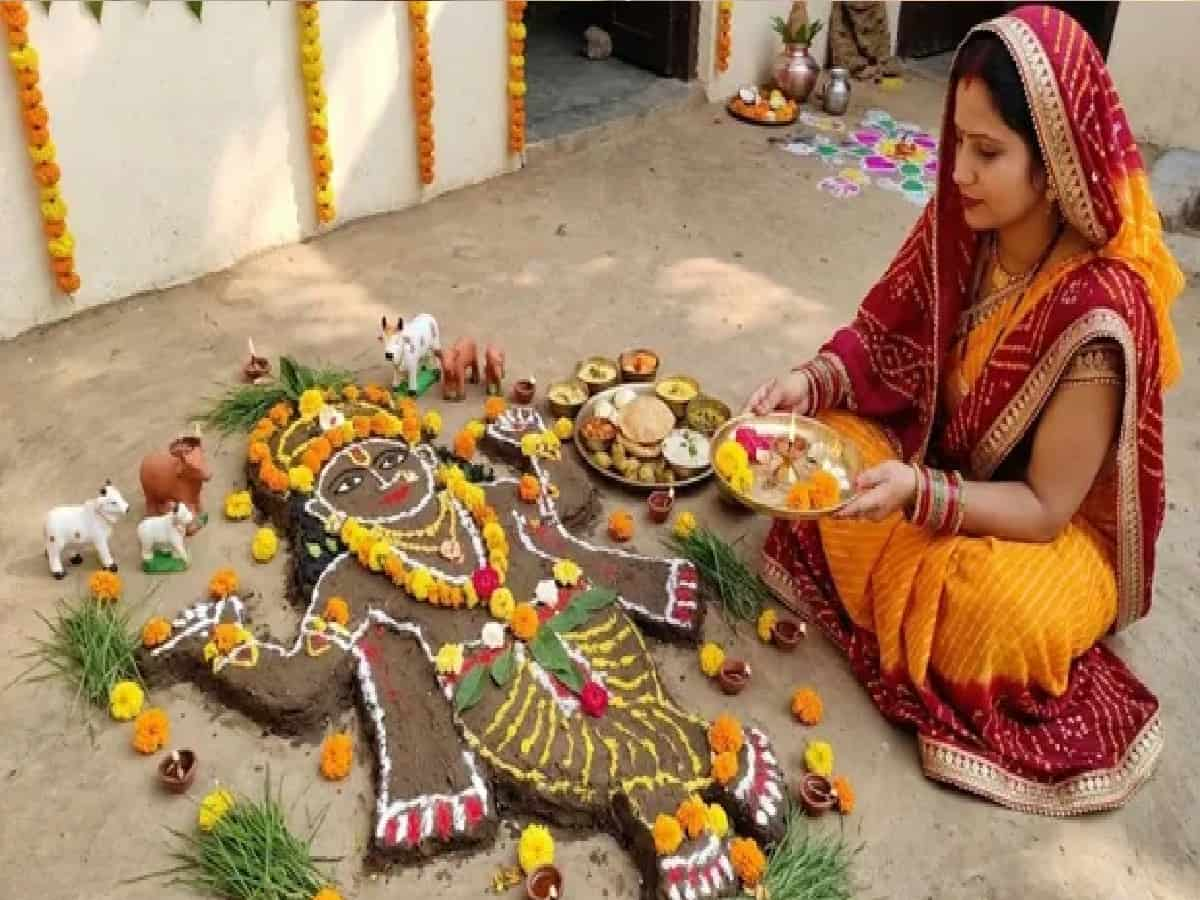
As the festive glow of Diwali illuminates courtyards across northern India, devotees are preparing for one of the most culturally revered and spiritually uplifting festivals of the Sanatan calendar: Govardhan Puja. Also celebrated as Annakut, this sacred occasion falls on the Pratipada Tithi of Shukla Paksha in the holy Hindu month of Kartik. The festival carries an electric devotion across the historic Brij region of Uttar Pradesh—spanning Mathura, Vrindavan, Govardhan, and Barsana—as well as households across Lucknow and the wider national landscape. While the visual tapestry of the festival is defined by intricately modeled cow-dung figures of Giriraj Maharaj, mountains of vegetarian culinary offerings, and decorated cattle, the spiritual nucleus of the festival is anchored in a profound theological shift that took place thousands of years ago. At its heart, Govardhan Puja commemorates the divine intervention of Lord Shri Krishna during the Dwapara Yuga, when a young cowherd boy dismantled the ritualistic hubris of the Vedic heavens to establish the sacred primacy of nature, ecology, and selfless devotion.
The Dwapara Yuga Legend: How Krishna Shattered Indra's Pride
The origins of Govardhan Puja trace back to an ancient pastoral society residing along the banks of the Yamuna River. In the Dwapara Yuga, it was customary for the cattle-rearing community of Gokul and Braj to organize grand annual sacrifices and elaborate fire rituals to appease Devraj Indra, the Vedic king of the demigods and ruler of rains, storms, and the firmament. The villagers believed that rain, pastureland fertility, and agricultural survival were direct gifts bestowed at Indra’s pleasure, requiring constant appeasement through sacrificial oblations.
One autumn morning, noticing his foster father Nanda Baba and the community elders feverishly preparing monumental feasts and ritual altars, a youthful Krishna inquired about the true purpose of the elaborate ceremony. Nanda Baba explained that propitiating Indra was an inherited duty necessary to secure the monsoon showers that sustained their cattle and crops. Krishna questioned this deeply entrenched dogma with clarity and philosophical courage. He argued that rain fell as a natural consequence of atmospheric forces and cosmic order (Rita), governed by the supreme laws of creation rather than the personal whims of a prideful monarch.
Krishna urged the elders to look around them: it was not a distant celestial deity who provided sustenance, but the fertile soil, the lush pasture grasses, the flowing rivers, the sacred cows (Gau Mata), and the majestic Mount Govardhan that directly protected and nourished their livestock. Convincing Nanda Baba and the cowherd community to redirect their gratitude, Krishna led the Brajwasis to divert their festive offerings away from Indra, utilizing the prepared delicacies to worship Mount Govardhan and their own cattle herds instead.
Lifting the Sacred Hill: Seven Days Under Giriraj's Divine Shelter
Observing that the traditional oblations intended for him were being placed at the foot of an earthen hill by a humble village community, Devraj Indra was consumed by fury and wounded vanity. Viewing Krishna’s council as an open affront to his sovereign authority, Indra resolved to unleash destructive vengeance upon the Braj countryside. He summoned the apocalyptic storm clouds known as the Samvartaka—ordinarily reserved for the cosmic dissolution of the universe—and commanded them to drown Gokul in continuous torrents of blinding rain, freezing hail, and thunderous lightning strikes.
Within hours, rivers breached their banks, pasturelands vanished under rising waters, and the livestock trembled in terror. Confronted with devastating devastation, the villagers rushed to Krishna for salvation. In a demonstration of grace and supreme authority over creation, the seven-year-old Krishna walked toward Mount Govardhan. With effortless ease, he lifted the entire mountain with the little finger (Kanishtha Anguli) of his left hand, holding it aloft like an enormous umbrella.
For seven consecutive days and nights, Krishna stood firm without flinching, sheltering the entire population of Braj, their cattle, horses, and wildlife underneath the dry canopy of the mountain. Seeing his apocalyptic tempests completely neutralized by the child's finger, Indra's arrogant illusions shattered. Recognizing that the cowherd boy was the Supreme Being manifest, Indra withdrew the storm clouds and descended from the heavens on his celestial elephant, Airavata. Prostrating before Krishna in total surrender, Indra performed a divine ablution with the milk of the sacred wish-fulfilling cow, Kamadhenu, formally crowning Krishna with the eternal title of Govinda—the supreme protector and lord of cows, land, and senses.
Sacred Rituals: Gau Seva, Giriraj Parikrama, and the Annakut Feast
The rituals observed on Govardhan Puja serve as a living continuation of Krishna’s pastoral philosophy. Across rural villages and urban neighborhoods in Uttar Pradesh, families rise before dawn to clean their courtyards with water and sacred cow dung. Devotees then craft a reclining physical likeness of Govardhan Mountain on the ground using fresh cow dung, adorning the figure with sugarcane sticks, marigold flower garlands, earthen lamps, and cotton wool. In the center of this effigy, a small earthen lamp filled with pure mustard oil or cow ghee is lit, symbolizing the inner light of spiritual awareness.
Parallel to the worship of the hill is the profound ritual of Gau Seva (cow reverence). Recognizing the cow as the cornerstone of pastoral prosperity and a surrogate mother to humanity, devotees bathe their cows and bulls, decorate their horns with auspicious vermilion and turmeric pastes, drape them in vibrant fabrics, and feed them freshly gathered green grass, seasonal fruits, and jaggery. The festivities culminate in the preparation of Annakut (literally, a mountain of grain). To celebrate Krishna's triumph and express collective gratitude, families and temples prepare fifty-six distinct traditional culinary delicacies (Chhappan Bhog), featuring a kaleidoscope of vegetable stews, sweet porridge, regional breads, kheer, and savories, which are placed before the deity and later distributed among neighbors and the underprivileged as sanctified prasadam. In the holy town of Govardhan near Mathura, millions of barefoot pilgrims undertake the rigorous 21-kilometer circumambulation (Parikrama) around the sacred hill, chanting devotional hymns that date back to ancient eras.
Govardhan Puja 2026: Accurate Dates, Timings, and Shubh Muhurat
Navigating the astronomical calendar for 2026 requires understanding the astrological transition of the Pratipada Tithi. According to traditional Hindu panchang calculations, the Pratipada Tithi of the Shukla Paksha of Kartik month commences on Monday, November 9, 2026, at 12:31 PM and concludes on Tuesday, November 10, 2026, at 2:00 PM.
In Sanatan Dharma traditions, religious festivals governed by diurnal rituals follow the principle of Udaya Tithi—which mandates that a festival is universally observed on the calendar day on which the relevant astronomical tithi is prevailing at local sunrise. Because the sun rises into Pratipada Tithi on the morning of Tuesday, November 10, the official celebration of Govardhan Puja will take place on November 10, 2026.
Astrologers and Vedic scholars have calculated the primary auspicious windows (Shubh Muhurat) for conducting the rituals:
The principal morning Govardhan Puja Muhurat on November 10 opens at 06:40 AM and concludes at 08:50 AM, providing devotees with an ideal two-hour-and-ten-minute window to perform the traditional rituals, light the sacred lamp, and present the Annakut offerings.
Devotees wishing to align their spiritual practices with broader astrological alignments during the day can also take note of complementary auspicious windows:
-
Brahma Muhurta: 05:00 AM to 05:51 AM (Best suited for meditation and early morning cleansing)
-
Vijay Muhurta: 02:06 PM to 02:50 PM (Auspicious for initiating new resolutions and auspicious works)
-
Godhuli (Twilight) Muhurta: 05:57 PM to 06:13 PM (Ideal for evening lamp-lighting and cow worship)
-
Nishita Muhurta: 11:49 PM to 12:41 AM (Optimal for night-time prayers and contemplative chanting)
Ecological Wisdom: An Ancient Lesson in Environmental Reverence
Beyond its mythological charm and festive pageantry, Govardhan Puja holds immense relevance for the contemporary modern world as one of humanity’s earliest lessons in environmental consciousness and sustainable ecology. In the Dwapara Yuga, Krishna’s refusal to worship a distant, wrathful deity in favor of an immediate, living mountain challenged human arrogance and dogmatic fear. His teachings demonstrated that genuine spirituality does not exist in escaping the natural world, but in recognizing the sacredness of our local environment—honoring the topsoil that yields food, the hills that regulate regional hydrology, and the animals that labor alongside humanity.
By transforming an earthen mound and common livestock into objects of supreme divine worship, Krishna dismantled elitist ceremonial hierarchies, democratizing religion and placing rural communities at the absolute center of spiritual life. As families gather on November 10, 2026, to sculpt the sacred hill, offer Annakut feasts, and bow before the mother cow, the celebration serves as an enduring reminder of human duty toward the natural world, proving that true prosperity flourishes only when humanity lives in harmonious reverence with the earth that sustains it.




