desk
desk Share
Share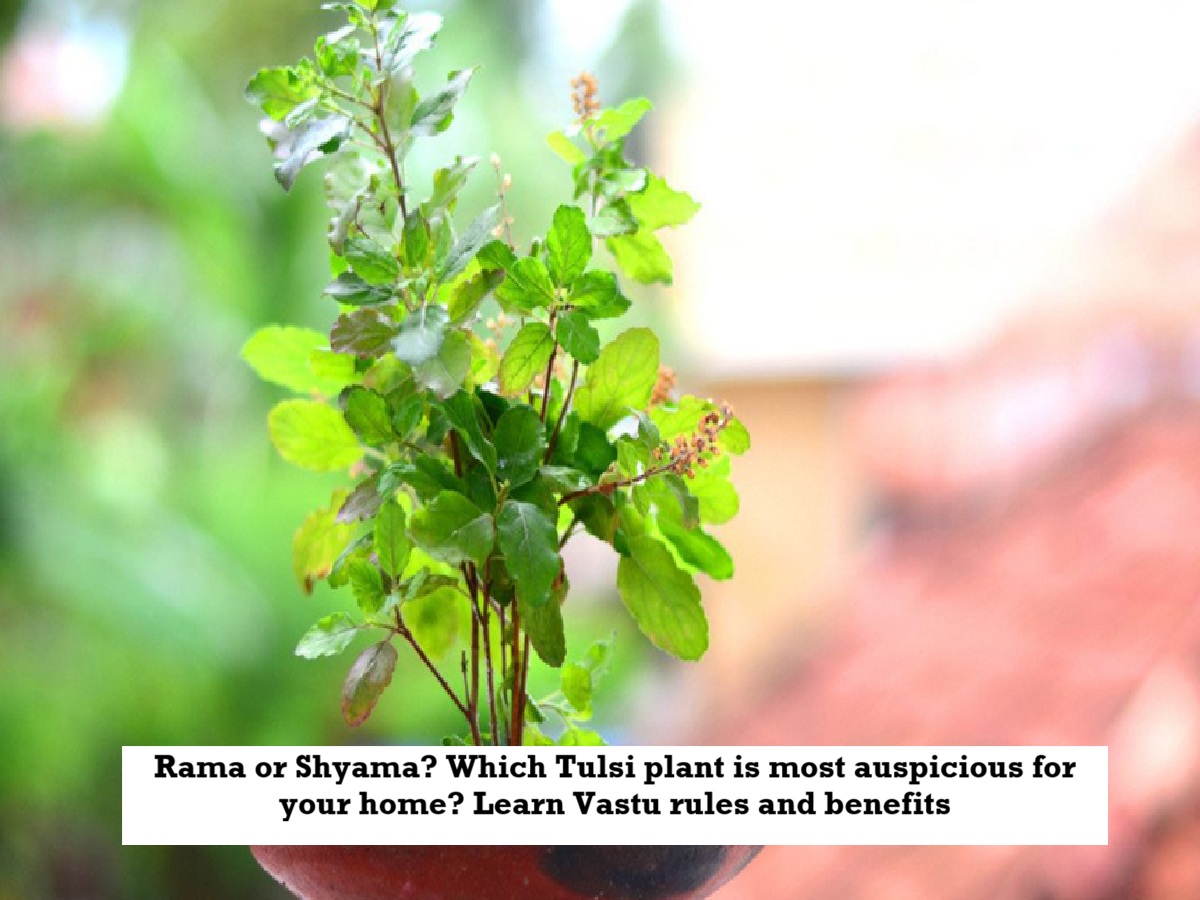
News Topical, Digital Desk : Having a Tulsi plant in the courtyard of the house is a beautiful part of our culture. We all know that Tulsi is auspicious, but people are often confused about which Tulsi plant is better for the home: Rama or Shyama.
Moreover, many people are unaware of whether these two can be placed together and what do they have to do with Vastu.
What is the difference between Rama and Shyama Tulsi?
Rama Tulsi: Its leaves are light green and have a slightly sweet taste. It is also known as 'Ujjwal Tulsi'. According to legend, it symbolizes happiness and peace in the home.
Shyama Tulsi: Its leaves are slightly purple or dark in color. Because its color resembles that of Lord Krishna (Shyama), it is called Shyama or Krishna Tulsi. In Ayurveda, it is considered to have medicinal properties.
Vastu rules and correct direction
According to Vastu Shastra, the Tulsi plant brings prosperity to the house only if it is in the right direction.
Best Direction: Tulsi should always be planted in the north or north-east direction. This direction is considered to be the direction of Kubera and Goddess Lakshmi.
East: If the space above isn't available, you can also place it in the east. Like the sun, it fills the home with positive energy.
Where not to plant: Avoid placing Tulsi in the south direction. This is considered the direction of Yamaraj, and placing Tulsi here can be harmful instead of beneficial.
What do our scriptures say?
According to the Padma Purana, the mere sight of Tulsi destroys a person's sins. Negativity never lingers in homes where Tulsi is cultivated.
According to the Skanda Purana, offering water to Tulsi and circumambulating it brings health and prosperity
According to Vastu Shastra, Tulsi is said to be the most effective plant to remove 'Vaastu Dosh'.
Benefits of planting both Tulsi
You can plant both Rama and Shyama Tulsi together. Rama Tulsi brings mutual love and peace of mind, while Shyama Tulsi opens the door to health and wealth.
--Advertisement--