desk
desk Share
Share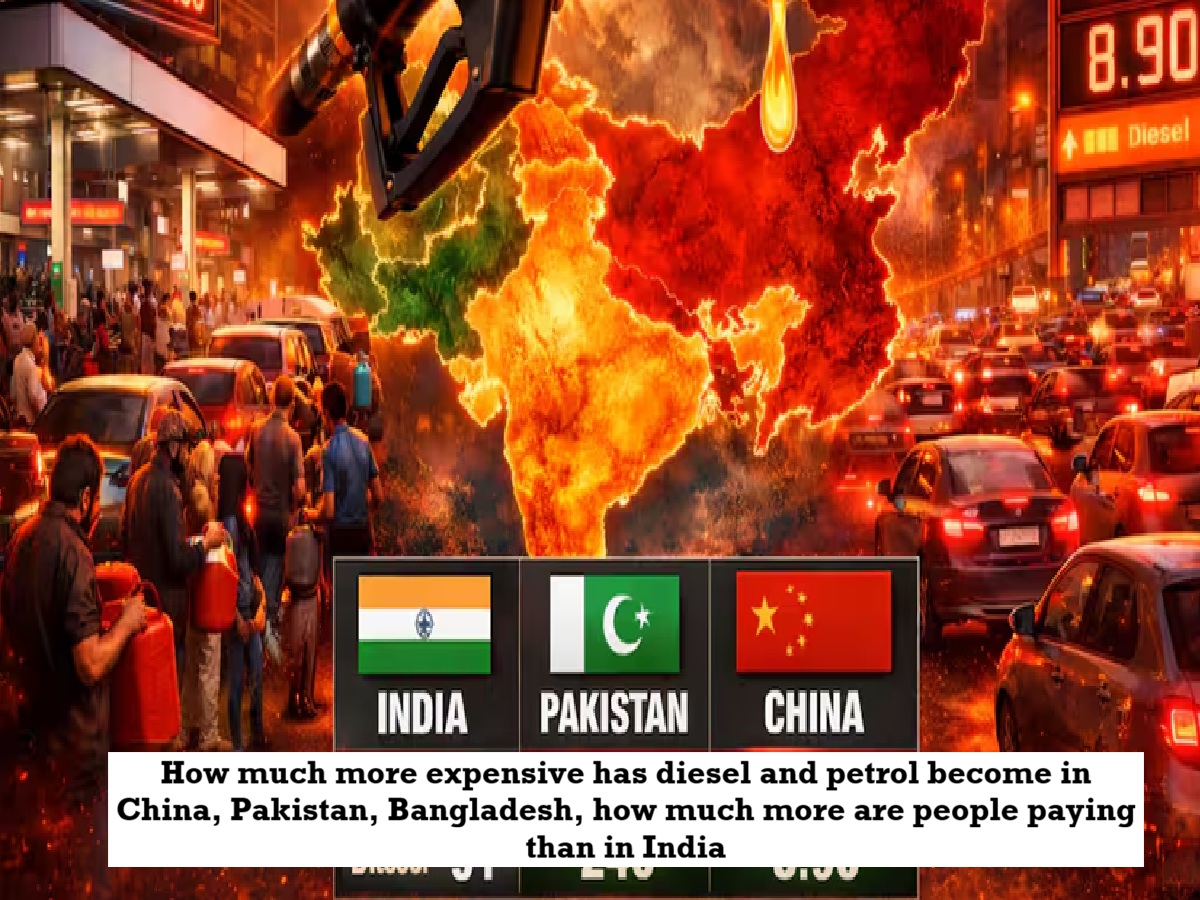
News Topical, Digital Desk : Petroleum prices and supplies are highly strained in India's neighboring countries. The Strait of Hormuz has been affected by the Iran-US-Israel conflict, disrupting global oil and gas supplies, directly impacting neighboring countries. India's neighboring countries include Pakistan, China, Bangladesh, Nepal, Sri Lanka, Bhutan, and the Maldives.
Petrol and diesel prices rocket in Pakistan
Petrol and diesel prices have risen sharply in Pakistan. According to Dawn News, from March 7, 2026, the government has increased the price of petrol to Rs 321.17 per liter and high-speed diesel to Rs 335.86 per liter. This is a huge increase of Rs 55 per liter, which is about 20% up. The reason given for this is the increase in oil prices due to the war in the Middle East. Common people are standing in long queues at petrol pumps in all the big and small cities like Karachi, Islamabad and Lahore. Rising transport costs are affecting inflation. Pakistan has described this as the highest increase among 14 countries.
Pakistani PM Shahbaz Sharif, addressing the nation on Monday night, said that the US-Israel war on Iran has triggered a global oil crisis, prompting the government to take strict measures. These include enforcing a four-day working day for all government offices, Monday through Thursday. Friday will be an additional holiday, but this will not apply to banks.
In China, filling up your tank costs around 29 yuan more.
Oil prices in China are skyrocketing, directly impacting petrol and diesel prices. The National Development and Reform Commission (NDRC) announced the largest increase in retail fuel price caps on March 9, 2026, the highest since March 2022. According to the NDRC, the retail price caps for gasoline (petrol) have been raised by 695 yuan ($100.46) per metric ton and for diesel by 670 yuan ($96.84) per metric ton. These changes will take effect on March 10, 2026. This will increase the price of 92-octane gasoline by 0.55 yuan per liter, 95-octane by 0.58 yuan per liter, and diesel by 0.57 yuan per liter. Filling a 50-liter tank costs an additional 27-29 yuan.
Bangladesh faces a major fuel supply crisis.
Bangladesh's new Tariq Rahman government has imposed fuel rationing from March 6-8 to prevent panic buying. According to a Reuters report, cars are receiving 10 liters of petrol and diesel daily, motorcycles 2 liters, and trucks and buses are receiving more, but limited, supplies. Petrol prices remain stable at Tk 116 per liter and diesel at Tk 100 per liter, but there are reports of long queues and overnight waits at stations due to supply constraints. Bangladesh imports 95% of its fuel, so the war is causing delays. India has sent 5,000 tons of diesel through the Friendship Pipeline, and a total import of 280,000 tons has been finalized to avoid shortages in March. However, panic buying has tightened the situation.
Petrol and diesel prices have not increased much in Nepal.
In Nepal's capital, Kathmandu, petrol is being sold at NPR 157 per liter and diesel at NPR 142 per liter. According to NOC Nepal, oil prices have increased slightly (about 0.03 dollar per liter), but not significantly. Nepal imports most of its fuel from India, so it is benefiting from India's stability. However, rising global prices are impacting transportation costs. No major rationing or shortages have been reported.
Oil prices have risen slightly in Sri Lanka.
Petrol prices in Sri Lanka are currently around LKR 340 per liter (95 octane) and diesel around LKR 279 per liter. Petrol prices in Sri Lanka have seen a slight increase, of $0.01 per liter, but this is slightly below the market price formula. While there is no major crisis, the global crisis is putting pressure on transport and the economy.
No significant price changes in Bhutan and the Maldives.
Diesel is priced at INR 61.69 per liter (about 70 BTN) in Bhutan, which relies on imports from India. Prices are also high in the Maldives, but specific March 2026 data doesn't show significant changes. Both countries are stable due to supplies from India.
Overall, Pakistan, China, and Bangladesh are the most affected, with prices rising sharply and supply rationing being imposed. Prices in Nepal and Sri Lanka have risen, but supplies are stable. India has kept prices stable by increasing domestic production and diversifying imports from Russia and the United States, but the impact of the war on its neighbors is clearly visible. Oil prices are above $100 per barrel, so further pressure is likely.
--Advertisement--