
 desk
desk Share
Share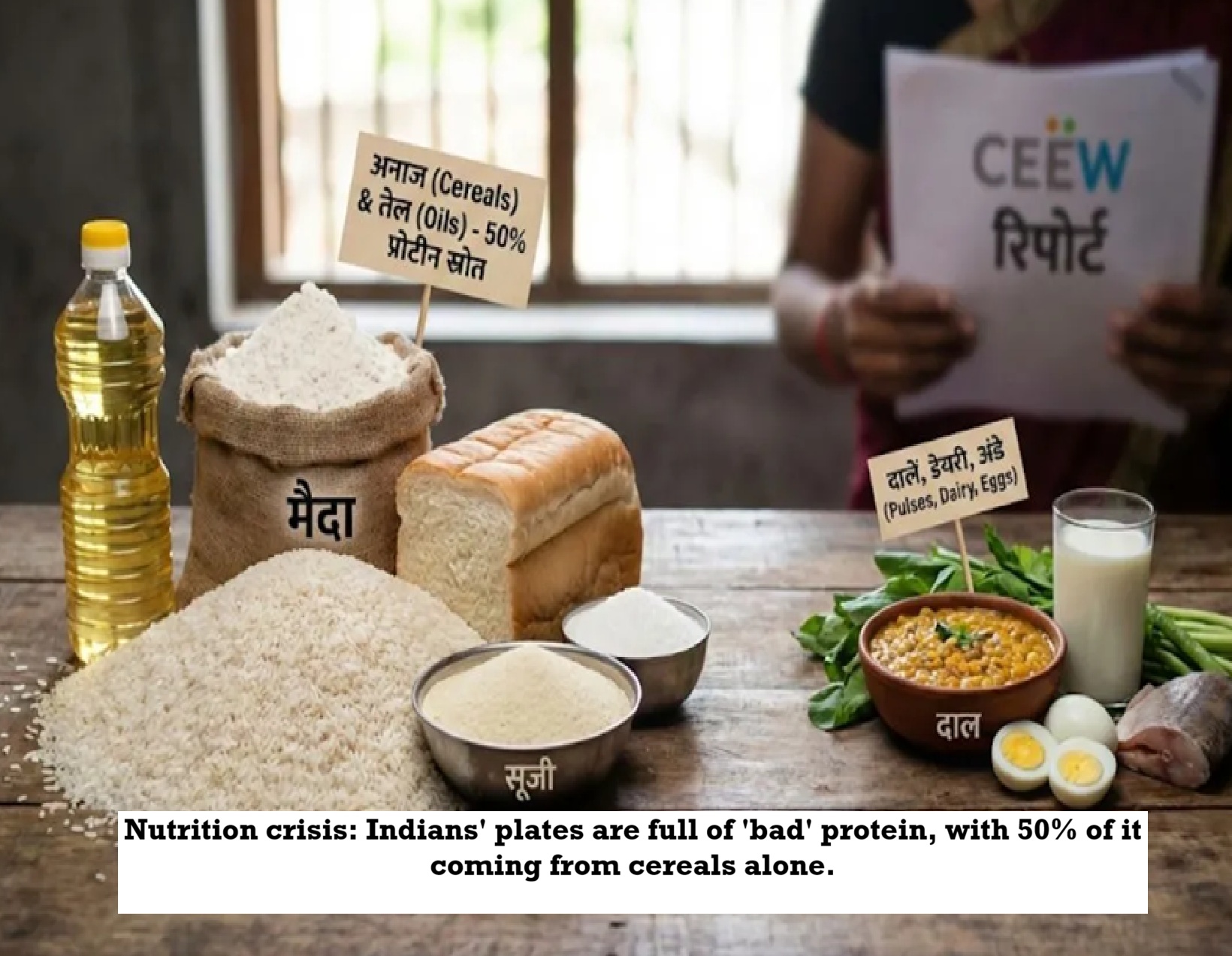
News Topical, Digital Desk : Nearly half of the protein intake in Indians' diets now comes from cereals like rice, wheat, semolina, and refined flour, according to a new study released Wednesday by the Council on Energy, Environment and Water (CEEW). The study analyzed dietary trends based on data from the National Sample Survey Office's Household Consumption Expenditure Survey 2023-24.
Increasing dependence on cereals
The study found that nearly 50 percent of this protein comes from cereals, which contain low-quality amino acids and are not easily digested. This share of cereals in protein is much higher than the 32 percent recommended by the National Institute of Nutrition (NIN). High-quality protein sources like pulses, dairy products, and eggs/fish/meat are being excluded from the diet. The CEEW study also found that the intake of key food groups like vegetables, fruits, and pulses is low, while cooking oil, salt, and sugar are high.
The rich have 1.5 times more protein in their plate than the poor.
CEEW analysis shows that the richest 10 percent of India's population consumes 1.5 times more protein at home than the poorest, and also has greater access to animal-based protein sources. India's diet remains heavily skewed toward cereals and cooking oils, both of which contribute to major nutritional imbalances.
Nearly three-quarters of carbohydrates come from cereals, and direct cereal intake is 1.5 times the recommended daily allowance, a factor fueled by widespread availability of subsidized rice and wheat through the public distribution system among the lowest 10 percent of the population. Household consumption of coarse grains such as jowar, bajra, and ragi has declined the most, with per capita consumption falling by nearly 40 percent over the past decade.
Flour and oil replaced coarse grains.
At the same time, the proportion of households consuming 1.5 times the recommended level of fat and oil has more than doubled in the past decade. Fat intake in high-income households has almost doubled compared to low-income households. Suhani Gupta, research analyst at CEEW, says, "Coarse grains and pulses are nutritionally superior and environmentally beneficial, but they are underutilized and under-provided in major food programs, such as the Public Distribution System (PDS), which continues to be dominated by rice and wheat."
--Advertisement--


