







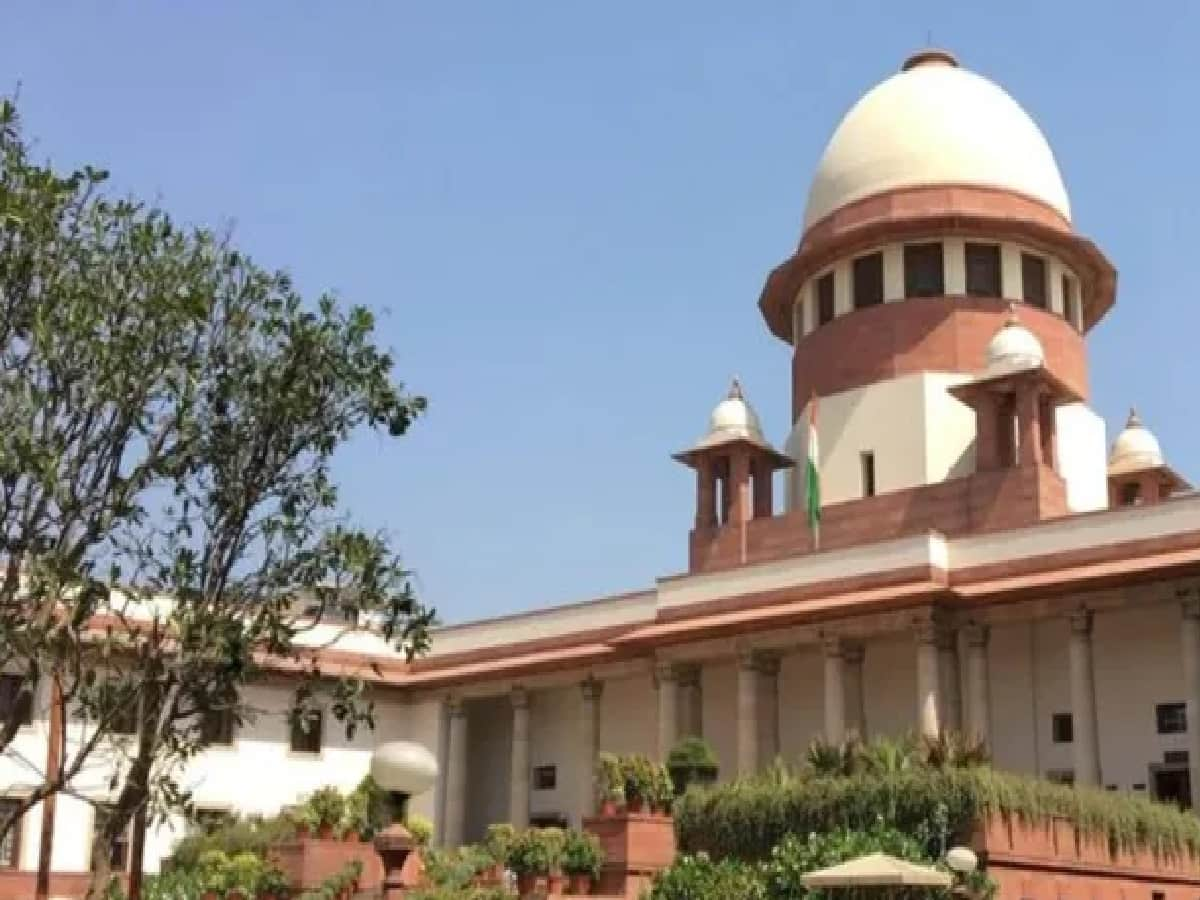
SC Collegium Plans Overhaul to End Arbitrary HC Judge Transfers
In a decisive push toward institutional transparency and judicial accountability, the Supreme Court Collegium in New Delhi has initiated high-level deliberations to overhaul the longstanding, unwritten conventions governing the transfer of High Court judges across India. Headed by Chief Justice of India (CJI) Surya Kant and comprising senior-most judges Justices Vikram Nath, B.V. Nagarathna, M.M. Sundaresh, and P.S. Narasimha, the five-member body held informal discussions last week aimed at codifying a clear, objective policy framework for relocating judges from their parent High Courts. For decades, inter-court transfers exercised under Article 222 of the Constitution have operated largely through opaque traditions, often sparking debate within legal circles over allegations of selective targeting, internal court politics, and administrative inconsistency. By moving to dismantle arbitrary "pick-and-choose" practices, the apex court's top decision-making body seeks to ensure that every transfer decision rests on verifiable institutional needs rather than personal preference or unrecorded grievances.
Ending 'Pick-and-Choose' Conventions: Inside the Collegium's Deliberations
During their recent discussions in the national capital, members of the Supreme Court Collegium reached a broad consensus that transfers lacking a solid, transparent foundation must be phased out immediately. Legal observers across major judicial centers—ranging from the Delhi and Bombay High Courts to the Allahabad High Court in Uttar Pradesh—have long noted that the absence of written guidelines has created unpredictable outcomes for sitting judges. Under the existing ad-hoc system, personal representations submitted by High Court judges requesting a transfer on medical or family grounds have met with sharply contrasting responses: while some applications were cleared with remarkable speed, others encountered prolonged silence and what insiders describe as benign indifference.
To eliminate such disparities, the proposed policy framework aims to establish uniform benchmarks for evaluating both administrative transfers and personal requests. By clearly defining the eligibility criteria, cooling-off periods, and procedural timelines, the Collegium intends to protect the morale of the higher judiciary while insulating the transfer mechanism from perceptions of favoritism. Senior advocates and constitutional experts view this effort as a natural extension of the judicial self-governance doctrine, ensuring that internal mechanisms remain credible and fair without inviting external interference.
Unwritten Rules and Internal Politics: Why High Court Judges Are Transferred
Historically, the relocation of a judge from one High Court to another has been driven by a complex mix of administrative necessity, institutional discipline, and unspoken internal dynamics. On purely administrative grounds, senior High Court judges are routinely transferred to other states to gain broader judicial exposure before being elevated as Chief Justices of those respective courts. Similarly, a judge possessing specialized domain expertise in complex fields such as taxation, commercial arbitration, or intellectual property law may be shifted to a High Court facing an acute backlog in that specific jurisdiction. Transfers have also been utilized as a pragmatic conflict-resolution tool to create an institutional buffer when serious administrative friction develops between a sitting High Court Chief Justice and a senior puisne judge.
Beyond these formal justifications, however, recent reports have highlighted an unrecorded practice widely whispered about in judicial corridors. Judges perceived as enjoying close proximity to a sitting Chief Justice of India or an influential Collegium member frequently face the risk of sudden transfer immediately after their mentor retires from office. In several instances, these post-retirement reshuffles have been viewed as a subtle method of settling internal institutional scores against an outgoing CJI who may have turned down colleagues' recommendations during earlier appointment cycles. Replacing these unwritten power dynamics with documented, objective standards forms a central pillar of the Collegium’s ongoing reform agenda.
From Euphemisms to Data: Five-Year Trends in Judicial Transfers (2022–2026)
The push for a formalized policy builds upon gradual shifts in Collegium disclosure practices over the past decade. Until 2018, every transfer resolution published by the Supreme Court was cloaked in the standardized boilerplate phrase "in the interest of better administration of justice," concealing whether a move was routine, promotional, or complaint-driven. By 2020, the Collegium discarded that blanket euphemism, opting instead to issue straightforward resolutions explicitly naming the judge recommended for relocation.
An examination of official data over the past five years underscores the scale and volatility of these movements across India's 25 High Courts. In 2022, the Supreme Court Collegium recommended the transfer of 18 High Court judges. That figure nearly doubled to 34 recommendations in 2023 before dipping sharply to 11 in 2024. Activity surged again in 2025, with 44 High Court judges recommended for inter-state transfers, while 12 transfer proposals have been cleared so far in 2026. Crucially, the Collegium's current deliberations are also addressing executive bottlenecks: several transfer recommendations have remained pending with the Union Law Ministry for years without formal notification. Under the contemplated framework, the Collegium may introduce a formal provision to periodically review and reconsider stalled recommendations that the executive has left unexecuted.
Corrective Counseling Before Transfer: Rethinking Punitive Relocations
Perhaps the most sensitive reform under active consideration involves how the judiciary handles complaints regarding a judge’s integrity, judicial temperament, or conduct unbecoming of a constitutional office—whether inside the courtroom or in public life. While Supreme Court jurisprudence has consistently maintained that transferring a High Court judge is purely an administrative measure and never a punitive sanction, legal analysts point out that the vast majority of transfers over the last five years were widely perceived as removing judges from their parent High Courts following adverse reports. Critics within the bar have often argued that merely shifting a judge with integrity or behavioral concerns from one state to another does not resolve the underlying issue, but simply relocates the problem to a different set of litigants.
To address this anomaly constructively, a strong view has emerged within the Collegium that immediate relocation should not be the default first response to behavioral or procedural complaints. Instead, before recommending an out-of-state transfer, the Chief Justice of the concerned High Court should formally counsel the judge in question, clearly communicate the institutional concerns, and grant a stipulated timeframe to improve their courtroom demeanor or working style. Only if the judge fails to demonstrate corrective improvement within that designated window would the Collegium initiate transfer proceedings.
Strengthening Judicial Independence and Public Trust Across High Courts
As the CJI Surya Kant-led Collegium refines the contours of this policy framework, the broader legal fraternity is watching closely. For High Courts handling massive caseloads across states like Uttar Pradesh, Maharashtra, West Bengal, and Karnataka, administrative stability at the bench level is vital for timely justice delivery. Establishing transparent, predictable rules for judicial transfers will not only shield honest judges from the anxiety of arbitrary displacement, but also curb prolonged standoffs between the judiciary and the executive over pending files. By replacing informal conventions with an accountable institutional charter, the Supreme Court Collegium is taking a meaningful step toward reinforcing public confidence in the fairness, independence, and constitutional integrity of India's higher judiciary.




