







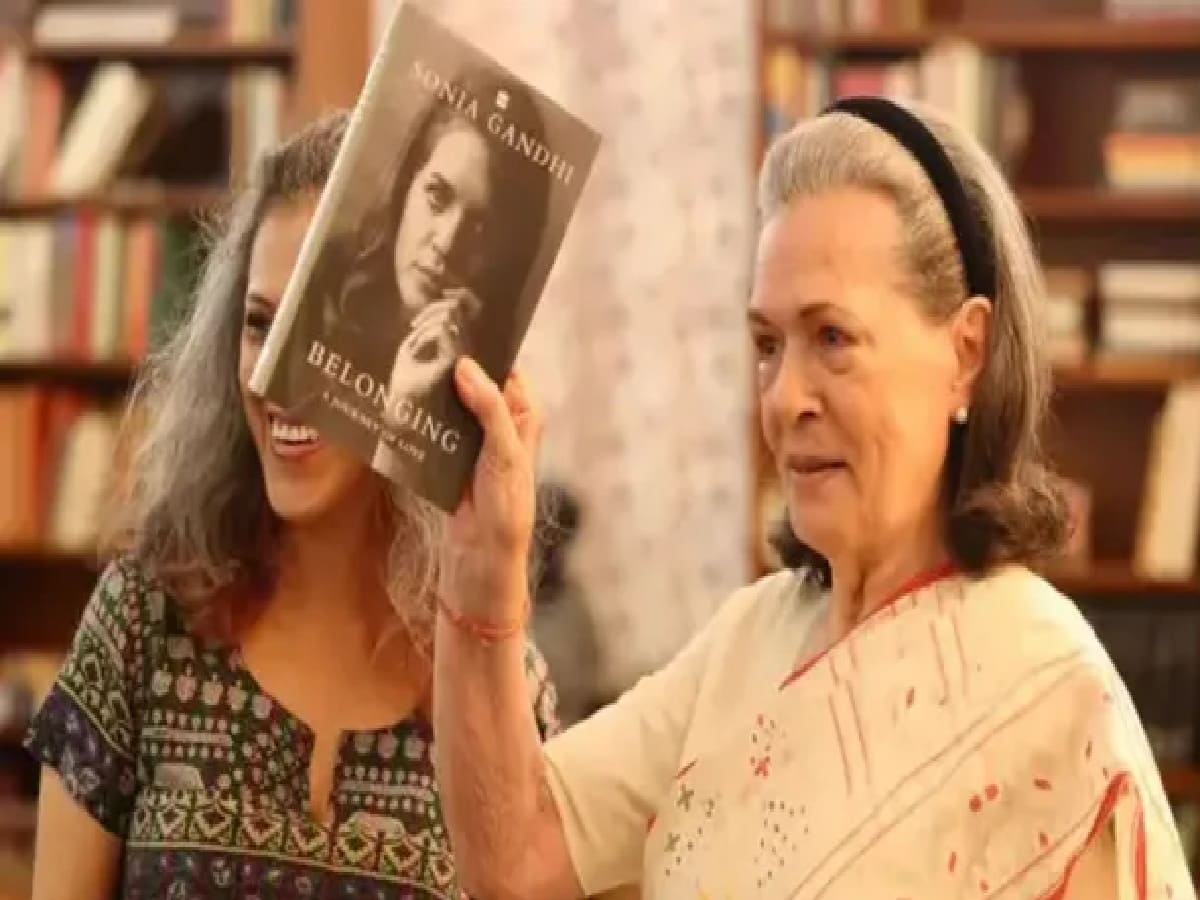
PV Narasimha Rao's Grandson Slams Sonia Gandhi's Memoir as 'Lies'
The release of Congress Parliamentary Party chairperson Sonia Gandhi’s long-awaited 544-page memoir, Belonging: A Journey of Love, has ignited a fierce political and ideological storm across the national capital and southern India. Just a day after the autobiography hit bookshelves on Tuesday, November 10, 2026, N.V. Subhash—grandson of former Prime Minister P.V. Narasimha Rao and chief spokesperson of the Bharatiya Janata Party (BJP) in Telangana—launched a blistering attack on the book’s narrative. Speaking to reporters on Wednesday, Subhash dismissed the memoir as a "bundle of lies" riddled with historical inaccuracies and deliberate omissions. Accusing the senior Congress leader of attempting to rewrite post-independence Indian history to burnish her family's image, Subhash alleged that the volume systematically erases the monumental economic and political legacy of P.V. Narasimha Rao while glossing over critical missteps committed during the Gandhi family’s decades in power, including the controversial 1975 National Emergency.
Omitting Narasimha Rao: Accusations of Sidelining Party Stalwarts
For the family of P.V. Narasimha Rao—the scholar-statesman from Telangana who steered India out of a severe balance-of-payments crisis in 1991 through landmark economic liberalization—the absence of due recognition in Sonia Gandhi’s memoir came as little surprise. Subhash remarked that as descendants of the late Prime Minister, they had fully anticipated that Gandhi would overlook Rao’s foundational contributions to both the Congress organization and the nation’s modern economic architecture. According to Subhash, this omission stems from a deeply ingrained institutional habit within the Congress leadership of diminishing non-Gandhi stalwarts so that members of the first family can monopolize historical credit.
Subhash contended that whenever the Congress establishment documents its history, accolades are selectively channeled either toward former Prime Minister Dr. Manmohan Singh or projected onto Rahul Gandhi, while leaders who held the party together during turbulent phases are pushed to the margins. He pointed out that Rao was not an isolated case, citing former President Pranab Mukherjee and former Congress president Sitaram Kesri as prominent examples of veteran organizational leaders who faced friction or institutional cold-shouldering from the Gandhi household. By excluding Rao’s five-year tenure from the narrative of national progress, Subhash argued, the memoir exposes an enduring insecurity toward leaders who commanded independent political stature.
Dynastic Contradictions: From Opposing Rajiv's Entry to Grooming Heirs
Beyond historical omissions, the BJP leader zeroed in on what he described as glaring internal contradictions and political hypocrisy woven throughout Belonging: A Journey of Love. In her book, Sonia Gandhi recounts her early years in New Delhi and asserts that she was strongly opposed to her late husband, Rajiv Gandhi, leaving his career as an airline pilot to enter active politics. Subhash questioned the credibility of this stance by contrasting her stated reluctance in the 1980s with her subsequent actions as Congress president over the past quarter-century.
Subhash argued that a leader who claims to have harbored deep reservations about political life would not have systematically inducted her own children, Rahul Gandhi and Priyanka Gandhi Vadra, into the center of national politics, nor laid the groundwork for the next generation of grandchildren to follow. Taking direct aim at Rahul Gandhi’s political trajectory, Subhash noted that despite decades of continuous organizational backing aimed at projecting him as a prime ministerial contender, he has struggled to fulfill his responsibilities effectively either as a parliamentarian or as Leader of the Opposition. Subhash maintained that presenting personal reluctance while actively entrenching dynastic succession underscores a fundamental disconnect between the memoir’s emotional framing and political reality.
'Crocodile Tears' Over Babri Masjid: Clash Over Ayodhya and Appeasement
The sharpest ideological confrontation triggered by Subhash’s critique centered on Sonia Gandhi’s reflections regarding the December 1992 demolition of the Babri Masjid in Ayodhya—a watershed event in modern Indian politics that unfolded during P.V. Narasimha Rao’s premiership. In her memoir, Gandhi expresses deep emotional distress over the incident, describing how she broke down upon learning of the events in Uttar Pradesh. Rejecting her account as theatrical vote-bank politics, Subhash accused the Congress leader of shedding "crocodile tears" in a calculated bid to distance herself from the majority Hindu community and appease specific minority sections of society.
Framing the issue within the broader civilizational context of Ayodhya and Uttar Pradesh, Subhash emphasized that the Ram Janmabhoomi site represented over four centuries of continuous historical struggle, cultural resilience, and exhaustive legal battles before the courts. He noted that the grand Shri Ram Temple standing in Ayodhya today was constructed strictly in accordance with the landmark verdict of the Supreme Court of India, an achievement celebrated across India and around the world. With millions of pilgrims from every walk of life traveling to Ayodhya to offer prayers before Ram Lalla, Subhash asserted that reviving partisan grievances over the 1992 dispute reflects an outdated politics of appeasement that no longer resonates with contemporary Indian voters.
Historical Blunders and Emergency Debates in Political Memoirs
Subhash further alleged that the memoir attempts to sanitize contentious chapters of Congress governance, notably the 21-month National Emergency imposed in June 1975 under former Prime Minister Indira Gandhi. Published globally by HarperCollins India and Alfred A. Knopf, Belonging: A Journey of Love arrives more than a decade after former External Affairs Minister Natwar Singh’s explosive 2014 autobiography, One Life Is Not Enough, challenged the official Congress narrative surrounding Sonia Gandhi’s decision to decline the prime ministership in 2004. At that time, Gandhi had publicly pledged to write her own book so readers would learn her version of events.
However, political critics across New Delhi and Hyderabad argue that instead of offering transparent historical introspection, the newly released volume relies on selective memory. By glossing over institutional excesses committed during the Emergency and side-stepping internal policy debates of the 1990s, Subhash contended, the text fails the test of objective historical documentation.
Electoral Decline and Cadre Disconnect: Why the Book Faces Skepticism
Concluding his critique, N.V. Subhash linked the timing of the memoir’s publication to the prolonged electoral decline of the Indian National Congress across major states. He observed that over the past twenty years, the party has suffered successive electoral setbacks across the country, remaining completely out of power for thirty to forty years in several key states—including major northern heartlands like Uttar Pradesh and Bihar. In such a challenging political climate, Subhash argued, literary exercises centered on family nostalgia cannot substitute for genuine grassroots organizational renewal.
According to the Telangana BJP spokesperson, Belonging: A Journey of Love represents an insular effort to re-establish an emotional bond between the Gandhi family and ordinary party workers. Yet, Subhash claimed, even the Congress party’s own grassroots cadre is largely ignoring the narrative, recognizing that India’s political landscape has moved decisively beyond dynastic storytelling toward performance-driven governance.




