







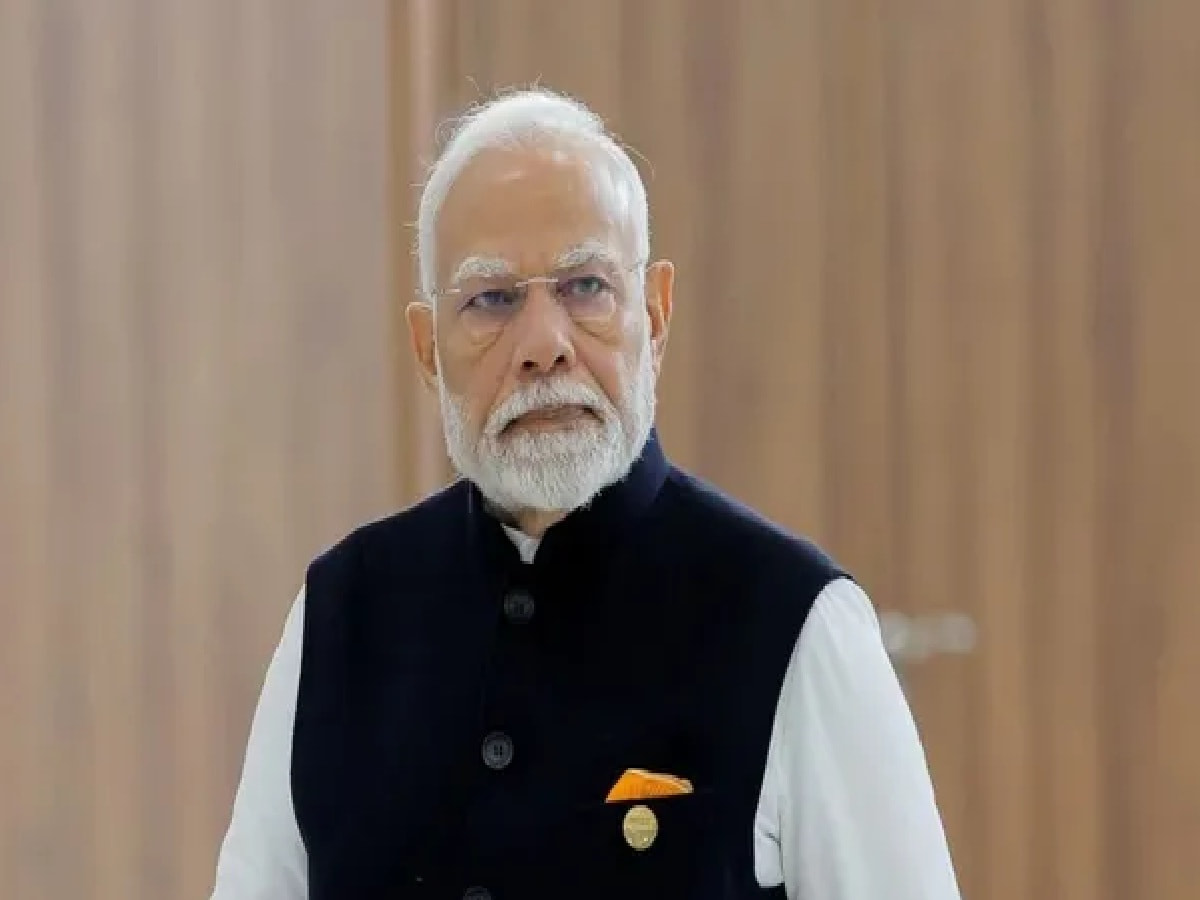
PM Modi Leaves for Philippines Today for ASEAN & East Asia Summits
Prime Minister Narendra Modi is departing for Manila, Philippines, today—Monday, November 16, 2026—on a high-stakes two-day diplomatic visit at the invitation of Philippine President Ferdinand R. Marcos Jr. During his stay in the Philippine capital, which is serving as the ASEAN Chair for 2026, Prime Minister Modi will participate in the 23rd ASEAN-India Summit and the 21st East Asia Summit (EAS) on Tuesday, November 17. Ahead of his departure from New Delhi, the Prime Minister underscored that relations with the 11-member Association of Southeast Asian Nations remain at the very heart of India's Act East Policy and its broader MAHASAGAR maritime vision. With 2026 formally designated as the ASEAN-India Year of Maritime Cooperation, discussions in Manila are set to prioritize naval and maritime security in the Indo-Pacific, accelerating the review of the $122 billion bilateral trade framework (AITIGA), defense exports such as BrahMos missile systems, regional stability in Myanmar and the South China Sea, and potential bilateral engagements on the sidelines. For diplomatic observers, defense analysts, business leaders, and citizens across New Delhi, Mumbai, Bengaluru, Chennai, Hyderabad, Kolkata, Pune, Ahmedabad, Lucknow, and Guwahati, PM Modi's Manila outreach represents a defining moment for India's strategic footprint across Southeast Asia.
Schedule in Manila and Core Pillars of the Act East Policy
Upon arriving in Manila on Monday, Prime Minister Modi is scheduled to attend an official dinner hosted by President Ferdinand R. Marcos Jr. for visiting regional and global leaders, alongside interacting with members of the Indian diaspora in the Philippines. On Tuesday, November 17, he will join fellow heads of state and government for back-to-back sessions of the 23rd ASEAN-India Summit and the 21st East Asia Summit, held this year under the overarching theme "Navigating the Future."
Briefing reporters ahead of the visit, Ministry of External Affairs (MEA) Secretary Rudrendra Tandon emphasized that as an Indian Ocean nation sharing direct maritime boundaries with Southeast Asia, India views deep strategic ties with ASEAN—both collectively and bilaterally—as mutually indispensable. Leaders will also review progress under the ASEAN-India Plan of Action (2026–2030) as both sides prepare to commemorate 35 years of Dialogue Relations and five years of their Comprehensive Strategic Partnership in 2027.
Key Agenda: Maritime Security, $122 Billion Trade Review, and Defense Ties
From trade modernization to regional security challenges, New Delhi's agenda in Manila spans five interconnected strategic tracks:
| Diplomatic Track | Core Focus Areas at Manila Summits (Nov 16–17, 2026) |
| Maritime Security & Indo-Pacific | Advancing the 2026 ASEAN-India Year of Maritime Cooperation; upholding UNCLOS and international law in the South China Sea |
| Trade & AITIGA Review | Pushing for an early conclusion to the review of the ASEAN-India Trade in Goods Agreement (AITIGA) to address trade imbalances across ~$122 billion in bilateral trade |
| Defense & Security Exports | Building on the $375 million BrahMos supersonic cruise missile deal with the Philippines as Manila seeks additional Indian defense platforms |
| Myanmar & Regional Connectivity | Opposing diplomatic isolation of Myanmar given India's 1,643-km shared border and strategic projects like the Kaladan Multi-Modal Transit Transport Project |
| East Asia Summit & Bilateral Talks | Exchanging views with global powers on geopolitical stability; watching for potential bilateral meetings—including whether talks materialize with US President Donald Trump |
South China Sea, Myanmar Connectivity, and Watch on Potential Bilateral Meetings
On maritime rules, New Delhi is expected to reiterate its consistent position that any Code of Conduct in the South China Sea negotiated between ASEAN and China must fully respect international law, particularly the 1982 United Nations Convention on the Law of the Sea (UNCLOS), and safeguard freedom of navigation. Simultaneously, defense cooperation with Manila—anchored by the landmark $375 million BrahMos deal and recent interest expressed by Philippine Defense Secretary Gilberto Teodoro Jr. in acquiring additional Indian systems—adds tangible strategic weight to the visit.
Regarding Myanmar, which is expected to be represented in Manila by a Foreign Ministry official, India continues to favor constructive engagement over isolation, citing its 1,643-kilometer land border, security considerations in India's Northeast, and flagship infrastructure investments such as the Kaladan Multi-Modal Transit Transport Project. Diplomatic watchers are also keeping a close eye on whether any bilateral pull-aside takes place between PM Modi and US President Donald Trump amid ongoing India–US trade discussions, though the Ministry of External Affairs has noted that no formal meeting between the two leaders has been confirmed so far.




