







'100% Pure' Food Labels: What Indian Law Says on Misleading Claims
Walk down any supermarket aisle or scroll through a quick-commerce grocery app in India today, and bold front-of-pack promises greet you at every tap: "100% pure fruit juice," "real forest honey," "sugar-free," or "whole-grain biscuits." Yet turning the packet over—or comparing what arrives at your doorstep against what was advertised on an e-commerce app—frequently reveals added sugars, refined fillers, undisclosed additives, or conflicting ingredient lists. As online grocery ordering becomes an everyday household habit, discrepancies between digital listings and physical food labels have emerged as a major food safety and consumer protection concern. In India, manufacturers, sellers, and e-commerce platforms are bound by strict statutory obligations under the Food Safety and Standards Act, 2006, the Consumer Protection Act, 2019, and the Legal Metrology Act, 2009. Understanding where legitimate marketing ends and illegal misbranding begins—and knowing how to preserve evidence and escalate complaints—empowers everyday shoppers to hold brands and platforms accountable. For households, grocery buyers, and consumer advocates across New Delhi, Mumbai, Bengaluru, Chennai, Hyderabad, Pune, Kolkata, Ahmedabad, Lucknow, and Jaipur, knowing these legal protections turns routine label-reading into real consumer power.
Why Enforcement Raids Alone Cannot Solve Food Misbranding
Recent enforcement data underscores both active regulatory vigilance and persistent compliance gaps. According to Food Safety and Standards Authority of India (FSSAI) records, authorities suspended 1,133 licenses, cancelled 52, and sealed 314 premises during enforcement drives—while parliamentary data for 2025–26 revealed that out of 223,808 food samples tested, 40,023 (nearly one in five) were found non-conforming across misbranding and adulteration, leading to 1,918 convictions.
Speaking on the challenge, FSSAI National Resource Person Ashwin Bhadri notes that punitive raids only address symptoms unless companies overhaul raw-material sourcing, supplier verification, sanitation, and quality checks permanently—emphasizing that food safety must become a daily habit rather than a temporary reaction to inspections.
What Indian Law Says About Misleading Labels and E-Commerce Platforms
Under Regulation 5 of the Food Safety and Standards (Labelling and Display) Regulations, 2020 (framed under Section 23 of the FSSAI Act), food businesses must list ingredients in descending order of weight or volume, alongside mandatory allergen, nutritional, and additive disclosures. Ankita, Senior Associate at the Chamber of Jain & Kumar, explains that neither fine-print disclaimers nor vague footnotes can legally shield a brand from mandatory visibility and font-size rules under Rule 4, and even the 2026 labelling amendments preserve core ingredient transparency. Furthermore, under FSSAI E-Commerce Amendment Regulations (2018) and the Consumer Protection (E-Commerce) Rules, 2020, online platforms must display accurate product details before purchase and deliver goods with at least 30 percent remaining shelf life or 45 days before expiry.
| Applicable Legal Provision | Type of Violation Covered | Statutory Penalty / Regulatory Action |
| Section 51, FSSAI Act, 2006 | Substandard food failing prescribed composition standards | Fine up to ₹5 lakh |
| Section 52, FSSAI Act, 2006 | Misbranded / mislabelled food sold with false or deceptive claims (e.g., false "100% pure" tag) | Fine up to ₹3 lakh (plus license suspension/cancellation under Regulation 2.1.8) |
| Section 53, FSSAI Act, 2006 | Misleading advertisements relating to food products | Fine up to ₹10 lakh |
| Section 21, Consumer Protection Act, 2019 (CCPA) | False or misleading advertisements & unfair trade practices (Sections 2(9), 2(11), 2(47)) | Ad suspension/modification plus fines up to ₹10 lakh (first offence) and ₹50 lakh (repeat offence) |
Five-Step Action Plan If You Receive a Mislabelled Grocery Product
Even if a grocery order costs only ₹150 or ₹600, consumers do not need to jump straight into prolonged litigation; India provides structured administrative and digital redressal pathways:
-
Preserve Five Key Pieces of Evidence Immediately: Keep the original wrapper, carton, or jar (unopened if still sealed); capture full-screen screenshots of the app listing showing product claims and ingredients; download the purchase invoice; photograph the batch/lot number, manufacturing/expiry dates, MRP, and 14-digit FSSAI license number; and save all emails or in-app support chats.
-
Escalate to the Platform's Grievance Redressal Officer: Under Rule 4(4) of the E-Commerce Rules, 2020, every online platform must display its Grievance Officer's details, acknowledge complaints within 48 hours, and resolve them within one month.
-
File a Grievance on the National Consumer Helpline (NCH): Call 1915, use the NCH app, or lodge a complaint at consumerhelpline.gov.in if the seller or platform fails to resolve the discrepancy.
-
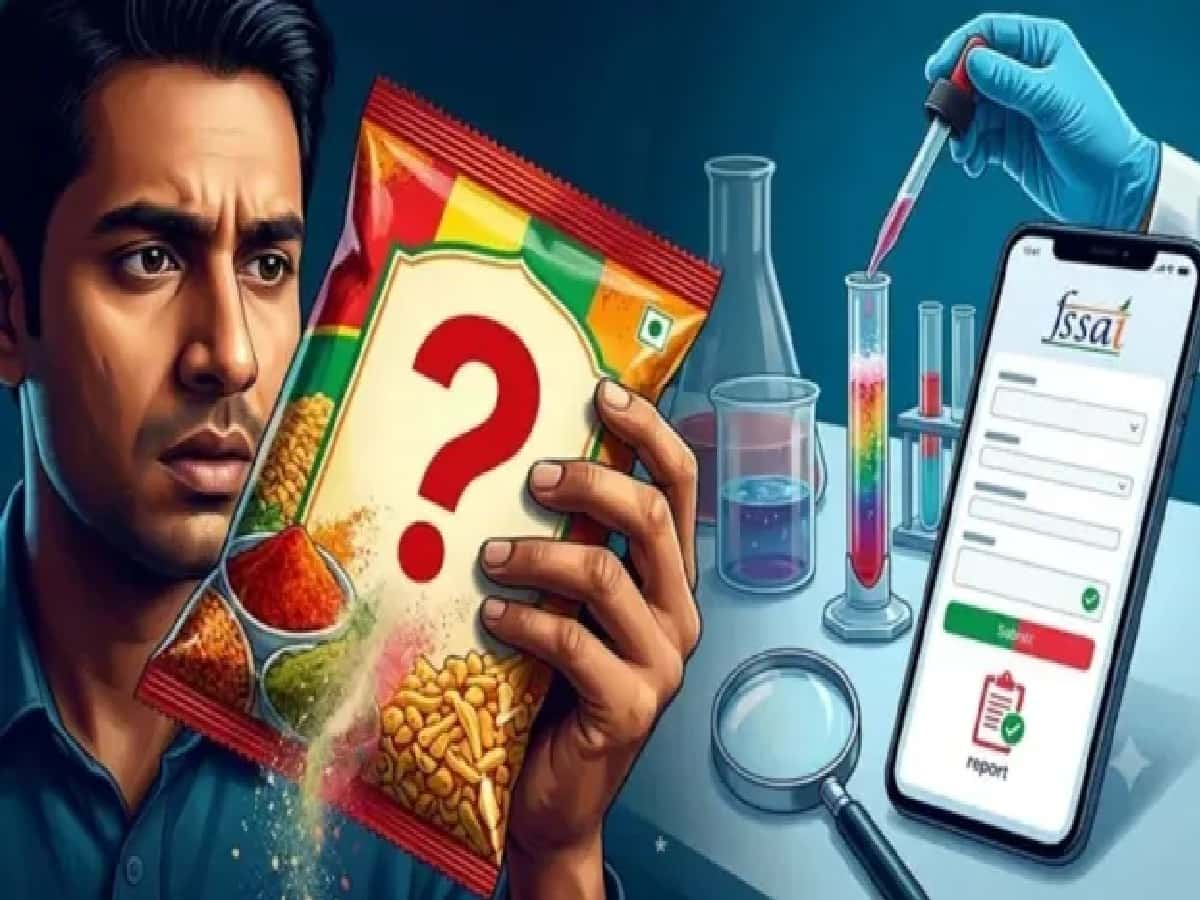
Report Directly to FSSAI: Submit the product's 14-digit FSSAI license number and label photos via the Food Safety Connect app or foscos.fssai.gov.in, triggering formal inspection by a Designated or Food Safety Officer.
-
Send a Legal Notice or Approach the Consumer Commission via E-Daakhil: Under Section 34 of the Consumer Protection Act, 2019, consumers can file claims up to ₹50 lakh online at edaakhil.nic.in—without requiring a lawyer—seeking a refund, replacement, compensation for mental agony, legal costs, or NABL-accredited lab testing under Section 38(2)(c).
Looking Beyond Front-of-Pack Marketing Promises
While procedural delays and the modest value of individual grocery bills often make shoppers hesitant to complain, every documented report strengthens regulatory oversight across supply chains. Ultimately, a shopper's strongest everyday defense lies in flipping the package over—checking the ingredient hierarchy, nutritional panel, and 14-digit FSSAI license number rather than relying solely on bold front-label marketing claims.




