







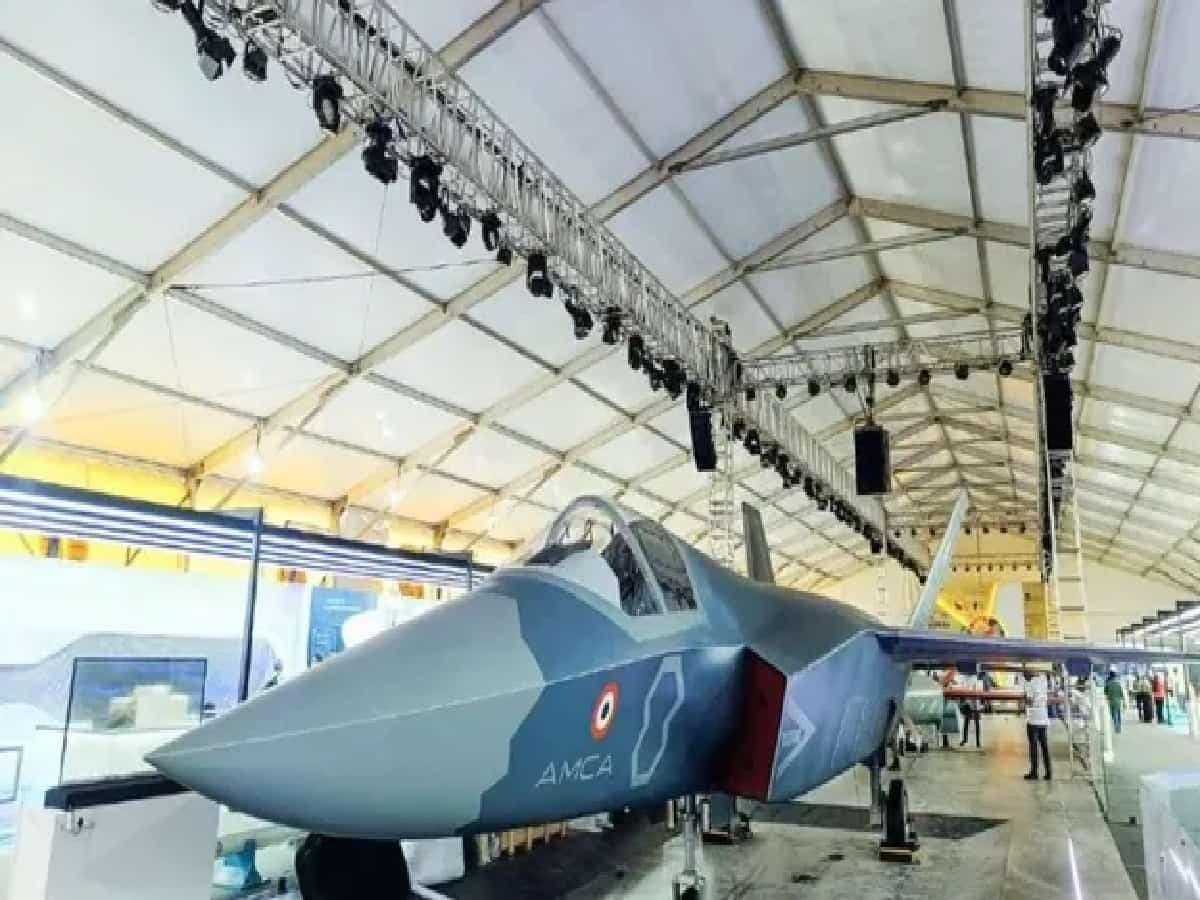
India's 5th-Gen AMCA Fighter: 3 Firms Submit Bids for ₹15,000 Cr Deal
India's ambitious push to field an indigenous fifth-generation stealth fighter jet has crossed a decisive industrial milestone, with three private-sector-led contenders formally submitting bids for the ₹15,000 crore Advanced Medium Combat Aircraft (AMCA) prototype development programme. According to defense industry reports, a high-level review committee constituted by the Ministry of Defence is currently evaluating proposals submitted by Tata Advanced Systems Limited (TASL) as a solo bidder, a consortium led by Larsen & Toubro (L&T) alongside Bharat Electronics Limited (BEL) and Dynamatic Technologies, and a third consortium headed by Bharat Forge with BEML Limited and Data Patterns. All three contenders filed their proposals ahead of the October 30, 2026 deadline—which had earlier been extended from August 27 at the bidders' request—and the technical bids were formally opened on November 1 to select a Development-cum-Production Partner (DCPP). Working under the design leadership of the Aeronautical Development Agency (ADA), a premier Bengaluru-based laboratory of the Defence Research and Development Organisation (DRDO), the selected partner will build five flying twin-engine AMCA prototypes and one structural test specimen. For defense analysts, aerospace engineers, strategic observers, and readers across New Delhi, Bengaluru, Mumbai, Hyderabad, Pune, Chennai, Vadodara, Lucknow, and Kanpur, this competitive bidding marks a historic shift toward building a second domestic fighter aircraft manufacturing line alongside state-run Hindustan Aeronautics Limited (HAL).
Inside the Three Contenders Vying to Build India's Stealth Fighter
Shortlisted from an initial field of seven applicants—in a process that notably saw legacy aircraft maker HAL miss out on technical consortium criteria—the three finalists bring distinct engineering, aerospace assembly, and defense electronics strengths to the competition:
| Contender / Consortium | Partner Entities Included | Core Industrial Capabilities Brought to AMCA |
| Tata Advanced Systems Limited (TASL) | Solo / Independent Bidder (only standalone bidder among the three) | Operates India's private military final assembly line for the C-295 transport aircraft in Vadodara with Airbus; manufactures complex fuselage sections and aerostructures for global OEMs |
| L&T-Led Consortium | Larsen & Toubro (Lead) + Bharat Electronics Limited (BEL) + Dynamatic Technologies | Combines L&T's large-scale defense systems integration, Navratna PSU BEL's military radars/avionics, and Dynamatic's proven global aerostructure manufacturing |
| Bharat Forge-Led Consortium | Bharat Forge (Lead) + BEML Limited + Data Patterns | Pairs Kalyani Group's precision metallurgy and forging scale with DPSU BEML's heavy engineering and Data Patterns' electronic warfare and flight-control systems |
Technical Evaluation, 1,800 Test Sorties, and Induction Timeline
Following initial document verification after the November 1 bid opening, the Ministry of Defence's review committee is conducting an exhaustive technical evaluation expected to conclude by the end of December 2026, paving the way for commercial negotiations. Once selected, the Development-cum-Production Partner will collaborate closely with Bengaluru-based ADA—and help establish dedicated integration and flight-testing infrastructure near Puttaparthi in Andhra Pradesh—to construct five twin-engine prototypes.
To power the five flying prototypes, ADA requires 15 GE F414 engines, linked to the proposed joint-production agreement between HAL and US aerospace major General Electric. Over a rigorous seven-year flight-test campaign, the five AMCA prototypes are slated to execute roughly 1,800 test sorties to validate stealth shaping, internal weapons bays, supercruise aerodynamics, AESA radar and sensor fusion, electronic warfare suites, and propulsion performance.
Why AMCA Is Crucial for Indian Air Force Squadron Strength
Defense planners view timely execution of the AMCA programme as vital for India's future air dominance. With the Indian Air Force's (IAF) active fighter squadron strength dipping to 29 squadrons against a sanctioned requirement of 42.5, inducting an indigenous fifth-generation stealth fighter is central to plugging capability gaps over the next decade. While prototype flight trials will span the coming years, the first serial-production batch of AMCA fighters is targeted for delivery around 2034–2035, positioning India among a select group of nations designing and manufacturing fifth-generation combat jets domestically.




