






Indian Railways Built Freight Corridors, Now Faces Truck Competition
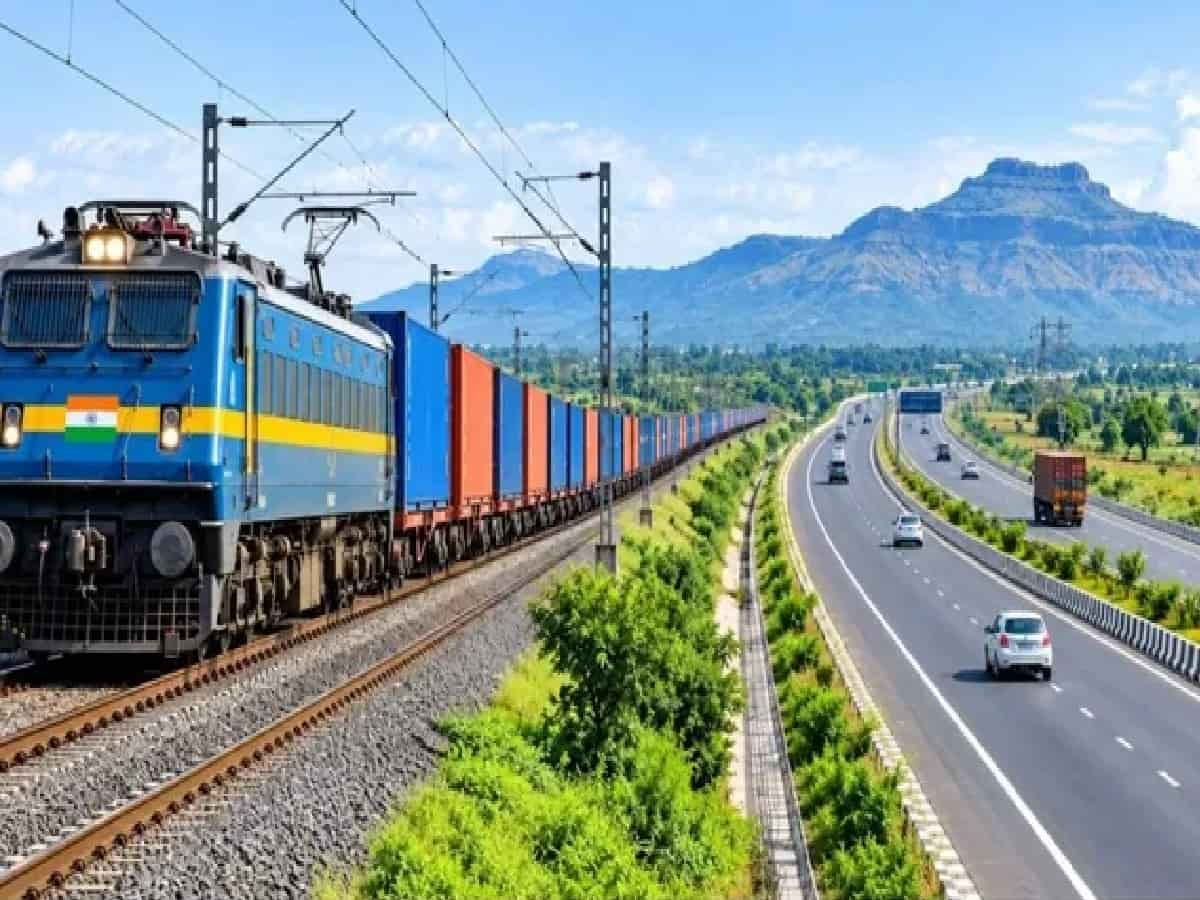
With the Eastern and Western Dedicated Freight Corridors (DFCs) now operational and a proposed East–West Corridor (Dankuni–Surat) in the pipeline, Indian Railways has entered a landmark phase of freight infrastructure expansion. On paper, cargo volumes appear stronger than ever: annual freight loading climbed from 1,098 million tonnes in FY15 to 1,617 million tonnes in FY25, reaching an all-time high of 1,670 million tonnes in FY26. Yet beneath those headline milestones lies a critical commercial reality. According to parliamentary estimates, rail's share of India's total freight traffic stands at roughly 27 percent, lagging far behind the National Rail Plan's target of 45 percent by 2030. After decades of capacity constraints, Indian Railways finally has high-speed freight tracks—but winning cargo back from highways now hinges on service reliability, seamless multimodal connectivity, and customer-centric logistics rather than infrastructure alone. For manufacturers, logistics operators, exporters, and supply-chain planners across New Delhi, Mumbai, Lucknow, Kanpur, Varanasi, Ahmedabad, Surat, Kolkata, Chennai, Bengaluru, and Hyderabad, how Indian Railways bridges the gap between track capacity and door-to-door delivery will shape India's logistics costs over the coming decade.
Record Loading vs. Falling Modal Share: Why Trucks Still Dominate
Even in traditional bulk commodities that generate the lion's share of railway freight revenue—coal, iron ore, steel, and cement—road transport has steadily carved out durable market share. Coal alone accounts for nearly half of railway freight earnings, yet road transport's share in raw coal movement expanded from 24.4 percent in FY21 to 33.8 percent in FY24 before moderating slightly to 31.1 percent in FY25, while rail's share dipped from 53.9 percent to 47.4 percent and recovered only partially to 50.5 percent.
| Freight & Infrastructure Metric | Verified Figure / Trend | Strategic Takeaway for Indian Railways |
| Annual Rail Freight Loading | 1,098 MT (FY15) → 1,617 MT (FY25) → 1,670 MT (FY26) | Record tonnage achieved, making IR the world's second-largest freight railway |
| National Freight Modal Share | ~27% for Rail vs. 45% target by 2030 under National Rail Plan | Huge structural gap remains as highways capture incremental cargo growth |
| Raw Coal Transport Share (FY25) | Rail: 50.5% (down from 53.9% in FY21); Road: 31.1% (up from 24.4%) | Road transport has entrenched itself even in core railway bulk commodities |
| Iron Ore Rail Share (FY25) | ~178 MT carried by rail out of ~289 MT national production (~61.6%) | Nearly 40% of iron ore—and even higher shares of steel & cement—move outside rail |
| National Highway Expansion | Expanded ~60%, from 91,287 km (2014) to 146,204 km (March 2025) | Enables trucks to deliver directly to decentralized factories, warehouses, and Tier-II/III towns |
Meanwhile, India's consumption map is decentralizing rapidly. With India's urban population projected to rise from 522 million in 2025 toward 600 million by 2036—and Tier-II and Tier-III cities generating nearly two-thirds of incremental direct-to-consumer e-commerce orders—warehousing and manufacturing are spreading well beyond traditional metro railheads.
First- and Last-Mile Bottlenecks: Where Rail Loses to Road Transport
A roughly 60 percent expansion in India's national highway network between 2014 and March 2025 (from 91,287 km to 146,204 km) has enabled trucking companies to offer direct factory-to-warehouse service with minimal cargo handling and a single point of accountability. By contrast, rail remains largely a point-to-point line-haul network dependent on trucks for first- and last-mile connectivity.
When transferring cargo between rail and road involves multiple handlings, unpredictable wagon placement, or opaque transit tracking, low rail tariffs lose their appeal. A steel plant cannot risk raw-material delays, and an exporter cannot afford to miss a port vessel because a rake arrived behind schedule.
Transforming Gati Shakti Terminals Into True Door-to-Door Logistics Hubs
To convert DFC track capacity into real market share, industry experts note that Indian Railways must treat service reliability as its core product—measuring performance through on-time arrival, terminal turnaround speed, assured wagon availability, and real-time digital tracking rather than tonnage alone.
While the Gati Shakti Multi-Modal Cargo Terminal (GCT) initiative has added substantial terminal capacity, the next phase must situate terminals near emerging industrial and consumption clusters rather than merely wherever railway land is available. Partnering closely with trucking operators, warehouse developers, and third-party logistics (3PL) providers—backed by unified digital booking and end-to-end shipment visibility—will allow Indian Railways to offer seamless rail-plus-road door-to-door solutions that match the convenience of trucking.