







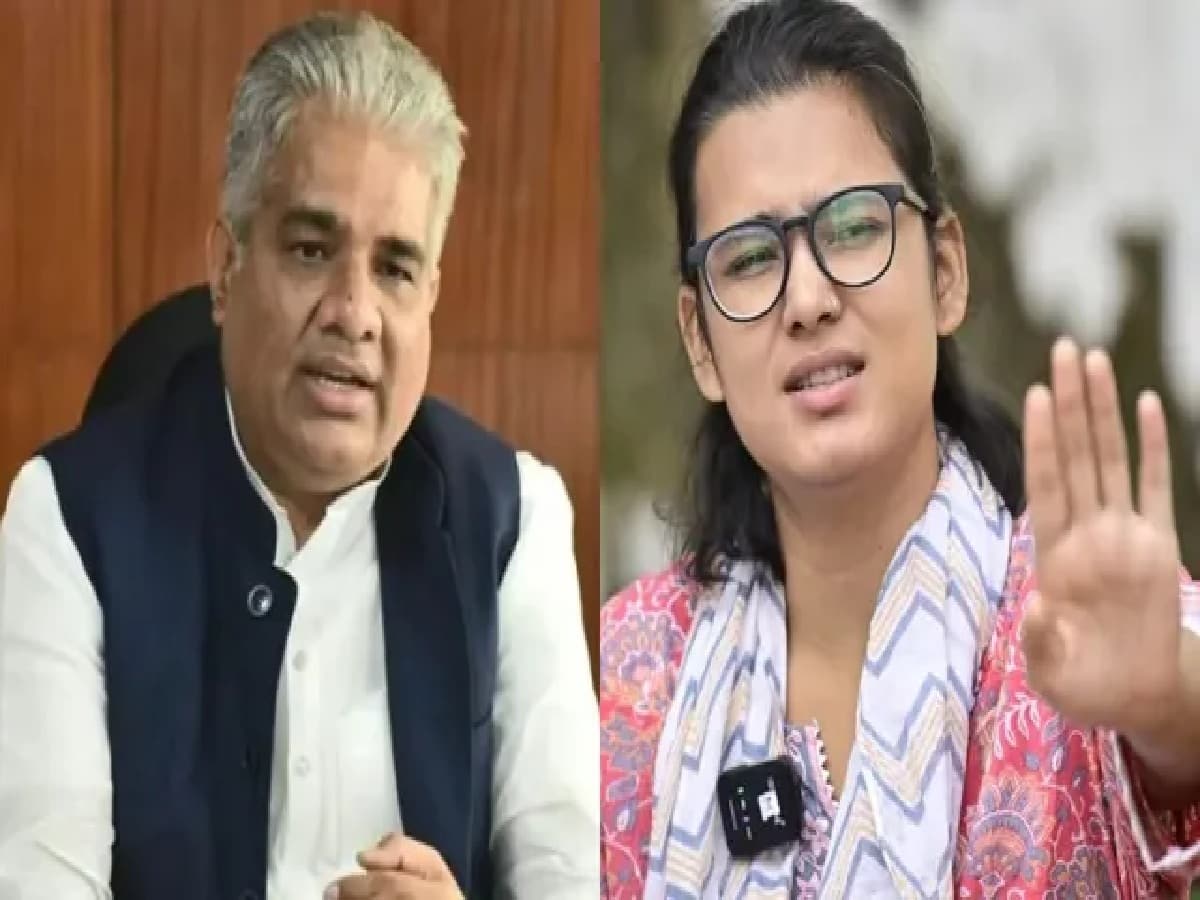
Delhi-NCR Pollution: Environment Ministry Replies to Neha Bora's Letter
As toxic winter smog continues to choke the National Capital Region, the Union Ministry of Environment, Forest and Climate Change (MoEFCC) has issued an official response to a letter sent by All India Students' Association (AISA) president Neha Bora and prominent clean-air campaigners regarding deteriorating air quality across Delhi and neighboring NCR cities. Taking cognizance of Bora's email dated November 12, 2026, the ministry clarified that Union Environment Minister Bhupender Yadav is treating air pollution across Delhi-NCR states as a top national priority, continuously reviewing enforcement by state governments and municipal agencies even while leading the Indian delegation at the United Nations Climate Change Conference (COP31) in Antalya, Turkey. During a high-level virtual review meeting with Delhi-NCR states on Saturday, November 14, 2026, Yadav issued stern directives that anti-pollution measures must not remain confined to paper plans, ordering strict ground-level execution, the deployment of senior Secretary-level nodal officers across NCR cities, and coordinated enforcement across five states through the Commission for Air Quality Management (CAQM). For students, parents, commuters, and citizens across New Delhi, Noida, Ghaziabad, Gurugram, Faridabad, Meerut, Sonipat, Panipat, Rohtak, Alwar, Lucknow, and Chandigarh, the ministry's reply sheds light on immediate administrative accountability measures aimed at curbing hazardous winter air.
What Neha Bora and Clean-Air Campaigners Raised in Their Letter
The November 12 email to Union Minister Bhupender Yadav—seeking an urgent appointment to address severe air quality across Delhi-NCR—brought together student leadership and civic environmental voices. Alongside AISA president Neha Bora, the communication involved "Warrior Moms" climate advocate Bhavreen Kandhari, cancer survivor and public health/environmental campaigner Urvashi Prasad, and retired Captain Ashish Jacob, a dedicated anti-pollution activist.
Their appeal urged the Union government to ensure decisive, visible intervention as hazardous air quality affects students, children, elderly residents, and daily commuters across the capital region.
Key Directives From Minister Bhupender Yadav's November 14 Review
In its official reply, the Environment Ministry outlined the concrete administrative actions ordered by Bhupender Yadav during his November 14 review meeting with environment ministers and senior officials of NCR states:
| Governance & Enforcement Pillar | Official Action & Ground-Level Mandate |
| City-Wise Senior Officer Deployment | NCR states directed to appoint Secretary-level officers to oversee pollution control in 15 key NCR cities (7 in Haryana, 4 in Uttar Pradesh, 4 in Rajasthan), conduct field visits, and submit weekly reports to CAQM |
| Five-State CAQM Coordination | Commission for Air Quality Management (CAQM) actively synchronizing enforcement across Delhi, Punjab, Haryana, Uttar Pradesh, and Rajasthan |
| Strict GRAP & Winter Action Plan | Mandatory ground enforcement of the Graded Response Action Plan (GRAP), hotspot action plans, road-dust control, mechanical sweeping, and restrictions on dust-generating construction |
| Industrial & Vehicular Crackdown | Immediate sealing ordered for 191 non-compliant industrial units lacking Air Pollution Control Devices (APCDs) and accelerated installation of ANPR cameras at fuel stations by November 30, 2026 |
| Continuous Ministerial Oversight | Despite leading India's delegation at UNFCCC COP31 in Antalya, Turkey (Nov 9–20, 2026), Minister Bhupender Yadav is continuously monitoring Delhi-NCR air quality metrics and state compliance |
Five-State CAQM Coordination and Ground Accountability Amid COP31
Addressing concerns over the Minister's overseas schedule, the Environment Ministry emphasized that although Bhupender Yadav is currently in Turkey representing India at COP31, he remains directly engaged with daily air quality reviews and field accountability in the National Capital Region.
Through CAQM, coordinated field action is being enforced simultaneously across Delhi, Haryana, Uttar Pradesh, Rajasthan, and Punjab—linking local municipal bodies, pollution control boards, and Integrated Command and Control Centres (ICCCs) so that road-dust suppression, industrial emission norms, waste management, and vehicular checks translate into measurable improvements on the ground.




