







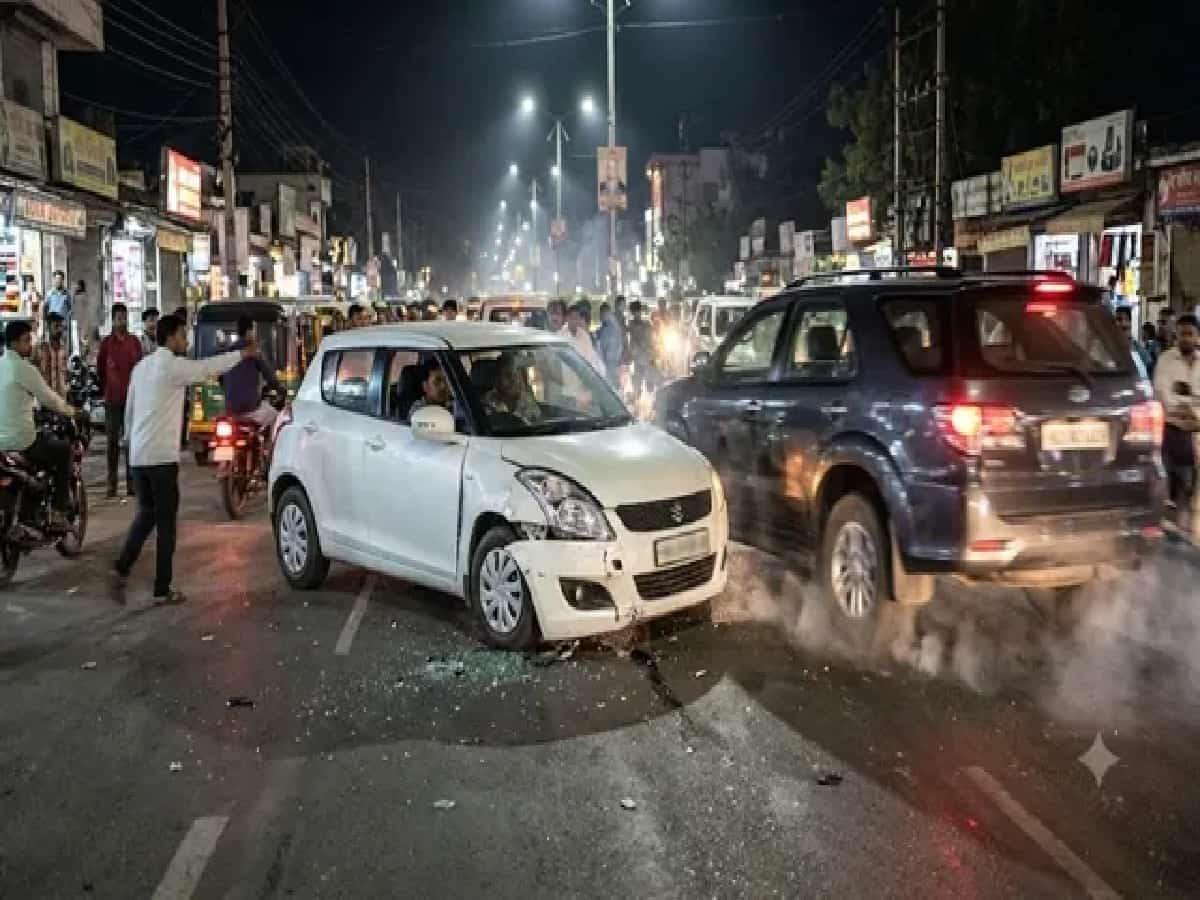
75% of Hit-and-Run Victims in India Miss Out on Compensation: Report
Nearly three out of every four eligible victims and bereaved families in hit-and-run road crashes across India are failing to receive the government financial assistance guaranteed to them under the Motor Vehicles Act, according to a new study by management consultancy firm Primus Partners. Based on official government crash and disbursement data, the report highlights a stark gap between statutory entitlement and ground-level delivery: while India records roughly 70,000 hit-and-run accidents every year—claiming more than 30,000 lives and leaving over 16,000 people grievously injured—around 75 percent of eligible beneficiaries remain deprived of compensation. Under the central government's revised Compensation to Victims of Hit and Run Motor Accidents Scheme, notified in February 2022 and effective from April 1, 2022, families of deceased victims are entitled to ₹2 lakh and seriously injured survivors to ₹50,000. Yet against an estimated annual statutory liability of approximately ₹600 crore, total disbursements over the past four years have remained below ₹300 crore, meaning less than 25 percent of intended annual aid is reaching distressed households. For commuters, families, road-safety advocates, and local authorities across New Delhi, Lucknow, Kanpur, Varanasi, Prayagraj, Agra, Mumbai, Bengaluru, Chennai, Hyderabad, Kolkata, and Jaipur, the findings expose urgent administrative bottlenecks in post-crash victim support.
The ₹600 Crore Aid Gap: How Many Claims Are Filed vs. Paid
Even though over 46,000 people either die or suffer grievous injuries in hit-and-run crashes annually across Indian highways and urban roads, the report reveals that fewer than 10,000 compensation claims are submitted each year—and under 8,000 applicants ultimately receive payouts:
| Hit-and-Run Compensation Metric | Verified Figure in Primus Partners Report | Key Policy Takeaway |
| Annual Hit-and-Run Incidents | ~70,000 crashes / year | Causing 30,000+ deaths and 16,000+ grievous injuries annually |
| Statutory Compensation Entitlement | ₹2,00,000 for death; ₹50,000 for grievous injury | Enhanced in February 2022 (up from ₹25,000 and ₹12,500 under the 1989 Solatium Scheme) |
| Annual Claims Filed vs. Paid | <10,000 claims filed; <8,000 payouts completed annually | Roughly 75% of eligible victims and families miss out on statutory aid |
| Annual Liability vs. 4-Year Disbursal | ~₹600 crore / year liability vs. <₹300 crore disbursed in 4 years | Less than 25% of annual aid reaches beneficiaries despite dedicated Motor Vehicles Accident Fund |
| Public Awareness Deficit | 80%+ unaware of scheme; 84% of aware lack form/guideline access | Severe information asymmetry prevents grieving families from initiating claims |
Why 80% of Families Never Apply: Awareness and Red-Tape Hurdles
The Primus Partners study attributes the dismal payout ratio to deep structural and procedural barriers rather than a shortage of funds. Survey findings show that more than 80 percent of respondents were completely unaware that a government hit-and-run compensation scheme even exists, and among the minority who had heard of it, 84 percent did not know where to obtain application forms or procedural guidelines.
Furthermore, grieving families and injured survivors—many from low-income households—are often overwhelmed by lengthy paperwork, multiple administrative verification layers, unclear jurisdictional responsibilities between police stations and district authorities, and discouraging procedural undertakings at a time when immediate medical and household expenses are most acute.
Four Key Reforms Proposed: Suo Motu Police Action, eDAR, and CSCs
To ensure that statutory compensation reaches victims swiftly and transparently, the report outlines four concrete systemic reforms:
-
Suo Motu Initiation by District Police: Empower district police departments to trigger the compensation process automatically as soon as an FIR or crash record classifies an incident as a hit-and-run, eliminating the burden on traumatized families to hunt for forms.
-
Migration to the eDAR Digital Platform: Transition the entire claim workflow onto the Ministry of Road Transport and Highways' electronic Detailed Accident Report (eDAR) system for end-to-end digital tracking and faster verification.
-
Integration of Common Service Centres (CSCs): Leverage India's nationwide network of Common Service Centres so rural and semi-urban victims can upload basic documents and track claim status easily near their homes.
-
Formula-Based Annual Revision for Inflation: Introduce an automatic, formula-linked annual upward revision of the ₹2 lakh and ₹50,000 compensation slabs—backed by Union Budget allocations or dedicated road-safety funds—so payouts keep pace with rising medical and living costs.




