







'Mithai Khilao, You Are Gujarat CM': PM Modi Recalls Media Scoop
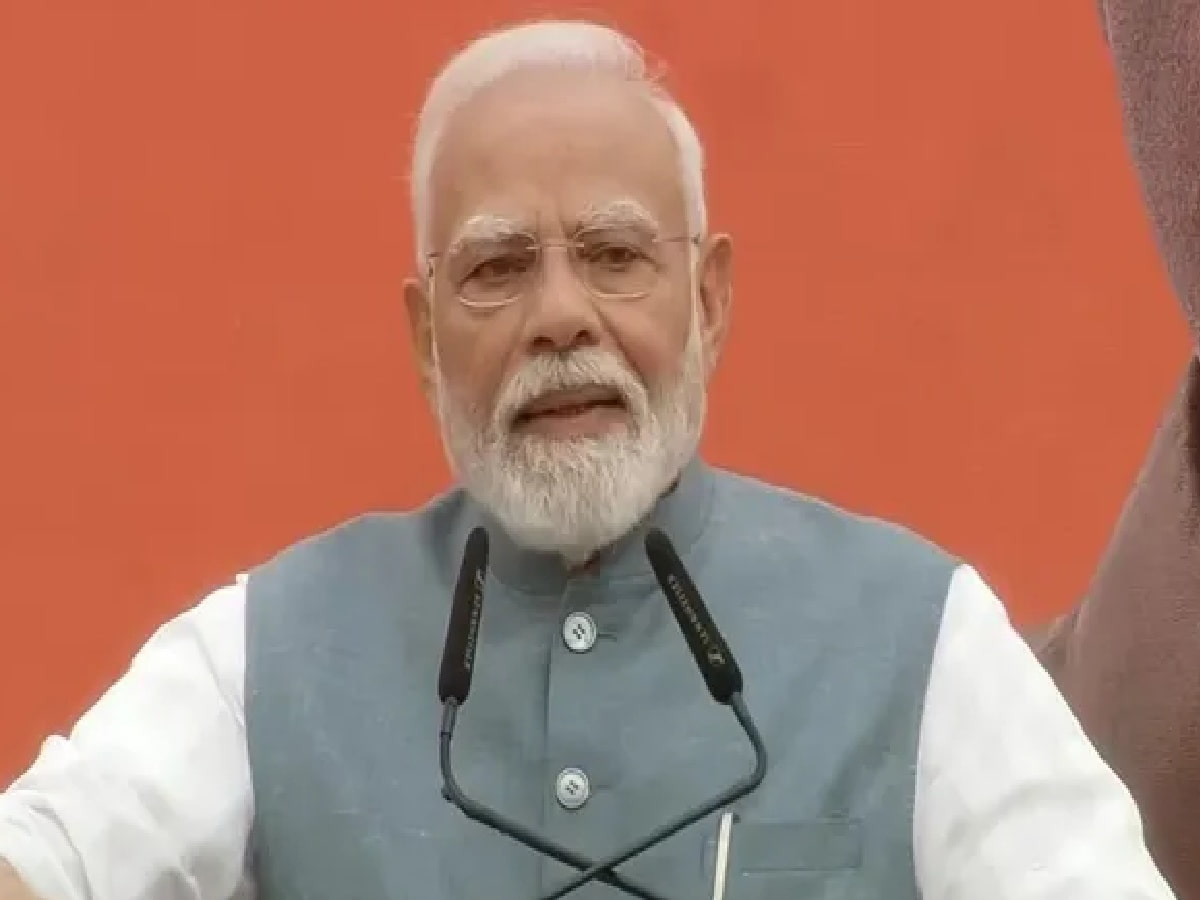
In a rare moment of lighthearted nostalgia away from the daily rigors of governance and policy, Prime Minister Narendra Modi shared a candid glimpse into his decades-long relationship with the Indian press corps on Thursday, November 12, 2026. Addressing a packed gathering of editors, political correspondents, and broadcast journalists at the Bharatiya Janata Party (BJP) national headquarters in New Delhi during the annual Deepawali Milan Samaroh, the Prime Minister recounted a memorable episode from October 2001. Before most senior leaders within his own party were even aware of the impending leadership transition in Gandhinagar, a group of Delhi journalists walked unannounced into his office room and demanded sweets, congratulating him on becoming the next Chief Minister of Gujarat. Speaking amidst warm applause and laughter, Prime Minister Modi used the anecdote to celebrate the investigative instinct of Indian reporters, tracing his personal journey from arranging chairs at party media events in the 1990s to witnessing modern journalism transform from the era of faxed press releases into the fast-paced age of Instagram Reels.
The 2001 Scoop at Ashoka Road: When Reporters Demanded Sweets
Setting the tone for the afternoon interaction, Prime Minister Modi transported the audience back twenty-five years to the autumn of 2001, a pivotal turning point that recently marked his completion of a quarter-century as a head of government. At the time, Modi was serving as a national general secretary of the BJP, spending most of his working hours at the party’s former central office at 11 Ashoka Road in the heart of New Delhi. According to the Prime Minister, deliberations regarding the leadership change in Gujarat were being held at the highest echelons, with barely two to four senior party leaders privy to the final decision.
Despite the strict confidentiality surrounding the move, the capital’s political beat reporters had already pieced together the story. Modi recalled that one afternoon, an entire group of journalists—spearheaded by what he affectionately termed a formidable "women's brigade" of senior political correspondents—walked straight into his room at Ashoka Road, bypassing normal protocol. Before he could ask the reason for the sudden visit, the reporters demanded, "Mithai khilao" (treat us to sweets), declaring that he was heading to Gujarat to take charge as Chief Minister. Attempting to maintain party discipline, Modi feigned complete ignorance and asked what occasion warranted sweets, only for the journalists to laugh off his denial and tell him, "We all know it, you are lying". Reflecting on the warmth of that era, the Prime Minister added that what touched him most deeply was seeing many of those same Delhi journalists travel to Gujarat at their own expense for his oath-taking ceremony on October 7, 2001—not on official reporting assignments, but out of genuine friendship and personal affection.
From Arranging Chairs to Leading the Nation: Early Media Ties
Beyond the 2001 scoop, Prime Minister Modi reflected on his formative years working behind the scenes as a media coordinator for the BJP during the 1990s. Before stepping into constitutional offices, Modi was tasked with handling publicity and press logistics during two major nationwide political yatras. He reminded veteran journalists in the hall of the logistical hurdles that defined political reporting three decades ago, noting that simply dispatching a single official press release to newspaper offices required hunting down a working fax machine across small towns and district headquarters.
Recalling the early editions of the BJP’s Deepawali Milan gatherings in New Delhi, the Prime Minister spoke with pride about his modest organizational duties. In those days, his role involved physically setting up rows of chairs on the lawn, organizing seating arrangements, and standing near the entrance to welcome arriving reporters and photographers. Modi observed that while television cameras and broadcast crews were far fewer in number during that period, the human connection between political communicators and journalists was remarkably deep and enduring. He noted that the organizational discipline and interpersonal lessons he absorbed while managing press rooms during those early years continue to serve him well even today.
Press Releases to Instagram Reels: The Evolution of Indian Media
Turning his attention to the sweeping technological shifts reshaping modern newsrooms, Prime Minister Modi remarked that his public life has allowed him to witness Indian journalism evolve from the physical "era of the press release to the age of the Instagram reel". In an era where breaking news travels via smartphone notifications, short-form vertical videos, and real-time digital streams within seconds, the traditional boundaries between print, broadcast, and social media have largely dissolved.
Addressing the relentless pace of contemporary reporting, the Prime Minister acknowledged that journalists possess a unique capacity to uncover closely guarded developments, remarking with a smile that political leaders are still trying to figure out the secret strength that allows reporters to catch establishments off guard. Declaring that "nothing is impossible in journalism," Modi praised the adaptability and ground-level reach of Indian media professionals. Whether operating out of metropolitan studios in New Delhi or filing dispatches from regional hubs across Uttar Pradesh, Gujarat, and Bihar, journalists remain at the forefront of documenting India’s socio-economic transformation in real time.
A 'Non-Breaking News Event' Celebrating Democratic Camaraderie
The Thursday gathering took place at a vibrant cultural moment across northern India, bridging the conclusion of Diwali celebrations with the final preparations for the four-day Chhath Mahaparva commencing on November 13. Extending warm festive wishes to the journalists and their families for both Diwali and Chhath Puja, Prime Minister Modi expressed gratitude to the media fraternity for turning out in large numbers despite their demanding schedules during the festive season.
Striking a humorous chord that drew widespread laughter across the auditorium, Modi playfully christened the annual Diwali Milan get-together a "non-breaking news event," noting that it offered a rare space where politicians and reporters could converse without microphones, ticker alerts, or Breaking News banners. Beneath the humor, however, the Prime Minister underscored a serious democratic conviction: that an active, questioning, and vibrant media plays a foundational role in keeping India’s democratic institutions healthy and responsive. As the afternoon concluded with traditional festive refreshments and informal interactions between senior cabinet ministers and reporters, the event served as a reminder that even in an age of intense digital polarization, mutual respect and shared history remain vital threads binding public life together.




