







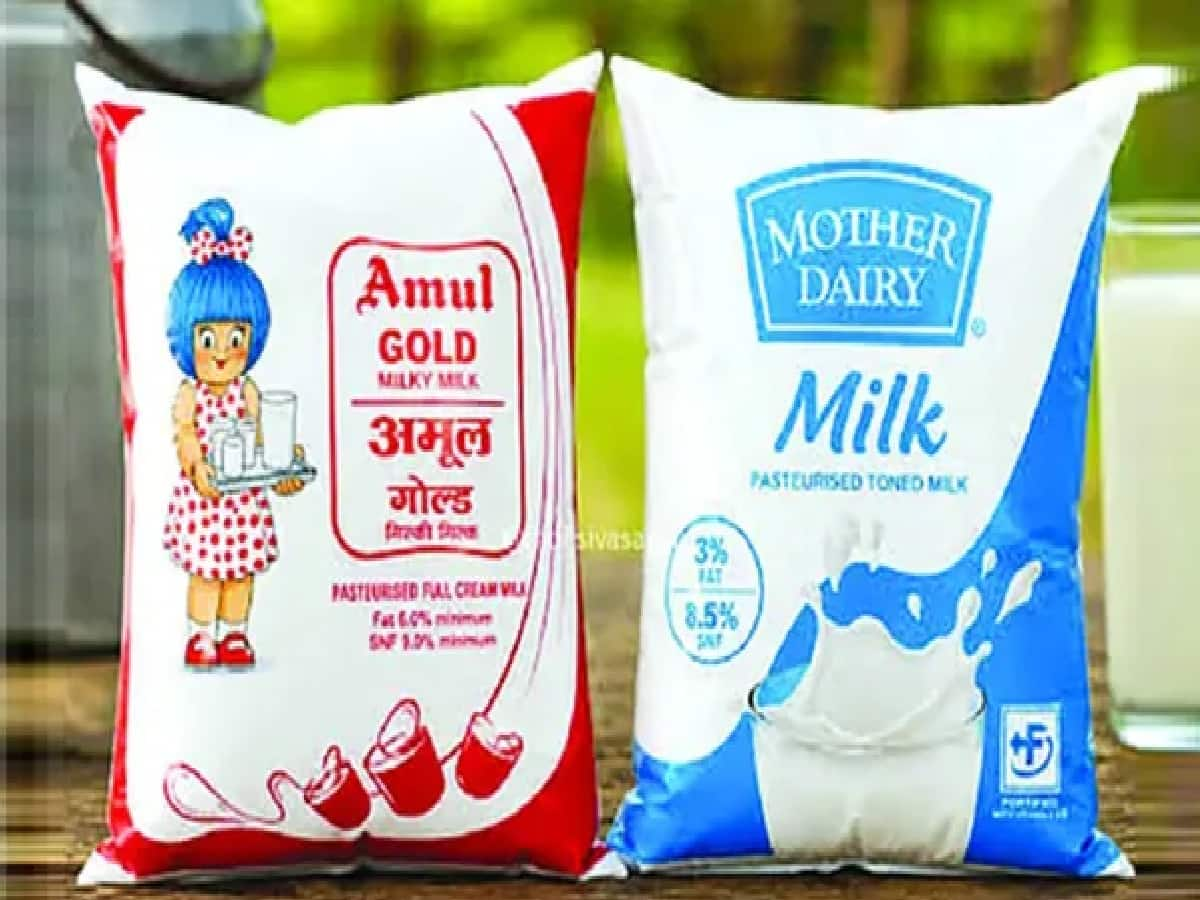
Amul, Mother Dairy Milk Costlier by Rs 2-4/Litre From Today
Households across northern and western India woke up to steeper kitchen expenses on Thursday, November 12, 2026, as two of the country’s largest dairy cooperatives, Amul and Mother Dairy, implemented a fresh round of retail price hikes ranging between ₹2 and ₹4 per litre. Announced late Wednesday evening and enforced from early Thursday morning, the revision impacts millions of consumers across the National Capital Region (NCR), Uttar Pradesh, Gujarat, Maharashtra, and other major urban centers. Marking the second retail price upward revision in just six months following an earlier hike in May 2026, the decision reflects intensifying financial strain across India’s dairy supply chain. Both the Gujarat Cooperative Milk Marketing Federation (GCMMF), which markets dairy products under the flagship Amul brand, and Mother Dairy cited a sharp escalation in farm-gate milk procurement costs, soaring cattle feed prices, uneven monsoon rainfall, and higher fuel and packaging expenses as the primary drivers behind the move.
Revised Mother Dairy Rates in Delhi-NCR: Full Price Breakdown
In the densely populated Delhi-NCR belt—encompassing New Delhi, Noida, Ghaziabad, Gurugram, and Faridabad—Mother Dairy’s revised price structure has directly altered daily dairy budgets across all major liquid milk categories. As the largest milk supplier in the region, Mother Dairy distributes approximately 35 lakh litres of milk every single day through its extensive network of neighborhood milk booths, general retail stores, and digital e-commerce platforms, out of its total national daily sales exceeding 50 lakh litres. Under the revised rate card effective Thursday, consumers purchasing unpackaged toned milk from automated bulk-vending machines (token milk) now pay ₹60 per litre instead of the previous ₹58 per litre, reflecting a ₹2 increase.
Packaged pouch milk variants have recorded similar upward adjustments across retail counters. The retail price of Mother Dairy’s packaged toned milk has climbed by ₹2 from ₹60 to ₹62 per litre, while double-toned milk has increased by ₹2 from ₹54 to ₹56 per litre. For households preferring cow milk, prices have been raised by ₹3 per litre, moving from ₹62 to ₹65 per litre. The steepest jump has been levied on packaged full-cream milk, which has become costlier by ₹4 per litre, surging from ₹72 to ₹76 per litre. Company officials noted that Mother Dairy previously revised its consumer prices on May 14, 2026, and maintained that passing a portion of the higher procurement cost onto consumers was unavoidable to sustain uninterrupted supply during the winter season.
Amul Milk Price Hike: Amul Taaza and Amul Gold Become Dearer
Parallel to Mother Dairy’s announcement, the Gujarat Cooperative Milk Marketing Federation confirmed that revised consumer prices for Amul’s highest-selling fresh pouch milk variants have also come into force starting Thursday morning. Under the updated pricing schedule, the retail rate of Amul Taaza—the cooperative’s widely consumed fresh toned milk—has been raised by ₹2 per litre across key markets. Simultaneously, Amul Gold, the premium full-cream variant favored by households for tea preparation and domestic sweet-making, has seen its price increase by ₹4 per litre.
Earlier in May this year, GCMMF had executed a nationwide price revision of roughly 4 to 5 percent across its fresh pouch milk portfolio to offset seasonal summer procurement pressures. In its latest communication, the federation emphasized its cooperative commitment to rural livelihoods, pointing out that nearly 75 to 80 paise out of every rupee paid by urban consumers for milk and dairy products is remitted directly back to millions of village-level milk producers. Without adjusting consumer rates upward, cooperative unions would have been forced to cut farm-gate procurement payouts, potentially discouraging dairy farmers from maintaining herd sizes and threatening long-term milk availability.
Why Milk Prices Are Rising: Fodder Shortage, Uneven Rain, and Fuel Costs
Dairy economists and cooperative executives attribute the November price revision to a convergence of climatic and macroeconomic pressures that have steadily eroded operating margins throughout 2026. According to industry assessments shared by GCMMF and Mother Dairy, erratic and uneven monsoon rainfall across Gujarat and several major milk-producing states severely disrupted the cultivation and harvesting of green fodder crops. Consequently, market prices for both green and dry fodder have surged by as much as 20 percent over the past twelve months, while concentrated cattle feed ingredients—such as oilcakes, maize, and bran—have grown roughly 10 percent costlier.
Because animal nutrition accounts for more than 65 percent of the recurring expenditure incurred by small and marginal dairy farmers, rising fodder bills forced cooperative unions to raise the minimum procurement prices paid to farmers by at least 5 percent. Beyond the farm gate, processing and logistics expenses have climbed sharply due to persistent inflationary pressures. Dairy operators report that cumulative operational overheads—spanning diesel transportation for insulated milk tankers, cold-chain refrigeration electricity tariffs, and food-grade low-density polyethylene (LDPE) film used for milk pouches—have risen by up to 25 percent.
Impact on Household Budgets and Food Inflation Across Northern India
The simultaneous price hike by India’s two dominant dairy brands delivers an immediate blow to middle-class and lower-income household budgets, particularly at a time when families across northern India are navigating seasonal wedding expenses and broader food inflation. For an average urban household in Delhi-NCR, Lucknow, Kanpur, or Ahmedabad consuming two litres of full-cream milk daily, the ₹4 per litre increase translates into an additional expenditure of ₹240 per month, or nearly ₹2,880 over the course of a year. Families relying on two litres of packaged toned milk per day will similarly absorb an extra ₹120 in monthly grocery bills.
Beyond domestic kitchens, the upward revision is expected to trigger secondary price increases across the commercial food and hospitality ecosystem. Neighborhood tea stalls, cafes, bakeries, and traditional sweet shops (halwais) that rely heavily on bulk liquid milk for preparing paneer, curd, khoya, and winter sweets face higher raw material costs just as the peak winter marriage season gets underway. Economists caution that since milk carries a significant weightage in India’s Consumer Price Index (CPI) food basket, sustained dairy price revisions could keep headline retail inflation elevated in the coming months, underscoring the urgent need for targeted fodder security programs and cold-chain energy subsidies to stabilize farm-to-fridge costs.




