







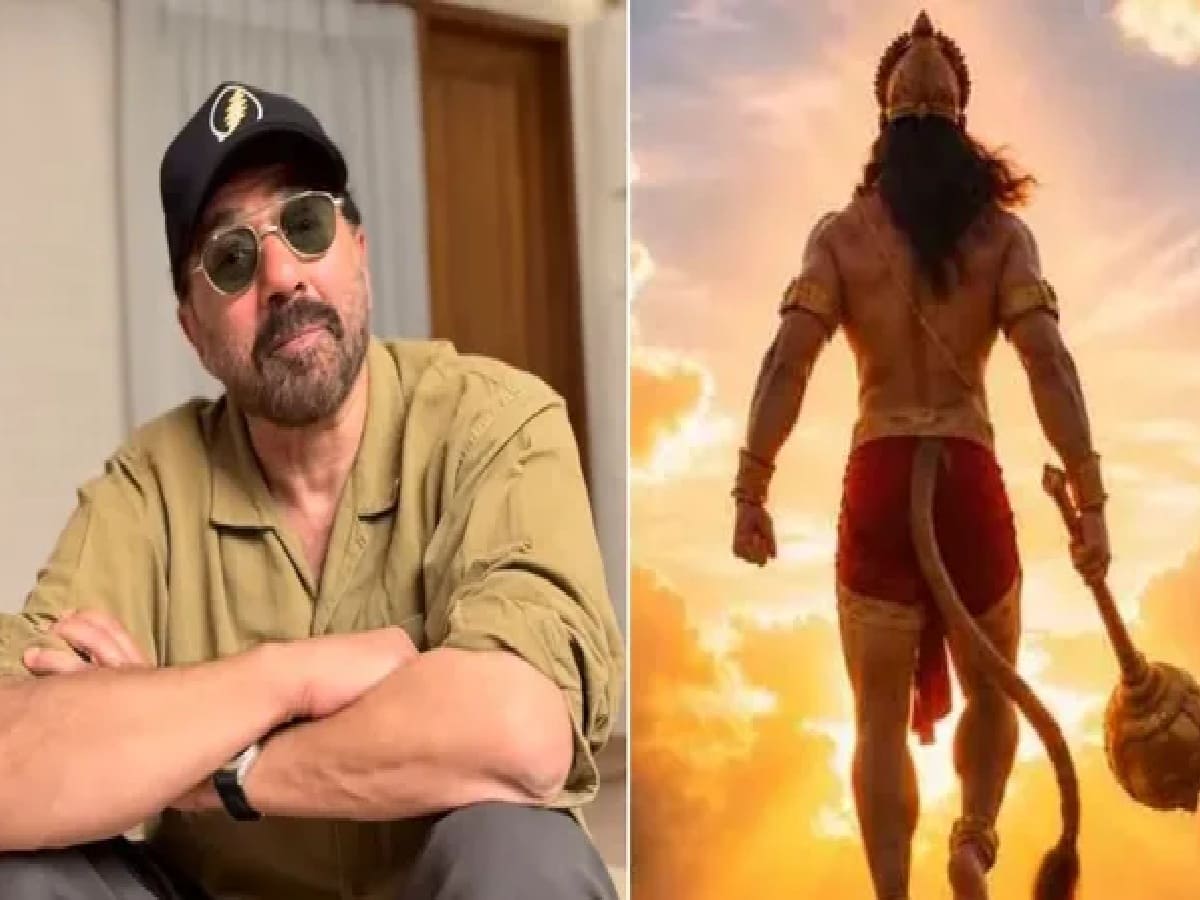
Sunny Deol Hails Ramayana: Calls Epic 'Better Than Hollywood'
Bollywood action icon Sunny Deol has shared a glowing review of director Nitesh Tiwari’s mythological magnum opus Ramayana: Rise of a Legend, declaring that the visual spectacle is not just comparable to high-budget Hollywood blockbusters, but comfortably surpasses them. Taking to his official social media channels after attending an exclusive weekend screening of the film, the veteran actor praised the grand vision of producer Namit Malhotra and the commanding performances of lead stars Ranbir Kapoor and Yash. Deol, who steps into the revered role of Lord Hanuman in the ambitious cinematic franchise, issued a passionate appeal to audiences across the country, urging every Indian family to experience the cultural milestone in theaters. The high-profile endorsement comes as the mythological epic dominates domestic and global box office charts, transforming cinema halls from Mumbai to Lucknow into vibrant hubs of devotional and cinematic celebration.
'Better Than Hollywood': Sunny Deol's Verdict on the Mythological Epic
In a personal video message uploaded to his official Instagram handle on Saturday, Sunny Deol spoke candidly about his emotional reaction upon witnessing the final theatrical cut of the first installment. Radiating enthusiasm, the actor shared his unfiltered thoughts directly with his millions of followers: "I just came back from watching my film Ramayana. I really enjoyed it, and I want every Indian to go and watch it in theaters. Because this film is no less than any Hollywood film, and not only that, it's even better. Its special effects are so impressive that you'll feel as if you're not in this world, transporting you back to that ancient era. All the actors have done a superb job. Therefore, I'm confidently urging you to go and see this film."
The actor’s comparison to Hollywood carries substantial weight in an industry that has frequently struggled to execute large-scale visual effects convincingly. For decades, Indian cinematic adaptations of sacred scriptures faced criticism for relying on dated computer graphics and synthetic green-screen backdrops that undermined emotional gravity. However, backed by Oscar-winning visual effects powerhouse DNEG, Ramayana has established an unprecedented technological benchmark. Deol specifically praised the transportive nature of the film's visual world-building, observing that the digital recreation of the Treta Yuga—from the pristine architectural grandeur of Ayodhya to the mystical, untamed flora of the Dandakaranya forest—immerses viewers in a tangible historical reality rather than an artificial spectacle.
The Climax Stunner: Lord Hanuman's Electrifying Cameo in Part 1
While Ramayana Part 1 focuses primarily on Lord Ram’s formative years, his marriage to Mata Sita, their fourteen-year exile, and the tragic abduction at Panchavati, the closing moments of the film deliver an electrifying dramatic punch. In the climactic sequence, audiences are treated to a brief first look at Sunny Deol embodying the legendary avatar of Lord Hanuman (Bajrangbali). The brief appearance has triggered ecstatic celebrations across single screens and multiplexes alike, with theater halls echoing with thunderous chants of "Jai Bajrangbali" and "Jai Shri Ram" as Deol’s silhouette appears on screen.
Trade analysts observe that casting an actor of Sunny Deol’s physical stature and vocal resonance as Lord Hanuman is a masterstroke of mainstream cinematic storytelling. Known for his commanding screen presence, deep baritone, and towering legacy in Indian heroic cinema, Deol brings an innate dignity, humility, and raw physical power to the role. Rather than presenting the deity solely through synthetic visual effects, the filmmakers have grounded the character in Deol’s authentic physical mass, creating an immediate emotional and spiritual connection with multigenerational viewers who have revered the deity since childhood.
Gearing Up for Diwali 2028: Hanuman's Central Role in Ramayana Part 2
Sunny Deol’s brief appearance in the opening film serves as a high-stakes prelude to the broader franchise roadmap envisioned by Namit Malhotra and Nitesh Tiwari. The second installment, Ramayana Part 2, is slated for a worldwide theatrical release two years from now, arriving on the auspicious occasion of Diwali in 2028. While Part 1 establishes the emotional foundations and moral conflicts of the epic, Part 2 is designed to pivot entirely around the heroic exploits detailed in the Kishkindha Kanda, Sundara Kanda, and Yuddha Kanda.
In the 2028 sequel, Sunny Deol will take center stage alongside Ranbir Kapoor, driving the core narrative engine of the war against Lanka. Audiences will witness the fateful meeting between Lord Ram and Hanuman, the legendary leap across the southern ocean, the infiltration and burning of the golden fortress of Lanka (Lanka Dahan), and the miraculous retrieval of the life-saving Sanjeevani booti. Industry insiders reveal that high-intensity motion-capture sequences and specialized combat choreography are already being prepared for Deol’s full-fledged turn as the ultimate servant of Lord Ram, positioning Part 2 to become one of the most anticipated sequels in Indian cinema history.
Universal Acclaim: Ranbir Kapoor, Yash, and an All-Star Ensemble
In his video review, Deol also made it a point to praise the dedicated artistic craftsmanship demonstrated by his co-stars. The actor highlighted the transformative turn of Ranbir Kapoor, whose understated, deeply spiritual portrayal of Maryada Purushottam Shri Ram has earned praise across the film fraternity. Departing from theatrical melodrama, Kapoor infuses the divine hero with quiet strength, moral steadfastness, and dignified restraint, anchoring the visual spectacle in genuine human empathy.
Deol also lauded Kannada superstar Yash, whose performance as the ten-headed demon sovereign, Ravana, provides the production with a formidable antagonist of chilling intellect and philosophical complexity. Backed by Sai Pallavi’s graceful turn as Mata Sita and Ravi Dubey’s loyal embodiment of Lakshman, the ensemble cast avoids caricature, treating the sacred narrative with artistic reverence. Deol’s praise aligns with similar acclaim from other prominent industry voices, including filmmaker Ram Gopal Varma, who recently declared that the production operates not as a passive religious drama, but as a visceral cinematic force that inspires genuine devotion.
A ₹4,000-Crore Milestone Elevating Indian Cinema Worldwide
The widespread industry celebration surrounding Ramayana highlights an important milestone for the Indian entertainment economy. With an aggregate production outlay exceeding ₹4,000 crore across its planned franchise timeline, the venture represents the most ambitious financial and creative gamble ever mounted by Indian studios. The gamble has paid off handsomely during its initial theatrical run, with the film grossing over ₹238 crore nett domestically in its four-day extended opening weekend and surging past the ₹500 crore worldwide gross threshold across international territories.
For regional audiences—particularly across the cultural heartlands of Uttar Pradesh, including Ayodhya, Varanasi, and Lucknow—the cinematic triumph carries deep geographical and emotional pride. By presenting ancient Indian civilization through world-class visual artistry, the project demonstrates that homegrown epics hold the narrative scale to captivate international film markets without compromising cultural authenticity. As Sunny Deol’s heartfelt review continues to circulate across digital feeds, his impassioned plea for Indians to celebrate their own heritage on the silver screen reaffirms that Ramayana has transcended ordinary entertainment to become a defining cultural moment for modern Indian cinema.




