desk
desk Share
Share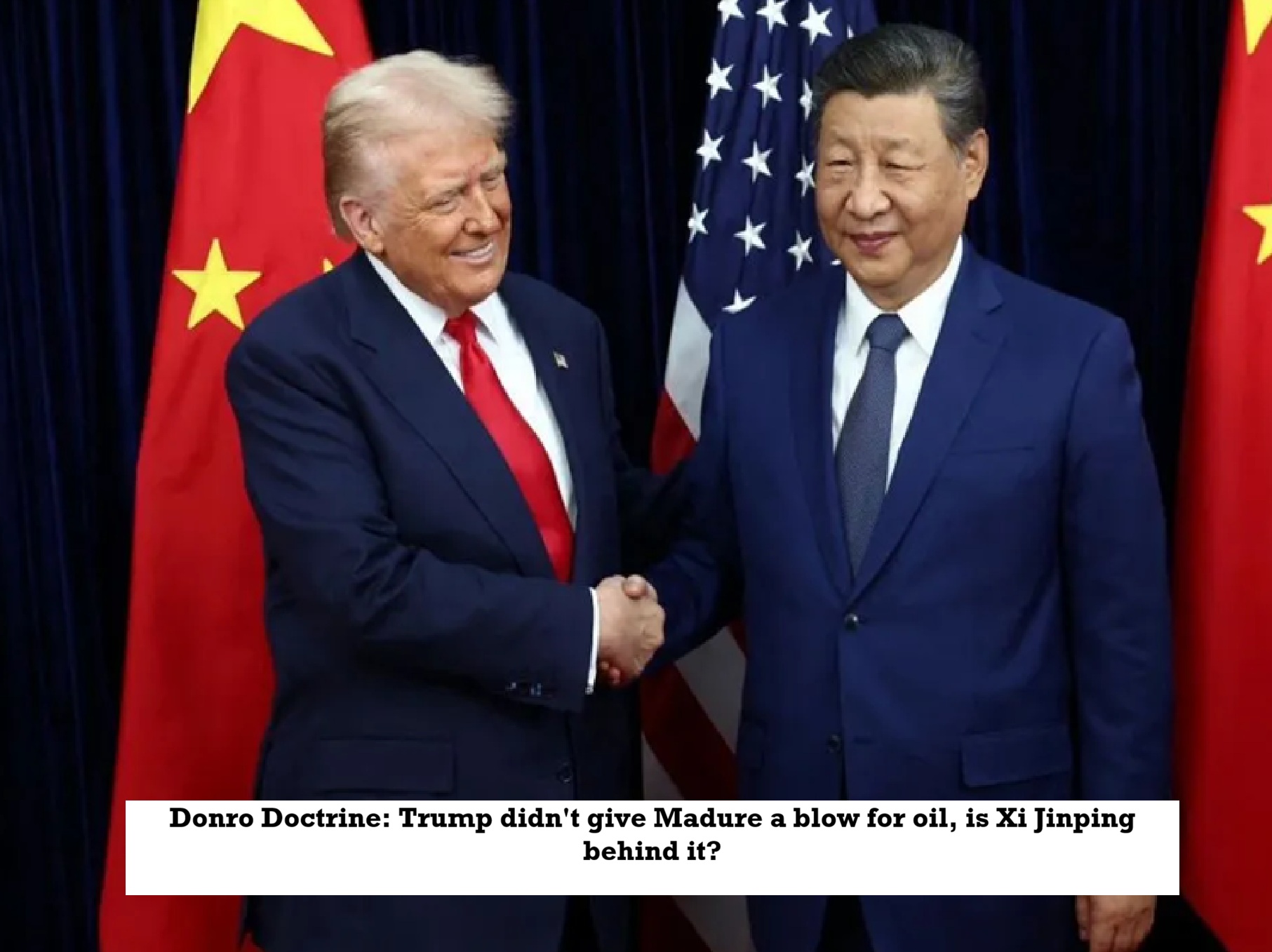
News Topical, Digital Desk : American power, the removal of a stubborn dictator, and a warning, but the reality is something else. In reality, the US was targeting China. The surprise attack by US forces in Caracas, Venezuela, and the capture of Nicolás Maduro evoke a moment of yore.
However, US President Donald Trump announced after Maduro's capture that Venezuela would hand over about $2 billion worth of crude oil to the US, which would be sold at market prices and the proceeds would be handled by Washington.
This incident is one of the biggest upsets.
According to a Reuters report, Trump's move could potentially lead to a rerouting of oil shipments to China. Bloomberg also described the move as a challenge to Beijing's long-term strategy in Latin America.
What does it mean?
Xi Jinping's setback in Venezuela marks the undoing of more than 10 years of patient economic diplomacy. China's approach to Latin America has been slow, methodical, and deliberately unostentatious.
Since the early 2000s, Beijing has expanded trade, financed infrastructure, and extended oil-backed loans, moving into areas not subject to US sanctions or austerity-driven lending.
Venezuela became the most politically tense, yet symbolically powerful, example of that strategy, but Trump's intervention has exposed the limits of that approach, making clear that US military power not only sets the outer limits of Chinese capital but also of influence in Washington's neighborhood.
Discomfort in the Global South
Beijing receives a clear signal that when US red lines are crossed, aligning with China is no guarantee of security. Venezuela has taken more than $100 billion in Chinese loans, representing more than 40 percent of China's total debt to Latin America. The damage isn't just financial; it's also prestige and political.
The big picture is that Venezuela lies at the intersection of three key Chinese priorities: energy security, geopolitical presence in Latin America, and Beijing's claim to champion sovereignty and non-interference. Trump's move hit all three simultaneously.
The White House has presented the operation as part of reasserting American dominance in the Western Hemisphere, a revival of the Monroe Doctrine that Trump officials have called the Donro Doctrine.
This thing reminded China
For Beijing, it was a stark reminder that influence built through credit lines and infrastructure projects can quickly erode when confronted with force.
Trump's move shocked Xi Jinping
- China will no longer be able to benefit from the oil. China has been Venezuela's most important oil customer for more than a decade, especially after the US ban in 2020 shut Western buyers out of the market. Bloomberg data shows that last year, about 80% of Venezuela's crude oil exports went to China, even though these barrels represented only 4% of China's total imports.
- This small share conceals its strategic importance. Venezuela's heavy crude oil is very low-priced and ideal for Chinese refineries. Trump's claim that Venezuelan oil will now be sold under US control directly attacks that supply chain.
- Bloomberg says China could replace those barrels with Canadian or Iranian oil, at a higher cost and with political difficulties. Beijing would lose one of its most flexible and politically secure energy sources.
- Furthermore, China's image as a most reliable partner has been dented. In 2023, China described its relationship with Venezuela as an all-weather strategic partnership.
- Chinese loans and assets suddenly appear vulnerable. China has lent Venezuela billions of dollars in oil-backed loans since the Hugo Chavez era. Reports by Bloomberg and The Guardian estimate that approximately $10–12 billion remains outstanding.
- This loan was to be repaid with oil. Bloomberg reported that after Maduro's ouster, China's top financial regulator asked major lenders to report their investments in Venezuela.
- Beijing's influence in Latin America appears to be weakening. US officials have cited Venezuela as proof that Washington will not allow the region to become a hub of influence for rival powers.
- The Taiwan comparison went against the Xi-Trump dynamic and sparked a heated debate on Chinese social media. Bloomberg reported that the topic trended on Weibo within hours. However, strategists are seeing a different lesson.
- If Xi were to attack Taiwan, he would face massive sanctions, major trade disruptions, and potentially war. Rather than emboldening Beijing, the incident reinforces why Xi has preferred pressure over direct confrontation.
- Beijing will maintain a high-profile diplomatic stance, but will likely not aim to take concrete action. It will also try to avoid a confrontation with Washington over Latin America, which could further pressure China in East Asia.
--Advertisement--