desk
desk Share
Share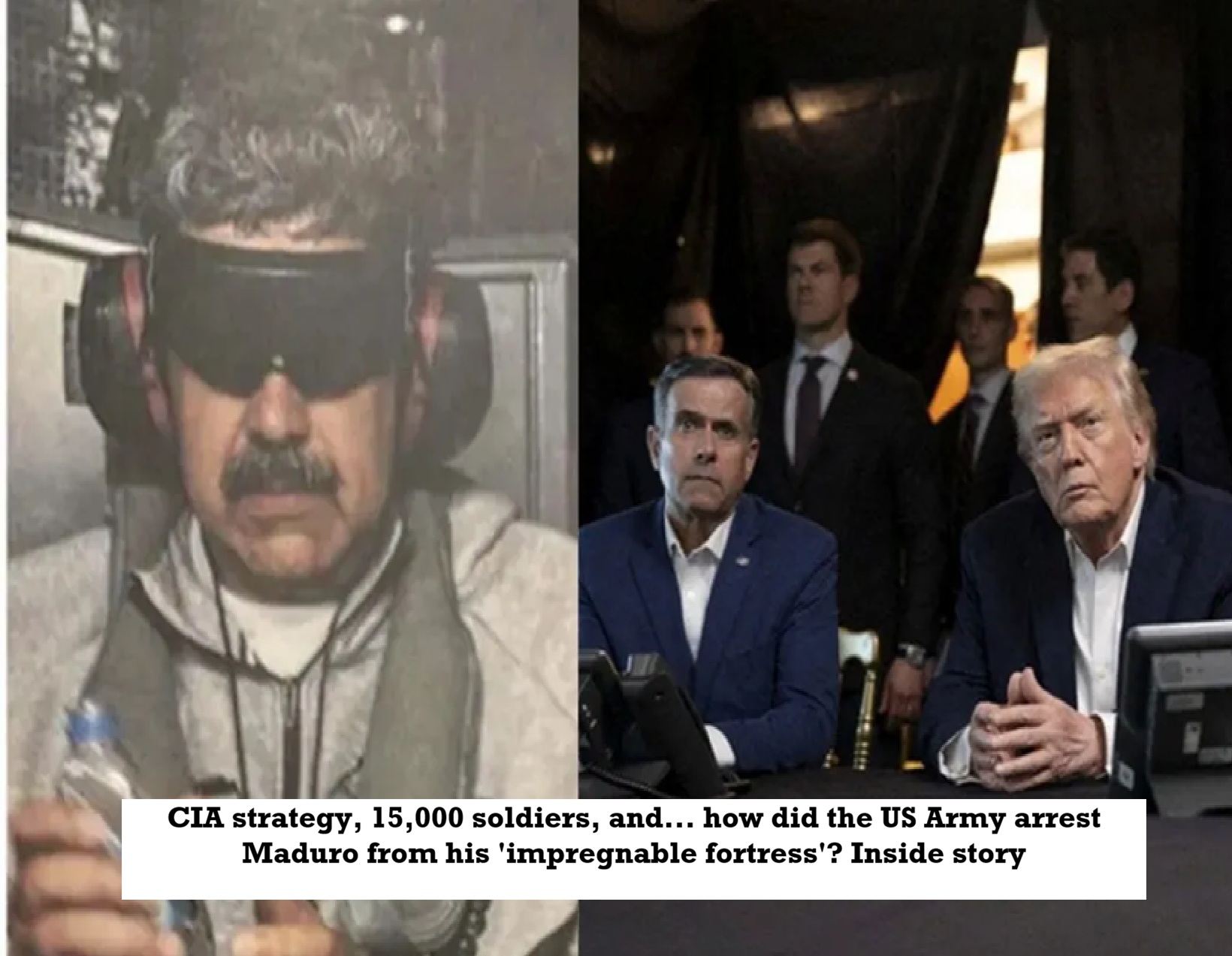
News Topical, Digital Desk : The US's "Operation Absolute Resolve" against Venezuela is being discussed worldwide. While this operation is being seen as a violation of international law, the US is hailing it as an extraordinary success for its Special Forces and a display of power by Trump.
Operation Absolute Resolve
In the operation, dubbed "Operation Absolute Resolve," Maduro was taken out of Venezuela by US Special Forces to the United States to face federal drug trafficking charges. According to officials familiar with the CIA's secret mission, a CIA team entered Venezuela in August to gather intelligence on Maduro.
Maduro was designated a narco-terrorist by the Trump administration. According to the NYT report, officials operated without diplomatic cover due to the closure of the US embassy in Caracas.
Previously, Trump had publicly stated that he had authorized the CIA to conduct covert operations in Venezuela. When asked if the agency had been instructed to "eliminate Maduro," the president responded that it would be "absurd."
A close watch was kept
The agency combined intelligence from a close associate of Maduro with surveillance from stealth drones flying over Caracas to create a comprehensive account of his daily routine. All of this input allowed US agencies to uncover Maduro's daily routine in detail.
The CIA team gathered information about Maduro's daily routine, including what he ate and even what pets he kept. Officials said this information ultimately proved crucial in planning the military operation.
Military rehearsals and targeting were challenges
As intelligence gathered, Delta Force commandos began rehearsing a potential extraction at a full-scale replica of Maduro's compound built by the Joint Special Operations Command in Kentucky. The drills focused on making a quick entry, breaching the reinforced steel doors, and evacuating the structure within minutes.
According to the NYT, the mission faced several significant challenges. Maduro often accompanied by six to eight people and would decide where he would stay late in the evening. This meant that US planners did not have precise information on his location until shortly before nightfall, complicating targeting decisions.
The US had increased pressure on Maduro before the operation. A week before the operation, the CIA carried out a drone attack on a Venezuelan port. The US military had conducted a legally disputed campaign in the Caribbean and eastern Pacific for months, destroying dozens of boats and killing at least 115 people. According to US officials, Maduro tried to avert the US attack by providing access to Venezuelan oil.
Operation delayed due to weather
President Donald Trump authorized the military advance on December 25th, but left the final timing to Pentagon officials and special operations planners. The holiday season was considered favorable, as many Venezuelan officials and military personnel were on leave. Days before the operation, the United States deployed additional special operations aircraft, electronic warfare planes, Reaper drones, search-and-rescue helicopters, and fighter jets to the area.
The operation was delayed for several days due to bad weather. Speaking at a press conference at Mar-a-Lago, Trump said that the operation was delayed by four days due to bad weather. As conditions improved, commanders monitored opportunities to strike targets. Trump gave the final approval at 10:46 pm on Friday night while monitoring the situation from Mar-a-Lago.
How did the operation begin?
The operation formally began around 4:30 p.m. Friday. Over the next several hours, they monitored weather conditions and Maduro's whereabouts.
Trump spent the evening at Mar-Lago, where aides told him he would be contacted later for final approval. He placed the order over the phone and then joined senior national security officials in a secure room on the property, watching the operation unfold live.
Inside Venezuela, the operation began with a cyberattack that cut power to large parts of Caracas, allowing planes and helicopters to arrive undetected, U.S. officials said.
More than 150 American aircraft surrounded the fort.
More than 150 US aircraft, including drones, fighters, and bombers, flew from 20 bases and naval ships. On Saturday morning, US warplanes attacked Venezuelan radar and air defense targets.
At least 40 people, including civilians and military personnel, were killed during the attacks. Despite suppressed air defenses, US helicopters were fired upon as they approached Maduro's compound at around 2:01 a.m. (local time).
Officials said a helicopter was hit by gunfire and about half a dozen US soldiers were injured. Delta Force operators used explosives to infiltrate the compound and reached Maduro within minutes. Trump later said on Fox News, "I literally watched it like I was watching a television show."
Within five minutes of entering the building, Delta Force announced that Maduro had been taken into custody. He and his wife were taken by helicopter and transferred to the USS Iwo Jima in the Caribbean at 4:29 a.m. Caracas time. From there, they were flown to Guantanamo Bay and then to a military-controlled airport near New York.
Read More: Israel issues warning to Lebanon: 'Evacuate these seven towns'
--Advertisement--