desk
desk Share
Share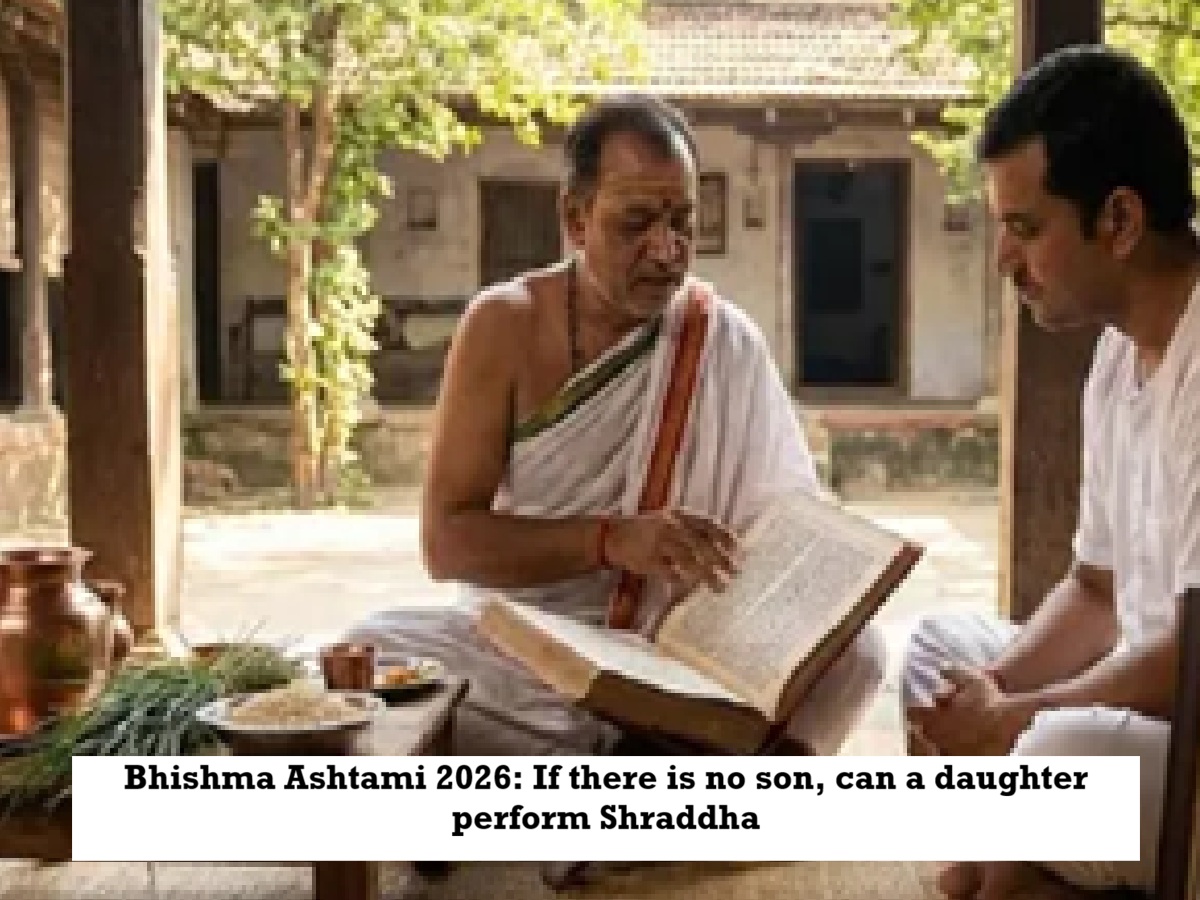
News Topical, Digital Desk : In Sanatan Dharma, serving parents and ancestors isn't limited to their lifetime; gratitude is expressed even after their death through Shraddha. Within this tradition, "Ekodishta Shraddha" holds special significance. In 2026, on the auspicious occasion of Bhishma Ashtami, which falls on January 26th, there is a special ritual for performing this Shraddha. People often wonder who has the right to perform this seemingly difficult puja and what the correct time should be.
According to religious beliefs, anyone who has lost a family member to the ancestral realm should perform this Shraddha to free themselves from ancestral debt. This ritual not only brings peace to the departed soul but also ensures a happy present and future for the family.
Who can perform the Tarpan of ancestors?
According to scriptures, the eldest son of the family has the primary right to perform Ekodishta Shraddha. If there is no eldest son, other sons can also take on this responsibility. Texts like the Garuda Purana also state that in the absence of a son, a grandson or great-grandson can also perform this puja for their ancestors.
Due to changing beliefs over time and under special circumstances, if there is no male member in the household, the wife or daughter is also permitted to perform Shraddha. Furthermore, performing Shraddha by a brother, nephew, or any other close family member provides the same satisfaction to the ancestors. The key is to have devotion and purity of mind, which pleases the ancestors.
The law of Shraddha according to the circumstances
The magnanimity of Sanatan Dharma is evident in the fact that it provides rules for every situation. Ekodishta Shraddha also holds special significance for those who have died prematurely (by accident or weapon). Furthermore, this ritual is also performed for unmarried individuals or renunciants.
The scriptures state that if a person is financially weak, they can appease their ancestors by offering only black sesame seeds and water. It is important to meditate solely on the person for whom you are performing the Shraddha. This is why it is called "Eka-Uddishta," meaning Shraddha dedicated to one, which requires concentration.
Effects of performing or not performing Shraddha
From a religious perspective, performing Shraddha is not just an old tradition, but rather a duty of children. It is believed that those who fail to perform Shraddha on the death anniversary of their ancestors may face many difficulties in life due to "Pitra Dosh." In contrast, those who perform Ekodishta Shraddha with complete devotion are blessed with peace, happiness, and prosperity.
Performing tarpan on special days like Bhishma Ashtami satisfies ancestors across seven generations. This puja connects us to our elders and our roots. It teaches us that love and respect for loved ones continue not only while they are alive, but also after their death. This brings peace and strength to the mind.
Read More: Lord Rama recited this Sun God's mantra to conquer Ravana; it could change your fortunes too.
--Advertisement--