desk
desk Share
Share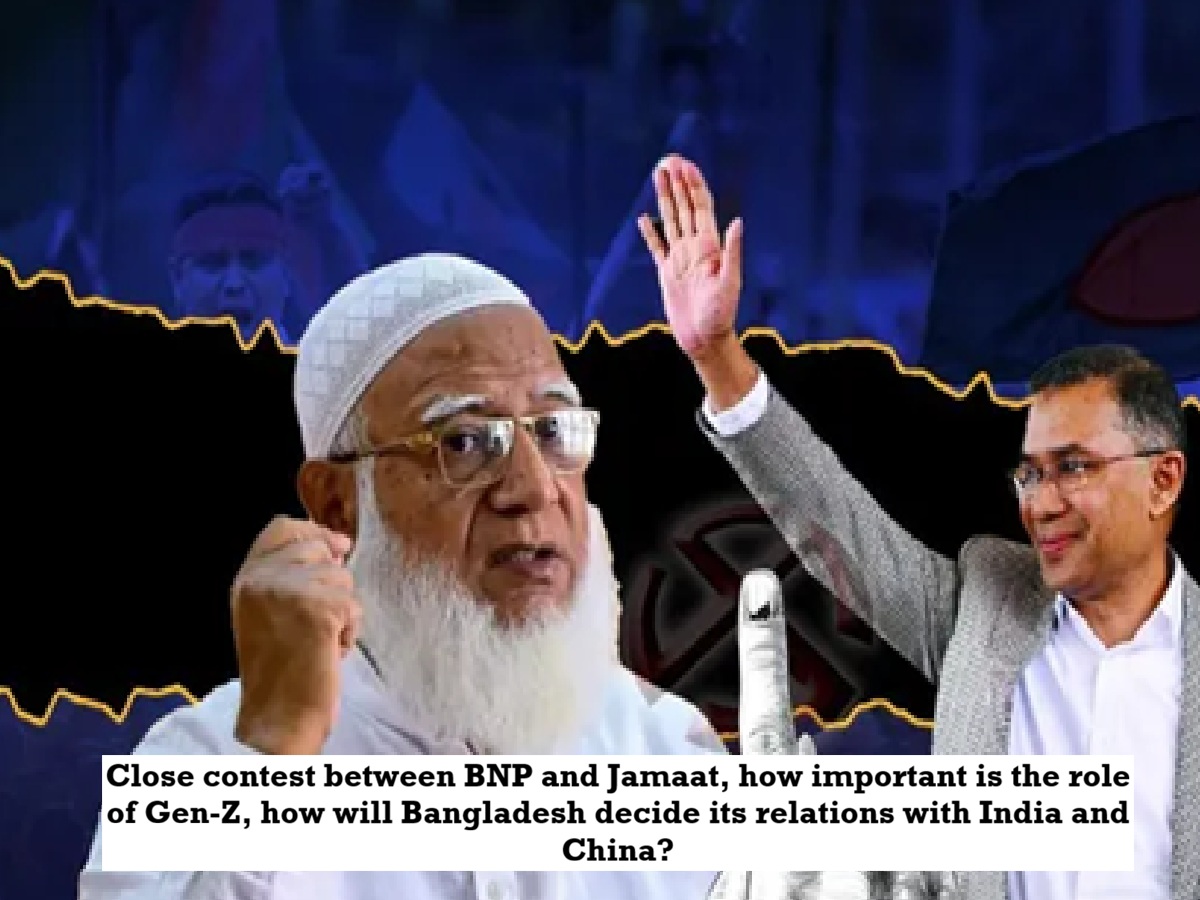
News Topical, Digital Desk : General elections are scheduled for this week in Bangladesh. The two major political parties, Bangladesh Jamaat-e-Islami and Bangladesh Nationalist Party (BNP), are in a close contest. Each party is leaving no stone unturned in making attractive promises to the public.
During the reign of ousted Bangladesh Prime Minister Sheikh Hasina, opposition parties had a negligible electoral presence. They either boycotted elections or were marginalized by widespread arrests of their top leaders. Now, the situation has completely changed.
Tough electoral contest between BNP-Jamaat
Monday is the last day parties can reach out to voters before Thursday's vote, with campaigning officially ending at 7 a.m. on Tuesday.
After Sheikh Hasina was removed from power and her Awami League was banned by Muhammad Yunus' interim government, former allies Jamaat and BNP have emerged as major forces in the country's politics.
The BNP is projected to win this election, but the Jamaat-e-Islami-led coalition is posing a strong challenge. Meanwhile, a new Gen-Z party, which emerged from the anti-Hasina 2024 protests, has joined forces with Jamaat after failing to achieve electoral success.
After the Yunus government took power in 2024, the ban on the Jamaat was lifted and its registration was restored by the Election Commission, which increased its strength.
On the other hand, Tarique Rahman's return after 17 years in exile has infused new enthusiasm among BNP workers. The atmosphere has shifted in favor of the BNP following the death of former Bangladesh Prime Minister Khaleda Zia.
The struggle to reach out to swing voters
Following the ban on the Awami League, many young people involved in the 2024 uprising believe it will be the Muslim-majority nation's first truly competitive election since 2009.
Both the BNP and Jamaat are working to woo former Awami League supporters, especially in areas where Hasina's party had a strong base. Following the death in prison of Ramesh Chandra Sen, a prominent Awami League leader and Hindu politician from Thakurgaon, top leaders from both parties visited his home.
Sen was a five-time MP and wielded considerable influence in the region. With the Awami League out of the election, both parties are seeking the votes of its supporters. These floating votes could prove decisive in this tight contest.
How important is the Hindu vote?
The election is set to be a close contest, so both parties are wooing the Hindu minority community. Many believe the Hindu vote will be decisive.
From temple visits to praising the contribution of Hindus to education, the Jamaat and BNP have promised security even as radical attacks continue ahead of the elections.
The Jamaat's hardline image could help the BNP secure more votes among Hindus. A Jamaat candidate recently praised Hindus, saying, "You cannot deny the role Hindus have played in spreading education in this region."
When and in how many phases will the elections be held?
The 13th national parliamentary election and referendum will be held on February 12. Voting for 299 seats will take place from 7:30 am to 4:30 pm using transparent ballot boxes and paper ballots.
The interim government has imposed strict security measures amid the violence. A referendum will also be held on the July Charter. This document, signed on October 17, 2025, will bind the parties if passed.
The Yunus government issued a decree to implement it on 13 November 2025. The referendum will be held on four reform proposals, with voters voting a single 'yes' or 'no'.
The China-India angle
The Bangladesh election results will influence the roles of China and India. After Hasina was removed from power, perceived as pro-India, she moved to Delhi, increasing Chinese influence there.
Experts say that BNP will align more with India than Jamaat, while Jamaat may move closer to Pakistan.
Earlier, the Jamaat's Gen-Z affiliate had expressed concern over 'India's dominance' and met Chinese diplomats.
Jamaat says it is not biased towards any country. BNP's Rehman said they will seek friendship with countries that are "suitable for their people and their country."
Read More: 'No Iranian ship will be able to leave,' JD Vance warns Tehran
--Advertisement--