desk
desk Share
Share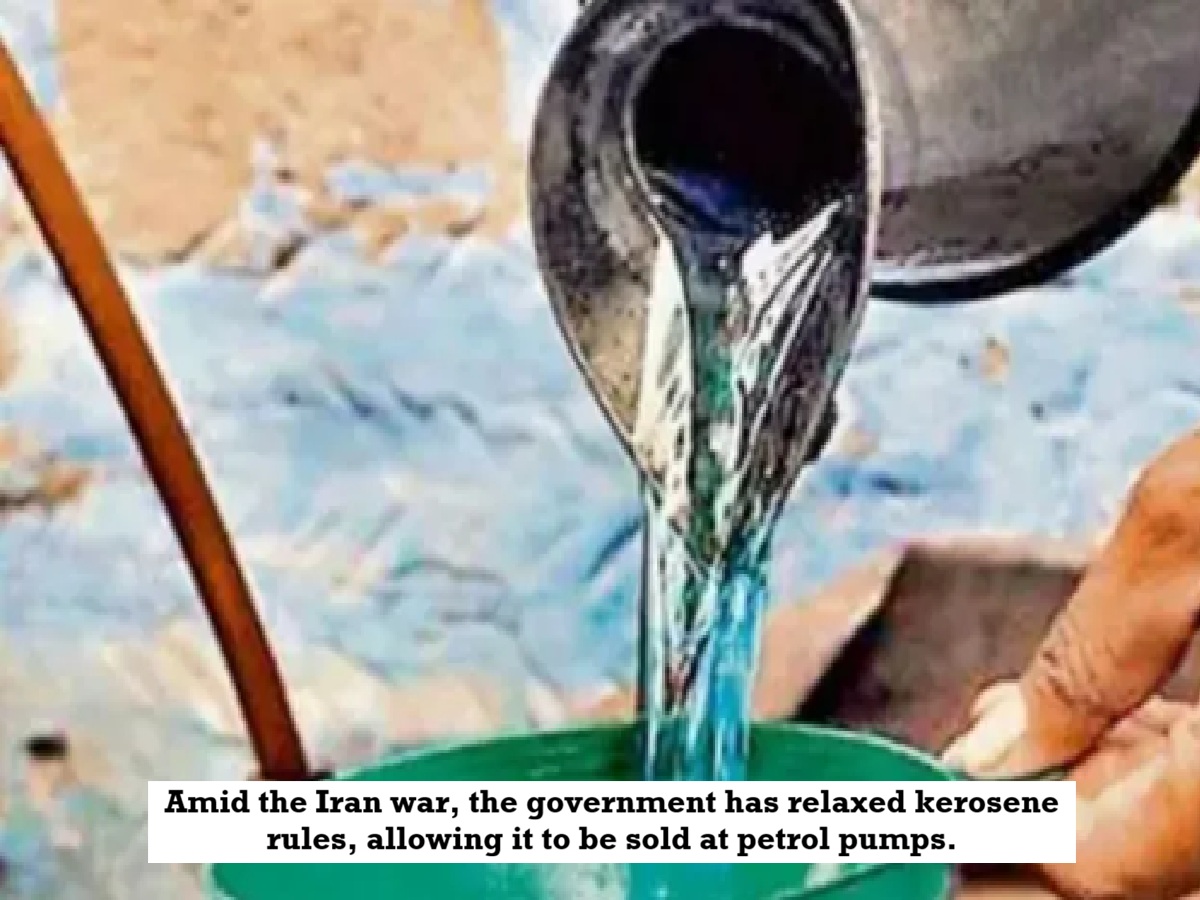
News Topical, Digital Desk : With the ongoing crisis in West Asia putting pressure on LPG supplies, the central government has allocated 48,000 kilolitres (KL) of additional kerosene to states and union territories as an alternative cooking fuel, over and above the regular monthly quota (approximately 1 lakh KL).
The Ministry of Petroleum and Natural Gas has asked all states to identify distribution locations within their districts, primarily through ration shops or designated locations. However, states have shown little enthusiasm for this plan.
Allocation of Superior Kerosene Oil
According to official information, only 17 states or union territories have issued orders for SKO (Superior Kerosene Oil) allocations so far. Himachal Pradesh and Ladakh have clearly stated that they have no need for kerosene. Several other states are still hesitant to issue orders.
According to experts and state administration sources, the biggest issue is that very few people now have access to kerosene stoves or stoves. Many states (such as Rajasthan, Haryana, Uttar Pradesh, etc.) stopped distributing kerosene through the Public Distribution System (PDS) around 2017.
No means of using kerosene
As a result, people have no means to use kerosene. Second, this additional allocation is considered too low. Third, the central government has directed that kerosene be distributed only at two locations in each district. The state administration says that once people start using kerosene by purchasing stoves from the market, the situation could worsen if a regular supply is not available. This will not be a popular decision.
Himachal Pradesh and Ladakh have clearly stated that they do not need kerosene. In fact, the central government has been pursuing a policy of gradually phasing out kerosene for the past decade. Cash incentives were provided to several states in exchange for the promotion of clean fuel (LPG) and the transfer of kerosene quotas under the Direct Benefit Transfer (DBTK) scheme.
PDS kerosene free
As a result, 21 states and union territories are now PDS kerosene-free. According to government data, the allocation for PDS kerosene in 2023-24 was only 1,060,524 kiloliters. West Bengal alone received the largest allocation (704,016 kiloliters), accounting for 66 percent. Ten years ago (2015-16), this figure was closer to 8.6 million kiloliters.
The regular monthly quota is now around 100,000 kiloliters, significantly lower than before. The Petroleum Ministry maintains that this additional allocation is temporary and designed to ease pressure on LPG due to the West Asian crisis. However, implementation of the plan is being delayed due to uncertainty about state-level distribution arrangements, availability of stoves, and future supplies.
The government has clarified that kerosene will be provided primarily to ration card holders for cooking and lighting, but preparations are currently incomplete in many states. Select petrol pumps operated by public sector oil marketing companies such as Indian Oil, Bharat Petroleum, and Hindustan Petroleum have been permitted to store and sell kerosene. Each designated retail outlet is permitted to store up to 5,000 liters of kerosene.
--Advertisement--