desk
desk Share
Share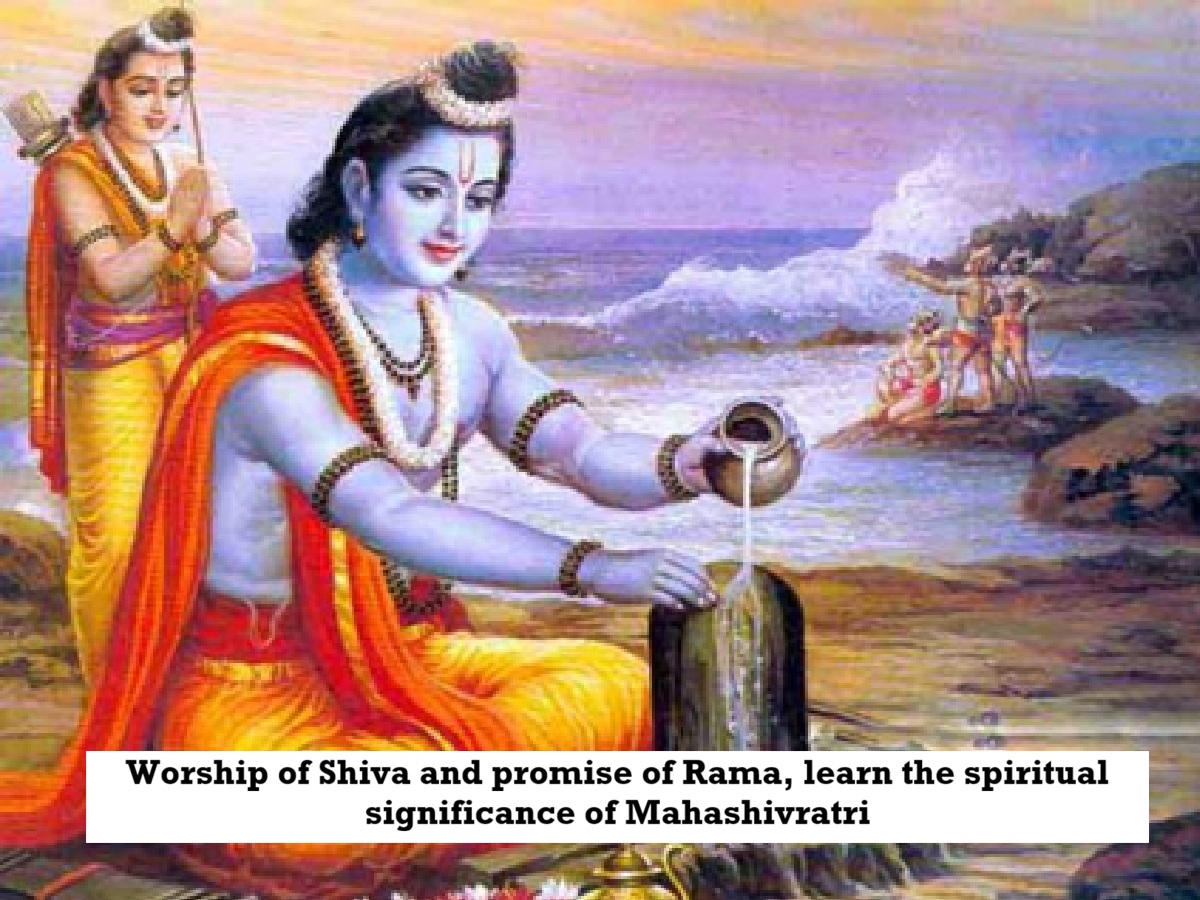
News Topical, Digital Desk : Acharya Mithilasanandinisharan (Siddhapeeth Shri Hanuman Niwas, Ayodhya). Time moves forward, based on the continuous cycle of day and night. In the dialogue between Yaksha and Yudhishthira in the Mahabharata, night and day are described as two sticks of black fire - ratridivendhanen. In the Srimad Bhagavad Gita, six months of day and six months of night are described as the day and night of the gods. The presence of Mahakaal Shiva in this science of time adds special meaning. In a world governed by time, the Shiva element, which resides beyond time as its regulator, is central to our Rishi tradition. We pray to Sachchidananda Shiva, the God of all knowledge and the ruler of the entire universe, the protector of the Brahma consciousness of the Vedas, for the welfare of the Vedas.
"इशानः सर्वविद्यानामीश्वरह सर्वभूतानां ब्रह्माधिपतिरब्रह्मानोऽदिपतिरब्रह्मा
शिवो में आस्तु सादाशिवोऽम्॥"
Lord Shiva is synonymous with extraordinaryness. Despite being the proud deity of the Tamas Guna (darkness), he is the embodiment of supreme light. Despite embracing all kinds of inauspiciousness, he is supremely auspicious, and even while wearing things like the garland of skulls and ashes of the dead, he purifies the fallen. Revealing Shiva's uniqueness, the greatest festival of Bhanukotiprakash Mahadev is called Mahashivratri. Normally, night is defined by darkness, but through Shiva's divine presence, the night of Falgun Krishna Chaturdashi has become one that expresses the light of Shivatva. A light that Goswami Tulsidas calls the light of the gem of devotion, which does not require ghee or wick. This light is not extinguished even by storms. The verses of Shri Ramcharitmanas are:
The form of supreme light day and night. If not there, then the ghee and wick should be lit.
This night, imbued with spiritual light, is cherished with great reverence in Indian life. It is a vigil. It is a fast. It is worship. It is faith. It is the path to union with Shiva. In the deep darkness of this night, the supernatural light of Shivatva is revealed. In religious scriptures, it is called Shivapriya Ratri. Shiva's glory and his transcendental grace and compassion are visible in Vedic hymns, mythological narratives, Agamic rituals, and poetic scriptures. On one hand, he is the master of all knowledge and is said to be the source of knowledge, while on the other hand, many auspicious stories of his innocence are prevalent. In a regional hymn, a devotee asks Lord Shiva, "O Lord! Do you not fear for your life at all, that you drink poison?" "Viswanath Baba, tell me, I fear for my life, I am not afraid of you, I have eaten poison."
The most beautiful scenes of welfare and public entertainment contained in the worldly pastimes of the supernatural Shiva are expressed through the pen of Goswami Tulsidas. While worshipping Lord Shiva in Shri Ramcharitmanas, he associates him with the most dignified Lord Shri Ram - 'Servant, master, friend of Siya and P.K. Tulsidas is the one who is in every way beneficial.' Not only this, Goswami Ji starts with a question regarding Shri Ramcharit in Shri Ramcharitmanas and places Shivcharit before Ramcharit. Answering the question of Maharishi Bharadwaj, Maharishi Yagyavalkya says that I have tested you by narrating Shivcharit first. Listening to Shivcharit with devotion is the proof of the right to listen to Ramcharit.
The Leela-Charita of Shri Ram and Shri Shiva
Pausing to reflect here, the values revealed in the lives of Lord Rama and Lord Shiva become clear. Summarizing the essence of Shivatva in a Sorath, Tulsidas says, "The entire universe of gods is burning, who drank the poisonous poison. O dull-minded one, who cannot worship the merciful Lord Shiva." Who else can be as merciful as Shiva, who drank the poison to save the world burning from the flames of ocean-born poison? This pledge to digest the poison meant for others aligns Shivatva with human values. Similarly, Lord Rama, who renounced the kingdom's wealth and went into exile for the welfare of the people, purified the character of humanity by absorbing the pain of everyone, including Kaikeyi and Dasharatha, in his own heart.
Supernatural Laws for the Protection of the World
Shiva is Vishwanath, the creator of supernatural laws for the protection of the world. His grace extends from enjoyment to salvation. In Ayodhya, he becomes an astrologer, drinking the nectar of Shri Ram's childhood pranks, and in Kashi, he liberates the dying by giving them the nectar of Shri Ram's name. The worship of Shiva, who himself became destitute and gave away everything, is seen as one with the popular Shri Ram's pledge for the welfare of the people.
--Advertisement--