







UK School Sued Over Tilak Ban: Hindu Father Seeks £25K
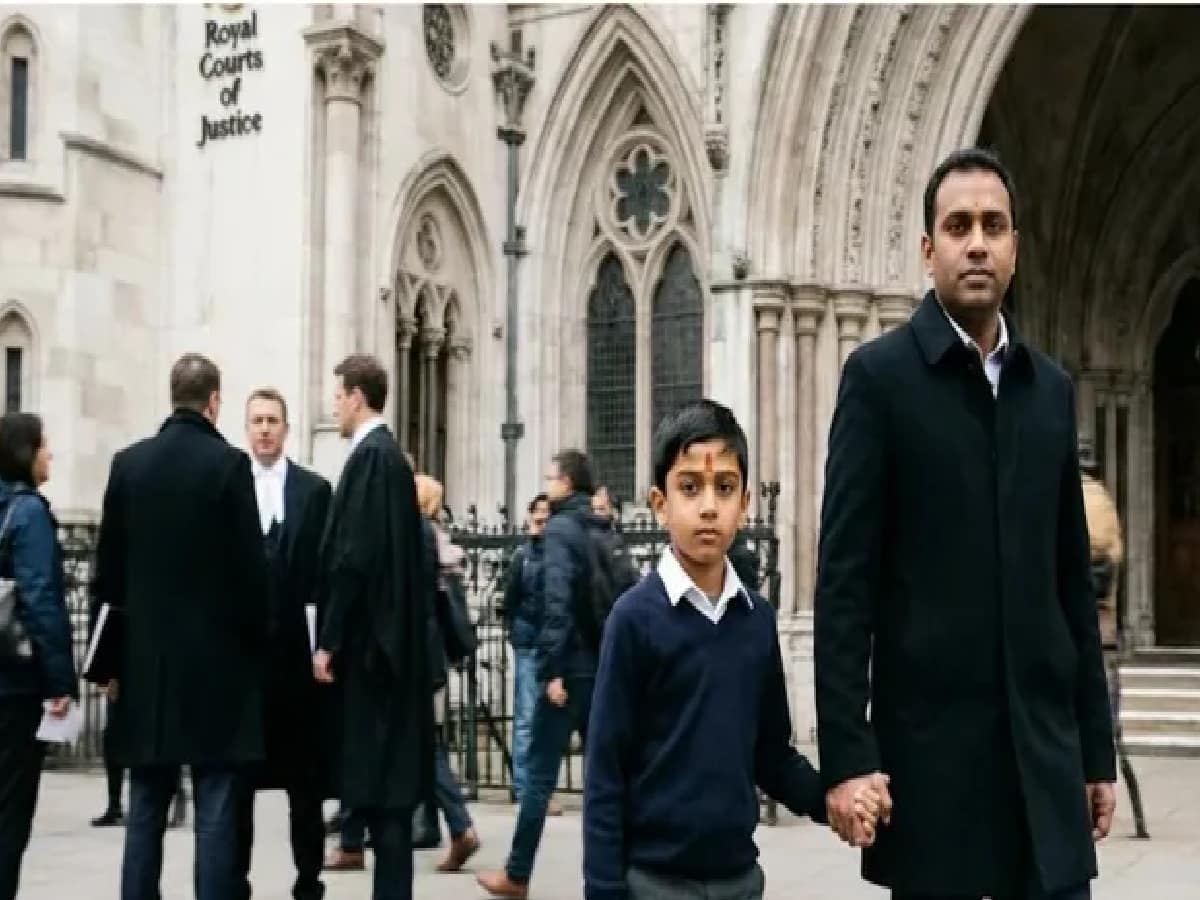
In a legal challenge that has ignited a debate over religious freedom and cultural expression in British state education, a British-Indian Hindu father has initiated High Court proceedings against his son’s former primary school in north-west London. Acting as the legal litigation friend for his nine-year-old son, the father alleges that Vicars Green Primary School—a state-funded primary institution located in Alperton within the London Borough of Ealing—subjected the young boy to unlawful religious discrimination, institutional harassment, and victimization by prohibiting him from wearing the sacred tilak-chandlo, a central devotional emblem of the Hindu Swaminarayan tradition. The legal action, which seeks £25,000 in general damages and civil compensation, is backed by the British Hindu advocacy network Action for Harmony and represented by specialized human rights firm Ashray Law. The case is poised to test the boundaries of school uniform mandates against statutory protections guaranteed to minority religious communities under United Kingdom law.
London High Court Lawsuit: Religious Freedom in British Classrooms
The formal claim filed before the High Court of Justice contends that Vicars Green Primary School and its governing authorities committed severe breaches of the Equality Act 2010, specifically violating the statutory Public Sector Equality Duty (PSED). Under British equalities legislation, state-funded institutions are legally mandated to eliminate unlawful discrimination, advance equality of opportunity, and foster good relations between persons who share a protected characteristic—including religion or belief—and those who do not. The lawsuit further asserts that the school’s actions directly contravened the child’s fundamental rights guaranteed under the European Convention on Human Rights (ECHR), as incorporated into domestic legislation via the Human Rights Act 1998.
Specifically, the petition cites Article 9 of the ECHR, which guarantees the absolute right to freedom of thought, conscience, and religion, including the public manifestation of religious belief in practice and observance. It also invokes Article 14, which strictly prohibits discrimination in the enjoyment of convention rights. "This case raises fundamental and far-reaching questions regarding religious freedom, identity, and the meaning of equality within the British education framework," stated Ambrish Limbachia, director of Ashray Law, who is leading the legal challenge on behalf of the family. The claimants argue that forcing an elementary student to conceal or remove an essential religious marker creates an intimidating, hostile, and degrading educational atmosphere, directly undermining modern British values of pluralism and multicultural inclusion.
Anatomy of the Dispute: Four Years of Quiet Observance Broken
According to detailed filings submitted to the High Court, the dispute traces back to November 2025, when the child was eight years old and enrolled in Year 4. One morning, school staff members intercepted the boy, questioned him about the markings on his forehead, and informed him that wearing the tilak-chandlo was strictly prohibited on school premises. The incident caused immediate distress to the young pupil, who had incorporated the spiritual practice into his daily morning prayers since early childhood.
Surprised by the sudden confrontation, the boy’s parents wrote an official letter of clarification to the school leadership. In their correspondence, the family pointed out that their son had attended Vicars Green Primary School for more than four continuous years while openly wearing the sacred mark every single day, without attracting a single complaint, disciplinary inquiry, or classroom disruption. Furthermore, the parents conducted an exhaustive review of the school’s existing behavioral and uniform dress codes, confirming that at the time of the intervention, the written policy contained no clause or regulation barring facial religious markings or spiritual symbols.
School Council Removal and Policy Overhaul: The Escalation
Rather than resolving the grievance through administrative dialogue, relations between the school administration and the family rapidly deteriorated. On December 12, 2025, the boy was abruptly stripped of his position on the official School Council, where he had been democratically elected by his peers to serve as his class representative. The family described this punitive measure as an act of administrative victimization designed to isolate their son from his peers.
Shortly after removing the child from the student council, the school governing body drafted and enforced a revised uniform policy that explicitly prohibited pupils from displaying religious symbols or marks on their skin. Faced with increasing administrative pressure, scrutiny from staff members, and feeling increasingly alienated within the school community, the parents concluded that their son’s emotional and psychological well-being was being compromised. In January 2026, the family formally withdrew the nine-year-old from Vicars Green Primary School, subsequently transferring him to an alternative educational facility to continue his primary schooling.
The School's Defense: Pupil Cohesion and Theological Debates
Vicars Green Primary School has firmly rejected all claims of wrongdoing, submitting a detailed defense denying that it acted unlawfully or discriminated against the claimant. In its legal submissions, the school asserted that prohibiting the child from displaying the tilak-chandlo on his forehead did not prevent him from practicing the wider tenets of Hinduism. Defending its dress regulations, the school claimed it harbored legitimate administrative concerns that granting an exception for the facial marking could produce "significant adverse consequences, including a breakdown in pupil cohesiveness" across the multi-ethnic student body.
In a move that has drawn criticism from Hindu diaspora organizations, the school's legal defense questioned the authenticity of the boy's adherence to the Swaminarayan branch of Hinduism, asserting that daily application of the forehead mark is not universally obligatory across all denominations of the Hindu faith. Defense documents also revealed that school staff had proposed a compromise, suggesting that the child could instead apply the sacred marking to covered parts of his body underneath his school clothes. The child’s parents rejected this proposal, explaining that religious scripture specifies the forehead as the precise sacred site for the symbol, and arguing that requiring a child to hide their religious identity beneath clothing contradicts the principle of open religious equality.
Cultural and Spiritual Significance: Understanding the Tilak-Chandlo
The controversy highlights a gap in understanding regarding the scriptural and cultural significance of the tilak-chandlo within the global Hindu community, particularly within the Swaminarayan Sampradaya. The mark consists of two distinct components: the tilak, a U-shaped vertical curve rendered using yellow sandalwood paste (chandan), and the chandlo, a circular red dot placed directly in the center using purified vermilion (kumkum).
In Hindu theological philosophy, the U-shaped sandalwood mark represents the sacred lotus feet of Paramatma (God), while the central red kumkum dot symbolizes the devout bhakta (devotee) resting under divine protection. Prescribed within sacred texts such as the Shikshapatri authored by Bhagwan Swaminarayan, the daily morning ritual of applying the tilak-chandlo on the forehead is considered an essential component of personal spiritual discipline (Nitya Puja), symbolizing humility, moral rectitude, intellectual clarity, and spiritual devotion. For young practitioners, wearing the marking in public spaces is not treated as cosmetic jewelry or a fashion accessory, but as a living expression of faith and cultural identity, comparable to the Sikh turban (patka), Jewish yarmulke, or Islamic hijab.
Wider Repercussions: British Education and Minority Rights
The legal battle unfolding in London carries broader implications for community relations and diversity management across the UK's educational sector. Over past decades, English courts have handled disputes concerning religious dress, consistently establishing that educational institutions must demonstrate an objective, proportionate justification when curtailing a student’s right to manifest their faith. In landmark cases such as R (Begum) v Denbigh High School and the historic Watkins-Singh ruling—which affirmed the right of a Sikh schoolgirl to wear the sacred Kara bracelet—British jurisprudence has established that uniform policies must balance school cohesion with protection for religious minorities.
With backing from Action for Harmony and various British Hindu community groups, the litigation against Vicars Green Primary School is set to clarify whether public institutions can legally demand that students hide visible religious markers in the name of uniform standardization. As the High Court prepares to hear arguments on statutory duties and religious freedom, the outcome will likely establish a legal precedent, determining how primary and secondary schools across England balance administrative uniformity with the religious rights of their diverse student populations.




