







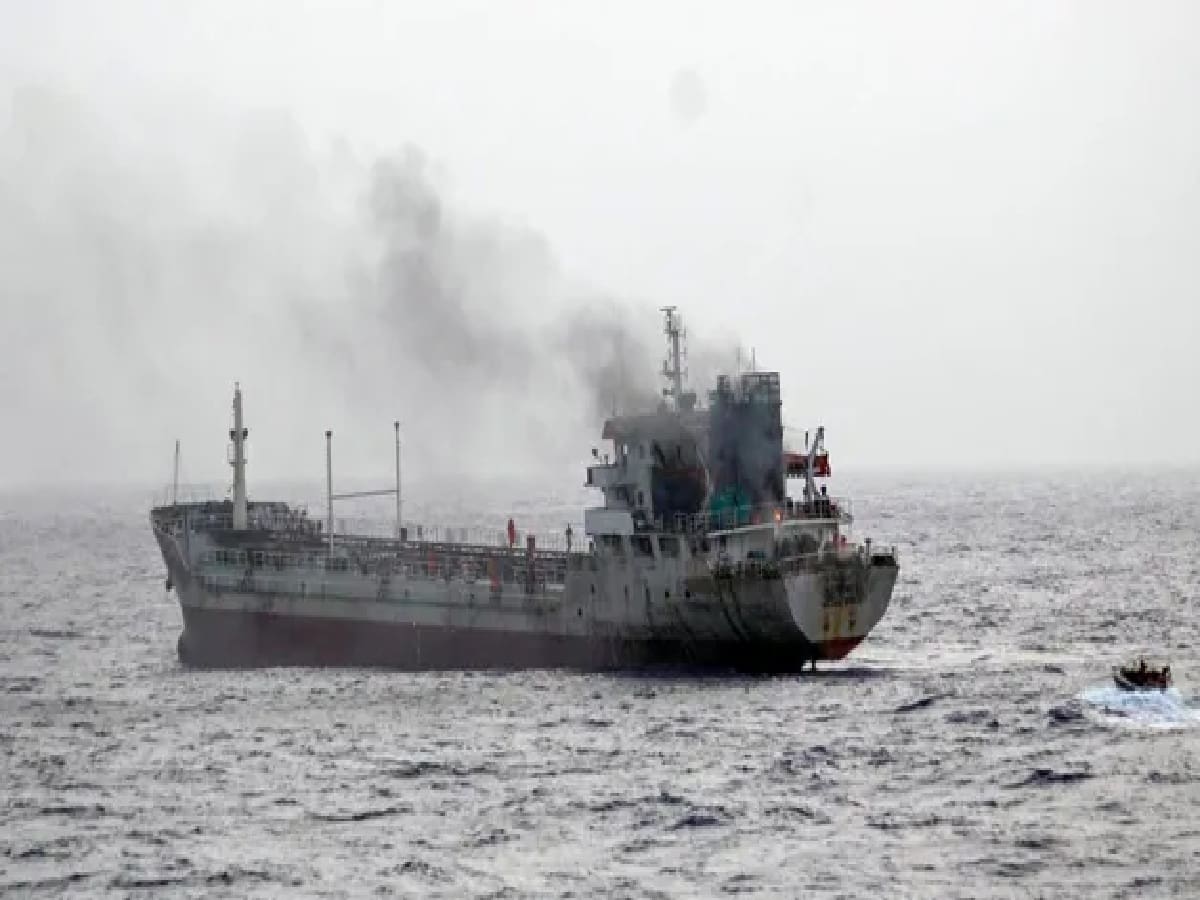
Two Oil Tankers Catch Fire After Striking Mines in Hormuz
In an alarming escalation across the world's most vital energy corridor, maritime hostilities in the Persian Gulf reached a critical juncture after two commercial crude oil tankers burst into flames upon striking naval mines in the Strait of Hormuz. The naval wing of Iran's Islamic Revolutionary Guard Corps (IRGC) announced on Friday that the vessels were crippled and brought to a standstill while attempting to traverse unauthorized, mine-contaminated waters under the operational guidance of the United States military. The twin detonations, which sent massive plumes of dense smoke billowing over the narrow chokepoint between the Persian Gulf and the Gulf of Oman, underscore the immense physical perils confronting commercial shipping amid an ongoing regional standoff. Tehran reiterated that the historic waterway remains strictly closed to unauthorized merchant traffic, cautioning that American attempts to force crude transports through blockaded maritime corridors will only lead to catastrophic maritime losses.
The Midnight Blaze: How Tankers Struck Naval Mines in Hormuz
According to official communiqués issued by the IRGC Navy, the incidents occurred in rapid succession under the cover of darkness as two separate commercial tankers attempted to exit the Persian Gulf along non-designated navigational tracks. Iranian military surveillance units reported that one vessel struck a submerged naval contact mine in the eastern approaches to the Strait of Hormuz, while the second tanker triggered an explosive device within the primary navigational narrows of the waterway. Both vessels sustained severe hull breaches below the waterline, igniting intense cargo fires that necessitated emergency maritime damage-control maneuvers.
Iranian defense authorities stated that both vessels had deliberately disabled their Automatic Identification Systems (AIS), maritime transponders, and navigational radio beacons in an effort to slip past coastal radar monitoring stations unnoticed. The IRGC explicitly alleged that the ships were operating under the direct tactical supervision and escort coordination of the United States Central Command (CENTCOM), which has attempted to facilitate commercial transit through the contested passage. The explosions halted the vessels' progress, leaving both hulls disabled and burning in international maritime lanes while regional salvage tugs and auxiliary support vessels scrambled to prevent catastrophic sinking and massive environmental crude spills.
The Seven Conditions: Tehran's Rigid Stance on Waterway Closure
The naval explosions coincide with an uncompromising diplomatic and military posture maintained by the Iranian leadership regarding maritime sovereignty in the Strait of Hormuz. The IRGC Navy stressed that the strategic strait remains closed to ships tied to hostile nations and that the restrictive operational posture of the waterway will not be lifted until Washington formally satisfies Iran’s comprehensive list of seven core conditions. These non-negotiable demands include an immediate termination of the maritime blockade on Iranian ports, the lifting of unilateral economic sanctions, the unfreezing of billions of dollars in sovereign foreign assets, compensation for infrastructure damages sustained in recent airstrikes, and the complete withdrawal of Western naval formations from regional waters.
Addressing CENTCOM's ongoing naval security efforts, Iranian military commanders warned that Western efforts to push commercial convoys through contested straits represent reckless brinkmanship. The IRGC declared that attempting to shepherd civilian commercial hulls through mine-contaminated waterways without resolving underlying geopolitical disputes would yield nothing but repeated and humiliating failures for American naval forces. The declaration signaled to global shipping conglomerates that international escort arrangements cannot guarantee safe passage against submerged ordnance and shore-based defense systems.
Dark Fleet Transits: The Spreading Crisis Across Southern Passages
Friday's double tanker disaster is part of a broader pattern of maritime interdictions and mine collisions across the Gulf region. Just twenty-four hours earlier, the IRGC confirmed that three commercial vessels—including two ultra-large crude carriers (VLCCs) and an assisting auxiliary tugboat—caught fire in separate incidents while attempting to navigate an illegal passage situated south of the Strait of Hormuz. That earlier convoy had similarly suffered underwater hull explosions, with one secondary vessel sustaining severe superstructure damage as it attempted to render firefighting assistance to the stricken tankers.
Maritime analysts note that the rising incidence of tanker fires stems from desperate efforts by international charterers to evade detection. To bypass formal regulatory closures and naval interception, numerous shipping operators have adopted "dark fleet" tactics, switching off tracking transmitters, utilizing flags of convenience, and plotting risky nocturnal courses outside traditional traffic separation schemes. However, as naval minefields and coastal patrols intensify, these alternative routes have turned into hazardous minefields, placing merchant mariners directly in the crosshairs of asymmetric naval warfare.
Global Energy Shockwaves: Insurance Panics and Skyrocketing Freight
The destruction of multiple crude carriers in the Strait of Hormuz has triggered panic across global commodity markets and maritime insurance syndicates. The Strait of Hormuz functions as the world's most critical maritime oil transit artery, historically handling approximately 20 to 25 percent of the global seaborne petroleum trade and substantial volumes of liquefied natural gas (LNG) originating from Gulf producers like Qatar, Saudi Arabia, the United Arab Emirates, and Iraq. With tankers burning inside the chokepoint, international marine insurers have moved to cancel standard war-risk coverage or levy exorbitant premiums, rendering unsanctioned voyages financially prohibitive.
Global logistics giants and major oil corporations have increasingly ordered their fleets to pause operations or initiate costly diversions around Africa’s Cape of Good Hope, adding weeks to transit times and straining tanker supply chains. Energy trading desks in London, New York, and Singapore responded to the mine strikes with heightened volatility, as fears grow that prolonged waterway closures could trigger acute crude supply deficits for major importing economies across Asia and Europe. Macroeconomic analysts warn that persistent disruption to Hormuz transit threatens to drive energy inflation higher, complicating central bank policies worldwide and dampening global economic growth.
Diplomatic Brinkmanship: Fragile Mediation Against Maritime Chaos
The burning tankers highlight the acute fragility of ongoing international mediation efforts designed to prevent an all-out regional war. Mediators from Qatar and Oman have been actively shuttling draft compromise frameworks between Washington and Tehran, floating short-term bridge agreements that proposed the temporary reopening of shipping lanes in exchange for phased sanctions relief, the unfreezing of escrow funds, and expanded inspection access for international monitors.
However, the continued detonation of naval mines and kinetic exchanges along Iranian coastal waters threaten to unravel these delicate negotiations. Defense experts warn that repeated attacks on civilian shipping raise the risk of an unintended confrontation, where a single mass-casualty incident or catastrophic environmental disaster could trigger direct military clashes between American naval strike groups and Iranian coastal defense units. As disabled tankers smolder in the contested waters of the strait, the international community faces a narrow window to restore maritime security before the crisis permanently alters the geopolitical landscape of the Persian Gulf.




