







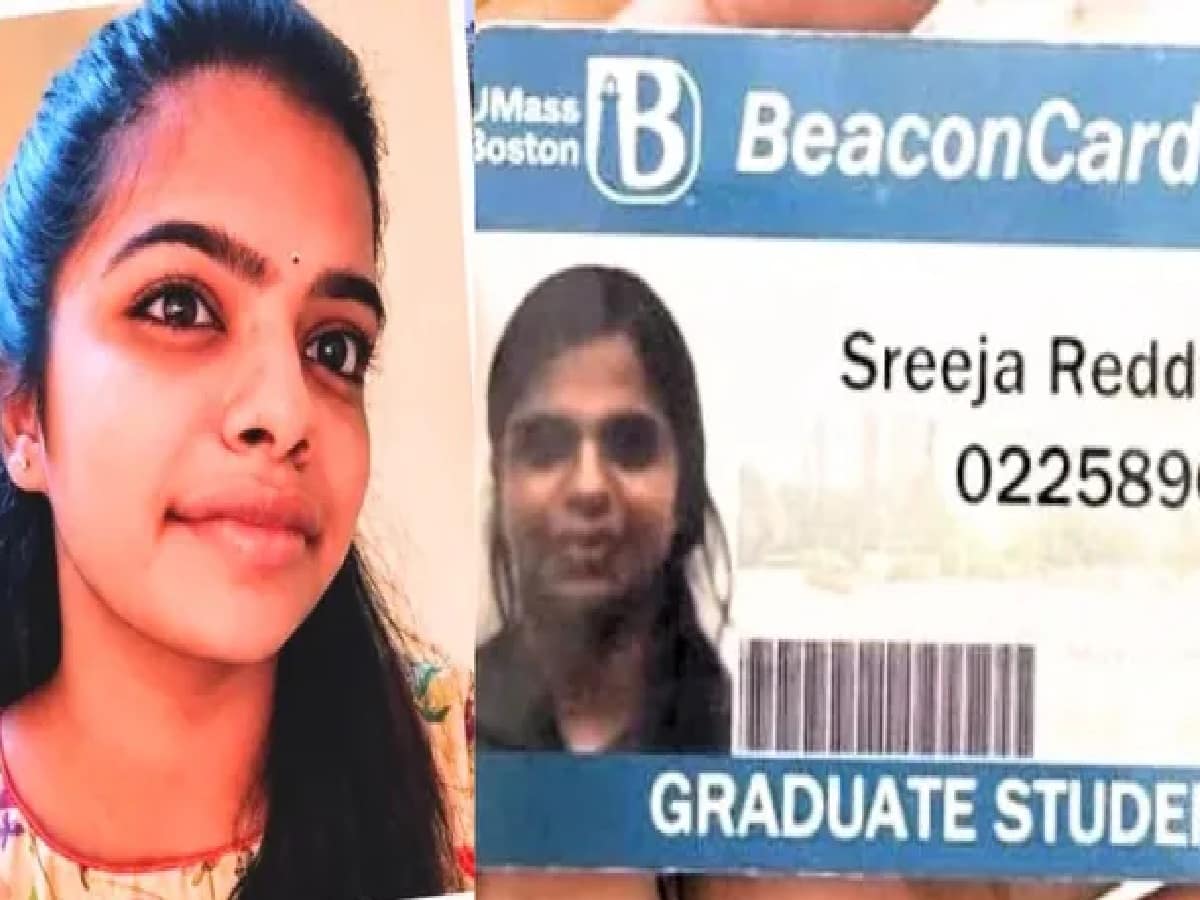
Telangana Student Sreeja Reddy Goes Missing in Boston
A deep sense of anxiety and heartbreak has gripped the rural hamlet of Shabdullapuram in Telangana’s Nalgonda district, as news arrived that 23-year-old Indian postgraduate student Koya Sreeja Reddy has mysteriously vanished in Boston, Massachusetts. Sreeja, who moved to the United States roughly eighteen months ago to pursue higher studies at the University of Massachusetts Boston (UMass Boston), has been untraceable since the late evening of Monday, November 2, 2026. What began as a routine, brief post-dinner walk through her neighborhood in the historic Dorchester section of Boston has turned into an agonizing, multi-agency missing person investigation spanning local law enforcement, diplomatic channels, and the global Indian diaspora. With her mobile phone persistently switched off and the autumn temperatures dropping sharply along the New England coast, local authorities, university officials, and community volunteers are scouring waterfront neighborhoods in a race against time.
Disappearance in Dorchester: Stepping Out for an Evening Walk
The sequence of events leading up to the young scholar's disappearance has left both investigators and her roommates bewildered. According to detailed timelines verified by the Boston Police Department, Sreeja returned to her shared apartment in the Edison Green neighborhood of Dorchester after attending her regular academic schedule at UMass Boston. Dorchester, one of Boston’s most densely populated and diverse urban communities, is home to a substantial concentration of international students due to its proximity to coastal campuses and public transit networks. Around 9:45 PM on Monday night, after unwinding with friends following a birthday gathering, Sreeja informed her housemates that she was stepping out for a breath of fresh air and a short stroll along the familiar avenues near her residence.
She left the apartment carrying minimal personal belongings, dressed for the chilly late-autumn weather in a black jacket and blue jeans. However, when she failed to return within the hour, her roommates grew alarmed and attempted to reach her via cellular calls. To their immediate dread, her mobile phone was completely powered down, routing straight to automated voicemail. Calls placed to fellow classmates, faculty members, and local acquaintances across the city yielded no clues regarding her destination or intentions. Realizing the gravity of the situation, her peers contacted the local police precinct on November 3 to file a missing person report, setting off an urgent search across the municipal jurisdiction.
The Investigation: Tracing Footsteps Near Carson Beach and Harbor Point
Recognizing the acute vulnerability of an international scholar vanishing in unfamiliar surroundings, the Boston Police Department issued a formal public alert on November 4, disseminating Sreeja’s photograph, physical description, and last-known sightings across local media networks, public transit hubs, and social platforms. Preliminary cellular triangulation data and surveillance sweeps indicated that her last recorded mobile signal bounced from a transmission tower located barely half a kilometer to a kilometer away from her apartment building. This localized digital footprint initially led patrol officers to suspect that she might have sought temporary shelter nearby or experienced a brief disorientation.
However, as hours turned into days without a single digital transaction, transit pass swipe, or phone ping, tactical search teams shifted their operational focus toward the nearby coastal perimeter. Detectives and search units are concentrating search efforts around the Carson Beach waterfront, the sprawling Harbor Point residential strip, and adjacent parklands that border Dorchester Bay. These scenic seaside paths, popular among university joggers and evening walkers, present challenging terrain during late hours due to heavy fog, cold maritime winds, and limited nocturnal visibility. Marine units and regional patrolling teams have been deployed to comb the shoreline and review private closed-circuit television (CCTV) feeds from waterfront condominiums and retail establishments, urging any late-night commuters or motorists who observed an individual matching her description to step forward with dashcam footage.
Family in Anguish: A Distant Father Pleads for Answers in Nalgonda
Thousands of miles away in Shabdullapuram village, situated within the Kanagal Mandal of Nalgonda district, the disappearance has devastated Sreeja’s family. Her parents, Koya Yadagiri Reddy and Roopa, belong to a modest farming background and invested their lifetime savings and resources into funding their daughter’s international academic aspirations. For Yadagiri Reddy, Sreeja represents the hope of their household—a determined, studious young woman who had worked tirelessly to earn admission into a master’s program in the United States. To offset living expenses and ease the financial burden on her agrarian family, Sreeja had also taken up legal, part-time campus work alongside her demanding course curriculum.
Speaking to journalists through tears from his rural residence, Yadagiri Reddy recounted how close-knit their daily communication had been. Just weeks prior, Sreeja had traveled home to Telangana, spending a joyful month-long vacation reconnecting with her parents, relatives, and childhood peers before flying back to Boston for the autumn semester. "She went to college, came back to her room, and then went out for a walk," her grieving father said. "After walking about a kilometer, she went missing, and her phone was abruptly switched off. The police initially told her friends she might be nearby, but five full days have passed without a single word. We are sitting here completely helpless, desperately pleading with the governments to bring our daughter back safely."
Diplomatic and Community Mobilization: MEA, Consulate, and TANA Step In
As news of the student’s disappearance spread across the Telugu-speaking diaspora, political leaders in Telangana moved swiftly to mobilize administrative and diplomatic machinery. Telangana Roads and Buildings Minister Komatireddy Venkat Reddy, who also represents the Nalgonda legislative constituency, intervened directly in the crisis. The minister established immediate contact with senior officials in the Ministry of External Affairs (MEA) in New Delhi and reached out to the Consulate General of India in New York and the Indian consular mission in Boston, demanding high-level coordination with United States federal and municipal authorities.
Minister Komatireddy also engaged leadership members of the Telugu Association of North America (TANA) and other prominent Indian-American community organizations to coordinate ground-level support. Diaspora volunteers in Massachusetts have formed localized search parties, circulating bilingual flyers across grocery stores, student centers, and subway stops on the MBTA Red Line. University of Massachusetts Boston officials issued an internal campus advisory, stating that student welfare counselors, campus security officers, and the dean of students are cooperating fully with city detectives to gather information from classmates and track academic portals for any recent logins. The Indian Consulate has assured the family of continuous consular assistance, maintaining direct communication with Boston police brass to monitor daily investigative briefings.
An Unnerving Trend: Rising Vulnerabilities for Indian Students Overseas
The troubling mystery surrounding Sreeja Reddy’s disappearance has reignited wider conversations regarding the safety, mental well-being, and situational security of the expanding Indian student population in the United States. Over the past two academic years, multiple distressing incidents involving Indian scholars—ranging from sudden disappearances and violent street robberies to tragic health crises and unexplained deaths—have sparked deep apprehension among middle-class parents across India who send their children abroad for higher education.
International education analysts point out that while metropolitan hubs like Boston offer world-class academic institutions, they also present complex urban environments where young students, navigating academic pressures, cultural isolation, and financial strains, can find themselves in precarious circumstances. Community advocacy networks are increasingly urging overseas universities to institute robust, culturally sensitive pastoral care mechanisms, buddy systems for late-night commutes, and emergency tracking protocols for international scholars living off-campus. As investigators in Boston scour the cold waters and residential alleys of Harbor Point, the thoughts of a global community remain fixed on a family in Nalgonda, praying that the 23-year-old student is located swiftly and returned unharmed to the arms of her waiting parents.




