







Pakistan Army Officer Declares Military Duty As Jihad Not Job
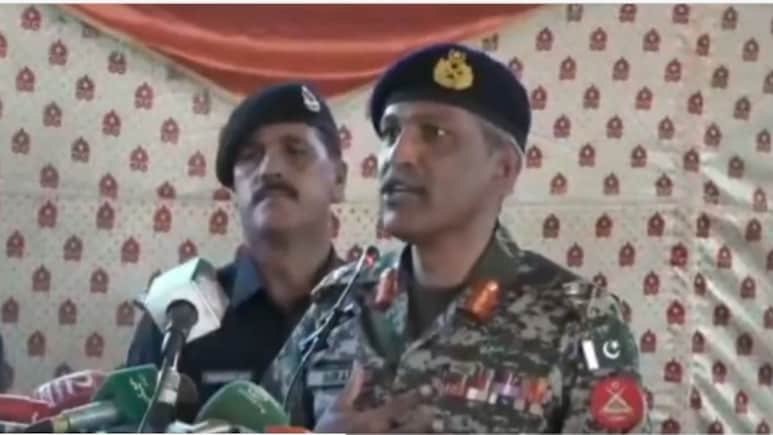
Global geopolitical analysts and security monitors are closely examining a controversial statement originating from within the upper echelons of the Pakistani military. Major General Rao Imran Sartaj, serving as the Inspector General of the Frontier Corps (FC) deployed in the volatile Balochistan region, has sparked widespread public debate and media scrutiny. During an official address to troops, the senior military commander explicitly defined active military service and frontline defense responsibilities not as a conventional government profession or employment, but as a sacred form of "Jihad" ordained by divine will. This rhetoric, blending sovereign state security frameworks with radical religious obligations, has once again brought the ideological underpinnings of Pakistan's armed forces under an international microscope, raising critical questions regarding institutional secularism, regional stability, and professional military ethics.
Frontier Corps IG Sparks Controversy with Religious Framing of Military Duty
The provocative remarks came to light through a widely circulated video clip capturing the Inspector General addressing personnel stationed in restive operational zones. In his speech, Major General Sartaj urged soldiers to perceive their daily patrols, combat deployments, and administrative tasks through a theological lens rather than viewing them merely through the lens of a contractual livelihood. By asserting that wearing the uniform and executing military commands constitute a direct responsibility assigned by the Almighty, the high-ranking officer leaned heavily into religious motivational tactics. While military organizations globally frequently employ patriotic themes to boost troop morale, critics and defense analysts note that infusing state-sanctioned combat with theological "Jihadist" terminology risks blurring the lines between professional national defense and ideological warfare, particularly in sensitive multi-ethnic regions like Balochistan.
Ideological Roots and the Institutionalization of Radical Motifs in Pakistan
The integration of religious terminology within Pakistan's military apparatus is deeply rooted in historical institutional shifts, most notably dating back to policies implemented during the late 1970s. The official motto of the Pakistan Army—Iman, Taqwa, Jihad fi sabilillah (Faith, Piety, and Struggle in the path of Allah)—serves as the foundational institutional creed. Observers point out that successive military administrations have frequently relied on religious narratives to foster internal cohesion, especially during periods of intense domestic insurgency or geopolitical friction. However, security experts argue that when senior commanders publicly characterize routine state military duties as holy struggles, it complicates diplomatic messaging and reinforces international concerns about the deep-seated ideological inclinations driving regional military operations.
Repercussions in Balochistan and Implications for Internal Security
The timing of this controversial pronouncement carries significant weight given the volatile security dynamics plaguing the Balochistan province. The Frontier Corps operates extensively in the region, managing counter-insurgency operations against local nationalist groups and handling porous border security. Human rights advocates and regional commentators express apprehension that framing local security deployments as religious mandates rather than constitutional duties risks deepening alienation among local populations. When state forces approach internal administrative and security challenges through an ideological or theological prism, prospects for political dialogue, civilian reconciliation, and human rights compliance often suffer severe setbacks.
Global Scrutiny on Professionalism and Democratic Governance in Armed Forces
In any standard democratic framework, armed forces derive their legitimacy, operational code of conduct, and functional ethos strictly from constitutional mandates, civic laws, and civilian oversight. Modern military doctrines emphasize professional detachment, adherence to international humanitarian law, and institutional neutrality. Statements from senior generals branding institutional employment as divine service highlight the persistent friction between democratic governance norms and the deep-rooted praetorian and ideological culture characterizing Pakistan's military establishment. As international partners monitor regional security developments, the rhetoric emanating from top commanders continues to fuel debates regarding the trajectory of institutional reforms and the true nature of civil-military relations within the nuclear-armed South Asian nation.




