







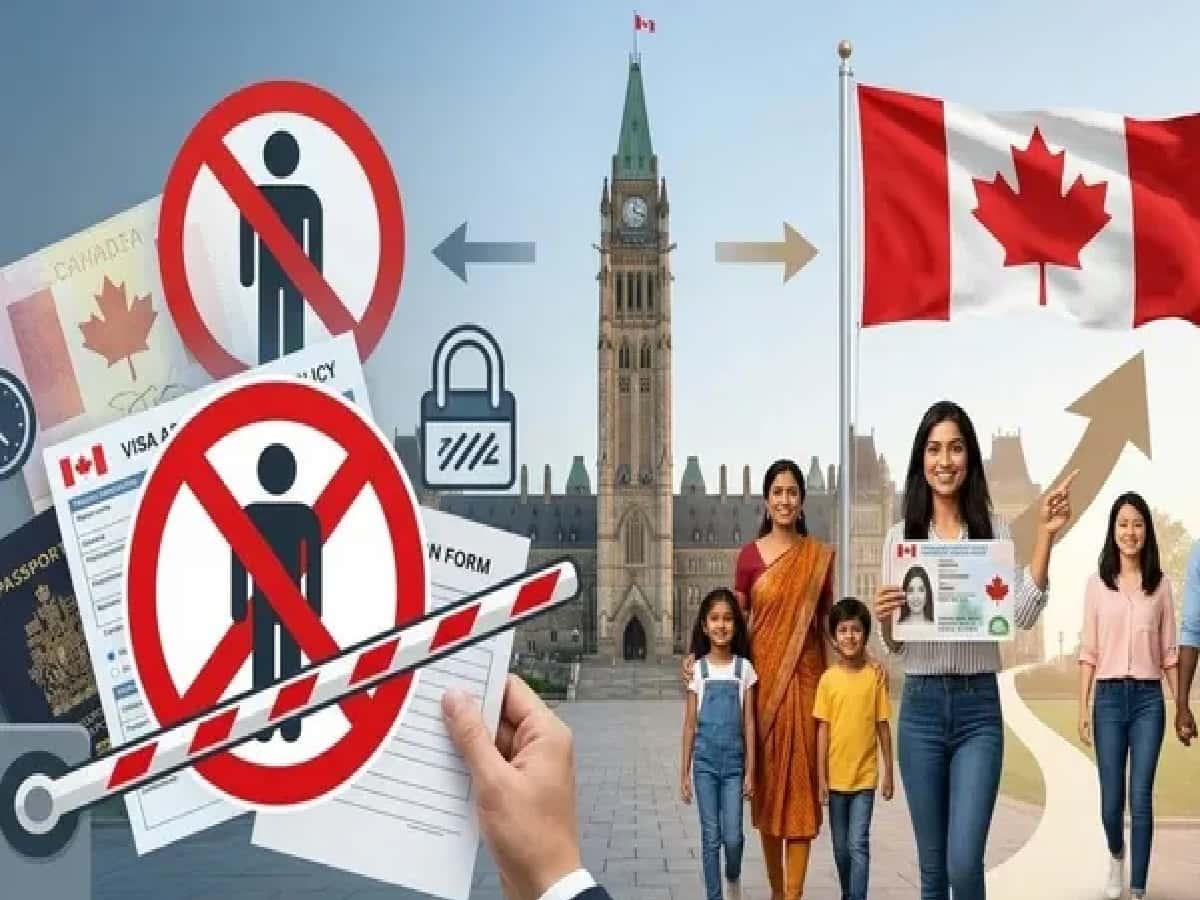
Canada 2027-2029 Plan: 200,000 PRs for In-Country Residents
In a decisive recalibration of its demographic and economic priorities, the Canadian federal government has unveiled its 2027–2029 Immigration Levels Plan, signaling that Ottawa is in no rush to ease restrictions on incoming foreign nationals. Tabled alongside the broader fiscal roadmap of Budget 2026, the multi-year framework establishes a strict policy of stabilization, holding annual admissions of new temporary residents constant at 370,000 across 2027, 2028, and 2029. Simultaneously, the annual target for permanent resident (PR) admissions will remain unchanged at 380,000. However, the defining centerpiece of the new directive is an exclusive, time-bound domestic initiative scheduled for 2027, which carves out room for up to 200,000 foreign workers, graduates, and vulnerable individuals already residing within Canada to transition into permanent residency. By pivoting away from open-ended overseas intake and prioritizing talent already embedded in local communities, Immigration, Refugees and Citizenship Canada (IRCC) seeks to ease severe strains on national housing supply, healthcare infrastructure, and public transit systems while meeting core labor market demands.
Shifting the Focus Inward: A 200,000-Seat Pathway for Current Residents
The most anticipated feature of the new immigration blueprint is the special 2027 transition measure designed to resolve the status of longstanding temporary residents. Designed as a time-limited measure, these 200,000 spaces are allocated entirely outside the standard 380,000 annual PR ceiling, creating an effective one-year surge in domestic regularization without inflating long-term immigration baselines. IRCC has structured this domestic pool into two distinct cohorts of 100,000 spaces each to address both economic and compassionate imperatives.
The first tranche of 100,000 admissions is dedicated strictly to skilled workers and their accompanying family members who meet the qualifying thresholds under the Provincial Nominee Program (PNP) or selected federal economic streams. This window offers a lifeline to thousands of employed professionals whose temporary work permits are nearing expiry amid elevated Comprehensive Ranking System (CRS) score cutoffs in Express Entry. The remaining 100,000 spaces have been reserved for humanitarian and compassionate considerations, including established special public policy pathways for nationals from Ukraine and Hong Kong, as well as expedited family reunification for the spouses, common-law partners, and dependent children of Canadian citizens and permanent residents.
Capping Temporary Inflows: Stabilizing Housing and Healthcare Pressures
The deliberate restraint embedded in the 2027–2029 targets reflects a fundamental shift in Canadian public policy. Driven by the mandates established in Budget 2026, the federal cabinet has codified a statutory objective to reduce the proportion of temporary residents—including international students and temporary foreign workers—to less than 5% of Canada's total population by the end of 2027. Furthermore, the intake of permanent residents will be held below 1% of the total population across the three-year planning cycle.
Federal policymakers emphasized that while immigration remains essential to offsetting an aging domestic demographic and sustaining fiscal health, the post-pandemic surge in non-permanent arrivals outpaced the absorptive capacity of municipal services. Rental vacancy rates plunged to historic lows in urban centers like Toronto, Vancouver, Montreal, and Calgary, while provincial healthcare systems faced severe backlogs. By freezing temporary arrivals at 370,000 annually—comprising 220,000 foreign workers and 150,000 international students—Ottawa intends to establish regulatory predictability, giving provinces and municipalities the runway required to expand housing construction and social service capacity.
Stiff Competition for Foreign Workers: The IMP vs TFWP Dynamic
Within the annual worker allocation of 220,000 temporary admissions, the distribution of permits reveals a heavy tilt toward bilateral trade and mobility agreements. A dominant 170,000 arrivals will be managed through the International Mobility Program (IMP), which covers open work permits, working holiday visas, and intra-company transfers that do not require an employer to obtain a Labour Market Impact Assessment (LMIA). In contrast, the employer-driven Temporary Foreign Worker Program (TFWP), which mandates a verified LMIA demonstrating an acute shortage of Canadian applicants, has been restricted to just 50,000 admissions per year.
Immigration economists and legal analysts warn that despite the temporary 200,000 PR transition measure, competition among existing temporary workers inside Canada will remain intense. Estimates indicate that only 20% to 25% of the temporary workers currently living in Canada will successfully secure permanent residency before their legal status lapses. As federal selection draws increasingly rely on category-based selections, applicants employed in non-specialized retail, hospitality, and low-wage administrative sectors will face steep hurdles. Selection preference will remain focused on individuals with direct experience in licensed healthcare roles, construction trades, agriculture, green technology, and high-wage technical occupations.
The Student Reality Check: Capped Visas and the End of Automatic PR
For prospective international students, the 2027–2029 Immigration Levels Plan cements a structural departure from previous decades. The cap of 150,000 new international student arrivals per year locks in the restrictive measures introduced over the past two years, representing a contraction of more than 70% compared to the peak volumes observed in 2023 and early 2024. This ceiling applies exclusively to new arrivals, excluding permit extensions and in-Canada study transitions, signaling that the federal government is targeting genuine educational exchange rather than treating international tuition as an open backdoor to settlement.
Immigration experts emphasize that the era of treating any Canadian post-secondary credential as an automatic ticket to permanent status has ended. While Post-Graduation Work Permits (PGWPs) will continue to be processed as status changes, long-term PR pathways are now tied strictly to degrees that address structural economic deficits. International graduates who fail to align their studies with national labor priorities or who lack verified local job offers in targeted industries will find it difficult to accumulate sufficient CRS points to receive an Invitation to Apply (ITA).
Provincial Power and the French Advantage: Strategic Realignment
The internal distribution of the 380,000 annual PR spaces highlights a calculated decentralization of economic immigration. Economic-class admissions will account for approximately 64% of total PR intake, representing roughly 244,700 seats annually. Within this economic envelope, the Provincial Nominee Program (PNP) quota has been raised to 95,000 spaces each year, empowering individual provinces to hand-pick skilled immigrants tailored to regional industrial needs. The Federal High Skilled stream—which governs Express Entry's Canadian Experience Class (CEC), Federal Skilled Worker (FSW), and Federal Skilled Trades (FST) programs—is capped at 100,000 admissions annually.
Simultaneously, the federal government is accelerating its nationwide Francophone integration strategy. The targeted proportion of French-speaking permanent resident admissions outside the province of Quebec has been set at 9.5% for 2027, rising progressively to 10.5% in 2028 and reaching 12% by 2029. This aggressive upward trajectory means that bilingual applicants or candidates demonstrating conversational fluency in French will enjoy a substantial competitive advantage across both Express Entry draws and provincial nominations, often bypassing the higher CRS requirements imposed on unilingual English applicants.
What the Shift Means for Indian Aspirants and Families
The policy landscape laid out for 2027–2029 carries immediate implications for Indian nationals, who have historically constituted the single largest demographic of international students, tech professionals, and PR recipients in Canada. The federal government’s focus on retaining the talent already present in the country means that individuals planning to migrate from India can no longer rely on standard academic admissions or generic IT credentials to secure permanent status.
To succeed under the new framework, Indian applicants must build a multi-layered profile. Gaining verifiable Canadian work experience in high-demand trades or healthcare occupations, seeking out provincial nominations in Atlantic Canada or rural communities, and investing in certified French language proficiency have transformed from optional bonuses into mandatory strategic assets. As Canada shifts from broad-based population expansion to targeted economic consolidation, only those whose skills directly support the country's productivity and regional economies will navigate the path to permanent residency.




